
Dutch Oven Baked Beans with Pork

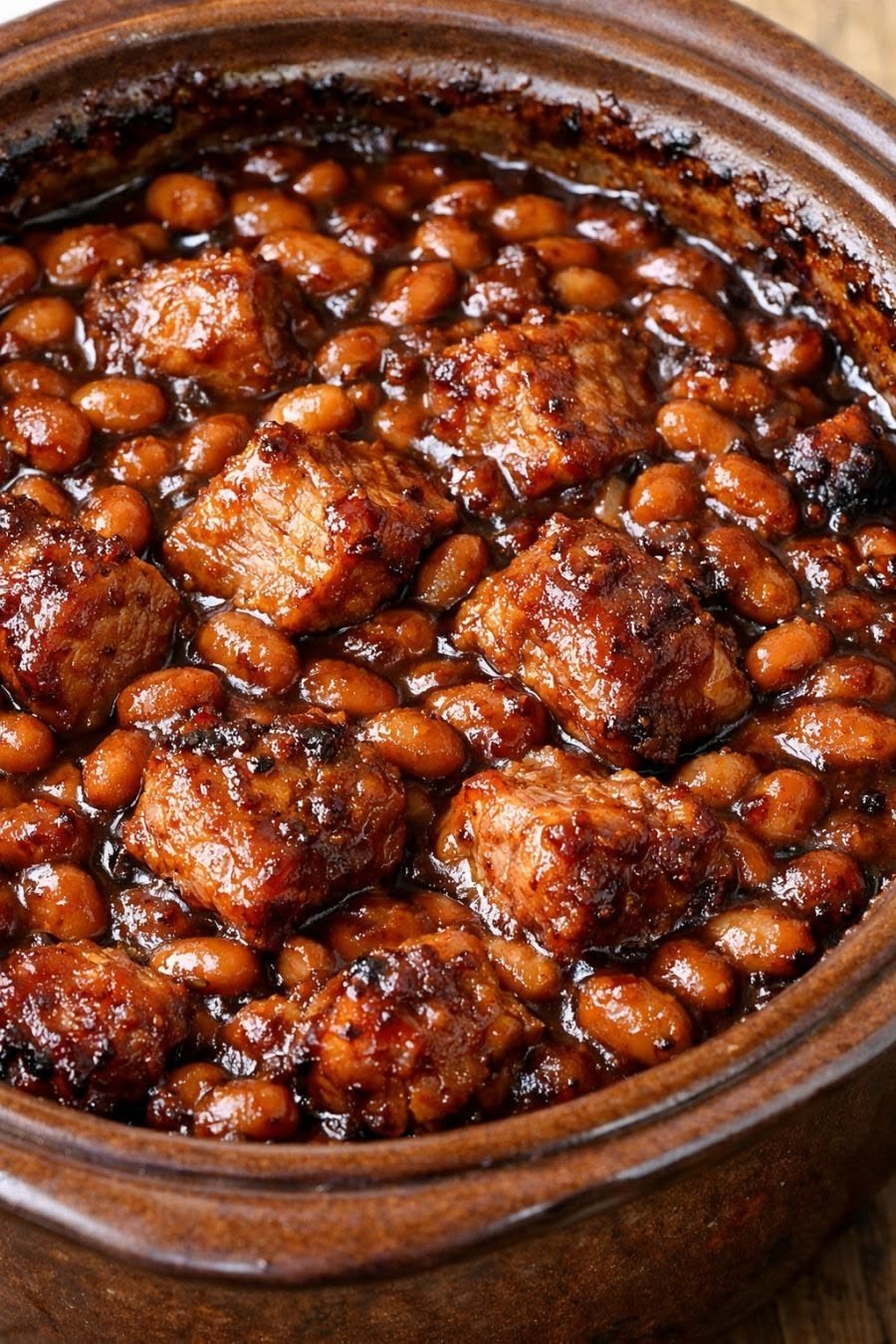
There is something special about a pot of baked beans slowly cooking until the sauce turns thick, glossy, and rich, and the pork becomes beautifully tender. This Dutch oven baked beans with pork recipe is the kind of comforting, hearty meal that makes the whole kitchen smell incredible.
Honestly, I love recipes like this because they don’t require fancy ingredients or complicated techniques. You start with simple beans, flavorful pork, a handful of pantry staples, and a little patience. After some slow cooking, everything comes together in the most delicious way.
The beans soak up all those savory juices, while the sauce develops a deep, slightly sweet flavor with hints of smoky seasoning. The pork gets caramelized around the edges and stays tender inside. Every spoonful is packed with flavor.
I usually make this dish when I’m craving something cozy for a weekend dinner, but it is equally wonderful for family gatherings, potlucks, or a relaxed barbecue. Serve it with warm cornbread, crusty bread, or a simple green salad, and you’ve got a satisfying meal that everyone can enjoy.
If you’ve been looking for an easy baked beans recipe that feels homemade and tastes like it’s been cooking all day, this one is worth saving.
Why You’ll Love This Recipe
- Rich, homemade flavor: The pork, beans, and slow-cooked sauce create a delicious combination of smoky, savory, and sweet flavors.
- Simple pantry ingredients: You probably already have many of the ingredients in your kitchen.
- Perfect for make-ahead meals: The flavors deepen as the dish rests, making leftovers especially delicious.
- Comfort food at its best: It’s hearty, filling, and ideal for chilly evenings or casual family dinners.
- Flexible and forgiving: You can adjust the sweetness, spices, and type of pork to suit your taste.
Recipe Details
- Prep time: 20 minutes
- Cook time: 2½–3 hours
- Total time: Approximately 3 hours 20 minutes
- Servings: 6
- Cooking method: Dutch oven baking
- Cuisine: American-inspired comfort food
Ingredients You’ll Need
Here is everything I use to make these rich and flavorful baked beans with pork.
Main Ingredients
- 1 pound (450 g) pork shoulder or pork belly, cut into bite-sized chunks
- 3 cans (15 ounces each) pinto beans or navy beans, drained and rinsed
- 1 medium yellow onion, finely chopped
- 3 cloves garlic, minced
- 2 tablespoons olive oil, if needed for browning
For the Sweet and Savory Sauce
- ½ cup barbecue sauce
- ¼ cup ketchup
- ¼ cup brown sugar
- 2 tablespoons molasses
- 1 tablespoon yellow mustard
- 1 tablespoon Worcestershire sauce
- 1 teaspoon smoked paprika
- ½ teaspoon black pepper
- ½ teaspoon salt, or to taste
- 1 cup chicken broth or water
Optional Ingredients
- 4 slices bacon, chopped, for extra smoky flavor
- ½ teaspoon chili powder for a gentle kick
- 1 teaspoon apple cider vinegar to balance the sweetness
- A pinch of cayenne pepper if you enjoy a little heat
A quick ingredient note: I usually prefer pork shoulder because it becomes tender and flavorful during slow cooking. Pork belly works beautifully too if you want a richer, fattier result. Pinto beans give the dish a creamy texture, while navy beans are a classic choice for baked beans.
How to Make Dutch Oven Baked Beans with Pork
Step 1: Preheat the Oven
Preheat your oven to 325°F (165°C).
Gather your ingredients and prepare the pork, onion, and garlic. I like to measure out the sauce ingredients before I start cooking because it makes the whole process easier and less rushed.
Step 2: Brown the Pork
Place your Dutch oven over medium-high heat and add the olive oil if needed.
Add the pork chunks in a single layer, working in batches if necessary. Let them brown for about 3–5 minutes per side, until they develop a deep golden-brown crust.
Don’t rush this step. Those browned edges add a lot of flavor to the finished dish.
If you’re using bacon, cook it first until it starts to render its fat, then brown the pork in the same pot.
Transfer the pork to a plate and leave a little of the rendered fat in the Dutch oven.
Step 3: Cook the Onion and Garlic
Add the chopped onion to the pot and cook for 4–5 minutes, stirring occasionally, until softened.
Stir in the minced garlic and cook for another 30 seconds.
Scrape up any browned bits stuck to the bottom of the Dutch oven. They are full of flavor and will blend into the sauce as everything cooks.
Step 4: Prepare the Sauce
In a bowl, whisk together the barbecue sauce, ketchup, brown sugar, molasses, mustard, Worcestershire sauce, smoked paprika, black pepper, salt, and chicken broth.
Taste the sauce before adding it to the pot. If you prefer sweeter baked beans, add a little more brown sugar. For a tangier flavor, stir in a teaspoon of apple cider vinegar.
I usually aim for a balance of sweet, smoky, and savory rather than making the sauce overly sugary.
Step 5: Combine the Pork and Beans
Return the browned pork to the Dutch oven.
Add the drained beans, followed by the prepared sauce. Stir gently until the beans and pork are evenly coated.
Make sure there is enough liquid to keep the mixture moist throughout cooking. The beans should be surrounded by sauce without being completely submerged in a thin broth.
Bring the mixture to a gentle simmer on the stovetop.
Step 6: Bake Until Tender
Cover the Dutch oven with its lid and transfer it to the preheated oven.
Bake for approximately 2–2½ hours, checking occasionally. The pork should become fork-tender, and the beans should absorb the rich flavor of the sauce.
If the sauce looks too thick before the pork is tender, add a splash of broth or water. If it looks too thin, remove the lid during the final 20–30 minutes of cooking.
Cooking time will vary depending on the size and cut of the pork.
Step 7: Let the Sauce Thicken
Once the pork is tender, remove the lid and bake for another 15–30 minutes if needed.
The sauce should become thick, glossy, and cling to the beans and pork. The exposed pieces of pork may develop delicious caramelized edges.
Be careful not to let the sauce reduce too much, as the beans can dry out.
Step 8: Rest and Serve
Remove the Dutch oven from the oven and let the dish rest for about 10 minutes.
Give everything a gentle stir, taste, and adjust the seasoning with additional salt, pepper, or vinegar if needed.
Serve warm, straight from the pot. I honestly think this is one of those dishes that tastes even better after it has had a little time to rest.
Tips for the Best Baked Beans with Pork
1. Brown the Pork Properly
Browning creates deeper flavor and gives the pork a more appealing texture. Avoid overcrowding the pot, or the meat may steam instead of brown.
2. Choose the Right Beans
Pinto beans, navy beans, and great northern beans all work well. Canned beans are convenient, but cooked dried beans can also be used.
If you use dried beans, cook them until tender before adding them to this recipe. Do not add raw dried beans and assume the oven time will be sufficient.
3. Adjust the Sweetness
Barbecue sauce, ketchup, brown sugar, and molasses all contribute sweetness. If your barbecue sauce is already sweet, reduce the brown sugar slightly.
A splash of apple cider vinegar near the end helps balance the rich sauce.
4. Keep the Cooking Temperature Low
Slow cooking gives the pork time to soften without drying out the beans. Keep the oven around 325°F (165°C) and check the pot periodically.
5. Don’t Skip the Resting Time
Allowing the dish to rest for 10 minutes helps the sauce settle and thicken. It also gives the flavors a chance to come together.
6. Make It Ahead
This recipe is excellent for meal prep. Prepare it a day in advance, refrigerate it promptly, and reheat it gently with a splash of broth if the sauce has thickened too much.
7. Use a Meat Thermometer When Needed
For pork shoulder cooked until tender, the meat often needs to reach approximately 195–205°F (90–96°C) to become easy to pull apart. This is a texture target rather than the minimum safe cooking temperature for pork.
What to Serve with Baked Beans and Pork
These baked beans are filling enough to serve as a main dish, but they also make an excellent side for barbecue meals.
Here are some of my favorite serving ideas:
- Cornbread: Its slightly sweet flavor pairs beautifully with the smoky sauce.
- Crusty bread: Perfect for soaking up every last bit of the rich sauce.
- Coleslaw: A cool, crunchy slaw adds freshness and balances the richness of the pork.
- Grilled vegetables: Corn on the cob, zucchini, and bell peppers are all great options.
- Roasted potatoes: Serve them alongside the beans for an extra-hearty meal.
- Green salad: A simple salad with a tangy dressing keeps the meal from feeling too heavy.
- Barbecue favorites: Pair the beans with grilled chicken, ribs, burgers, or sausages for a classic cookout spread.
For a simple family dinner, I usually serve a generous bowl of these beans with cornbread and a crisp green salad. It’s easy, comforting, and doesn’t require much extra work.
Variations to Try
Smoky Bacon Baked Beans
Add chopped bacon at the beginning and cook it until its fat renders. Brown the pork in the same pot for a richer, smokier flavor.
Spicy Baked Beans
Add chili powder, cayenne pepper, or a finely chopped jalapeño when cooking the onions. Start with a small amount and adjust to taste.
Less-Sweet Baked Beans
Reduce the brown sugar to 1–2 tablespoons and omit the molasses if you prefer a more savory dish. A little vinegar can help brighten the flavor.
Tomato-Rich Baked Beans
Add ½ cup crushed tomatoes and reduce the broth slightly. This creates a more tomato-forward sauce with a gentle tang.
Dried Bean Version
Use approximately 4½–5 cups of cooked, drained beans in place of the canned beans. Make sure they are fully cooked before combining them with the pork and sauce.
Storage and Reheating Instructions
Refrigerator: Allow leftovers to cool slightly, then transfer them to airtight containers and refrigerate within two hours of cooking. They will generally keep for 3–4 days.
Freezer: Freeze cooled portions in freezer-safe containers for up to 3 months for best quality. Leave a little space at the top for expansion.
Reheating on the stovetop: Place the beans in a saucepan or Dutch oven over medium-low heat. Add a splash of broth or water and stir occasionally until heated through.
Reheating in the oven: Transfer to an oven-safe dish, cover, and warm at 325°F (165°C) until the center reaches 165°F (74°C).
Microwave: Reheat individual portions in a microwave-safe container, stirring partway through to distribute the heat evenly.
Avoid leaving cooked beans and pork at room temperature for extended periods. Refrigerate promptly and reheat leftovers thoroughly.
Nutrition Information
The following nutrition information is an estimate for one serving, assuming the recipe makes six servings using pork shoulder, canned beans, and the listed sauce ingredients.
- Calories: 520
- Protein: 29 g
- Carbohydrates: 52 g
- Fat: 21 g
- Saturated fat: 7 g
- Fiber: 11 g
- Sugar: 20 g
- Sodium: 900–1,100 mg
Actual nutrition values will vary depending on the pork cut, type of beans, barbecue sauce, and amount of salt used. For a more accurate calculation, use the nutrition labels of your specific ingredients.
Frequently Asked Questions
1. Can I make baked beans with pork in a slow cooker?
Yes! Brown the pork and cook the onions and garlic in a skillet first for the best flavor. Transfer everything to the slow cooker and cook on LOW for approximately 6–8 hours or HIGH for 3–4 hours, until the pork is tender.
Because canned beans are already cooked, add them later in the cooking process if you want them to hold their shape better. Check the liquid level and avoid overcooking the beans.
2. Can I use canned baked beans instead of plain canned beans?
Yes, although you should adjust the sauce. Canned baked beans already contain sweeteners and seasonings, so reduce or omit the brown sugar, molasses, and some of the barbecue sauce. Taste the mixture before adding more seasoning.
3. Why are my baked beans watery?
The sauce may not have reduced enough, or too much broth may have been added. Remove the lid and bake for another 15–30 minutes, stirring gently as needed.
Remember that the sauce will thicken slightly as the beans rest after cooking.
4. How do I know when the pork is done?
The pork should be fork-tender and easy to break apart. For shoulder cuts, this commonly happens around 195–205°F (90–96°C), although the exact time depends on the cut and size of the pieces.
If the pork is still chewy, continue cooking and check again after 20–30 minutes.
5. Can I make this recipe without pork?
Absolutely. Omit the pork and use vegetable broth for a meat-free version. You can add sautéed mushrooms, diced bell peppers, or extra beans for more texture and flavor.
Keep in mind that the sauce and overall cooking time may need adjusting because the pork contributes fat, moisture, and savory flavor.
Final Thoughts
These Dutch oven baked beans with pork are everything I want in a homemade comfort-food recipe: simple ingredients, a rich sauce, tender meat, and plenty of flavor in every bite.
I love how the beans slowly soak up the sweet, smoky sauce while the pork becomes tender enough to cut with a fork. And honestly, the best part might be how easy the leftovers are to turn into another satisfying meal.
Whether you’re planning a weekend family dinner, preparing a barbecue side dish, or simply craving something hearty, this recipe is a wonderful one to keep in your collection.
Make it your own by adjusting the sweetness, adding bacon, or bringing in a little heat. Serve it hot with cornbread or crusty bread, and don’t forget to save some for the next day.
If you try this baked beans with pork recipe, enjoy experimenting with the flavors until you find the combination your family loves most!