
Slow Cooker Beef and Barley Stew Recipe

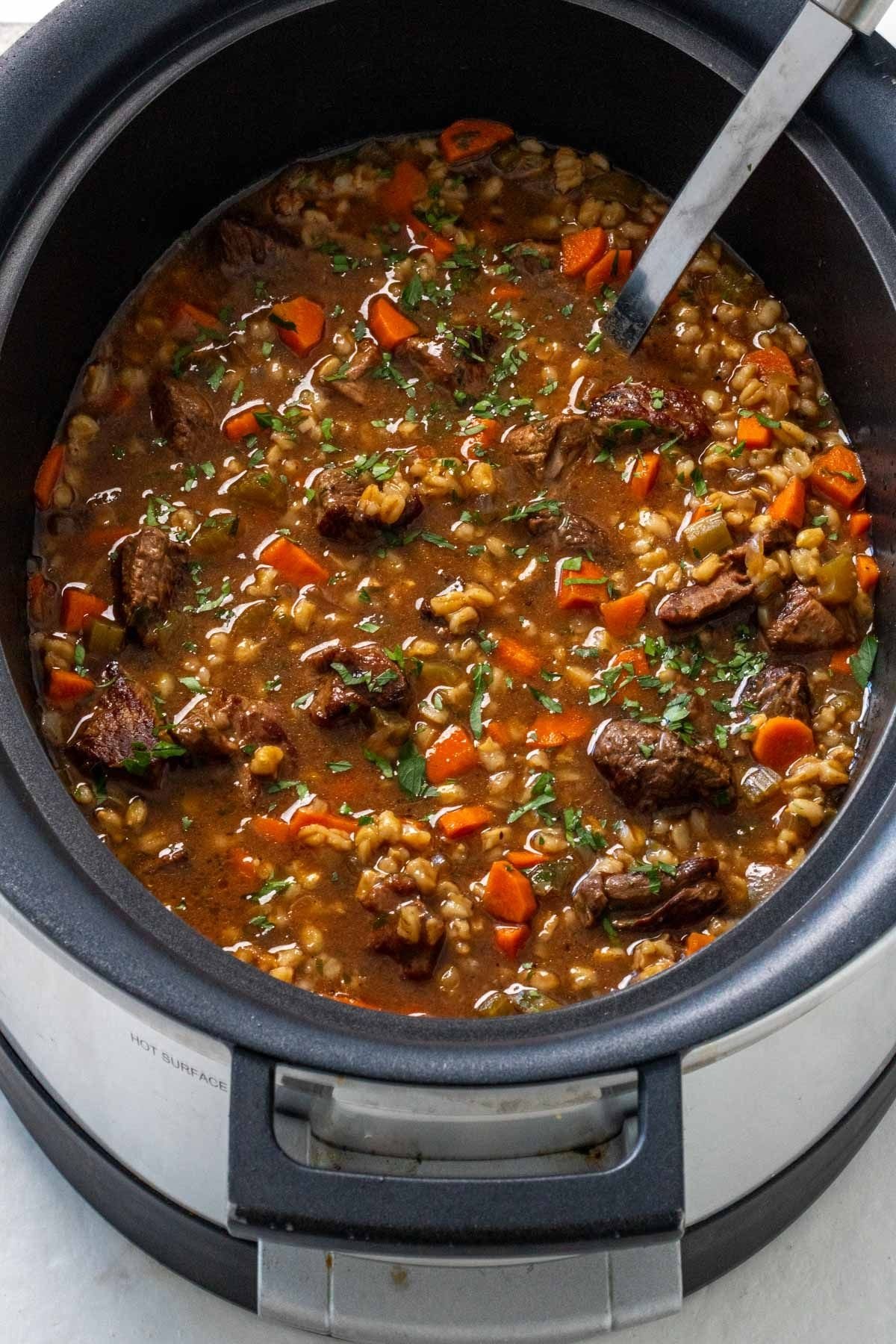
There is something so comforting about coming home to a slow cooker full of rich, savory beef stew. The smell alone makes the whole kitchen feel warm and inviting! This slow cooker beef and barley stew is one of those simple, satisfying meals that I love making when I want something hearty without spending hours standing over the stove.
Tender chunks of beef, chewy pearl barley, sweet carrots, and celery simmer together in a flavorful broth until everything is wonderfully soft and delicious. The barley absorbs some of the broth as it cooks, giving the stew a thick, almost creamy texture without needing cream or flour.
Honestly, what I love most about this recipe is how easy it is. Once everything is in the slow cooker, you can get on with your day while dinner practically takes care of itself.
Whether you’re looking for a cozy family dinner, an easy meal-prep recipe, or something warm to enjoy on a cold evening, this beef and barley stew is worth adding to your regular rotation.
Why You’ll Love This Beef and Barley Stew
- Easy to prepare: A little chopping and a few minutes of prep are all you need.
- Tender, flavorful beef: Slow cooking gives tougher cuts of beef plenty of time to become soft and succulent.
- Hearty and filling: Pearl barley, vegetables, and beef make this a satisfying meal in one bowl.
- Perfect for busy days: Let your slow cooker do most of the work.
- Great for leftovers: The flavors develop beautifully, making the stew just as enjoyable the next day.
- Simple everyday ingredients: You probably have many of the seasonings and vegetables already in your kitchen.
Ingredients You’ll Need
This recipe uses basic ingredients to create a rich, homemade beef stew with plenty of texture and flavor.
Main Ingredients
- 2 pounds (900 g) beef chuck: Cut into bite-sized cubes. Chuck roast is ideal because it becomes tender during long, slow cooking.
- 3/4 cup (about 140 g) pearl barley: Rinse it under cold water before adding it to the slow cooker.
- 3 medium carrots: Peeled and sliced into thick rounds.
- 2 celery stalks: Chopped into small pieces.
- 1 medium onion: Diced for a savory base.
- 3 cloves garlic: Minced for extra flavor.
- 6 cups (1.4 liters) beef broth: Use a good-quality broth for a deeper, richer taste.
- 2 tablespoons tomato paste: Adds depth, color, and a subtle sweetness.
- 2 tablespoons olive oil: Optional, for browning the beef.
- 2 tablespoons Worcestershire sauce: Gives the broth a delicious savory flavor.
- 2 bay leaves: Add a gentle herbal aroma.
Seasonings
- 1 teaspoon dried thyme
- 1 teaspoon dried rosemary
- 1 teaspoon paprika
- 1 teaspoon salt, or to taste
- 1/2 teaspoon freshly ground black pepper
For Garnishing
- 2 tablespoons freshly chopped parsley
Fresh parsley is optional, but I usually add a little just before serving. It brings a lovely fresh flavor and makes the finished stew look even more appetizing.
How to Make Slow Cooker Beef and Barley Stew
Step 1: Prepare the Ingredients
Cut the beef into roughly 1-inch cubes, trimming away any unusually large pieces of excess fat. Chop the carrots, celery, and onion, then mince the garlic.
Rinse the pearl barley in a fine-mesh strainer under cold running water.
I like to prepare everything before turning on the slow cooker. It makes the cooking process much easier, especially on busy mornings.
Step 2: Brown the Beef (Optional but Recommended)
Heat the olive oil in a large skillet over medium-high heat. Add the beef in batches and brown it on several sides.
You don’t need to cook the beef all the way through. The goal is simply to develop a flavorful brown crust.
Transfer the browned beef to the slow cooker.
Honestly, you can skip this step if you’re short on time. The stew will still be tasty, but browning the beef adds a deeper, richer flavor to the finished broth.
Step 3: Add the Vegetables and Barley
Add the chopped onion, carrots, celery, garlic, and rinsed pearl barley to the slow cooker.
Stir in the tomato paste, Worcestershire sauce, thyme, rosemary, paprika, salt, and black pepper.
Place the bay leaves on top.
Try to distribute the barley evenly so it doesn’t settle into one thick layer at the bottom.
Step 4: Pour in the Beef Broth
Pour the beef broth over the ingredients. Stir gently to combine everything, making sure the barley is submerged in the liquid.
The mixture may look quite thin at this stage, but don’t worry. The barley will absorb liquid and release starch as it cooks, helping the stew thicken naturally.
Step 5: Slow Cook Until Tender
Cover the slow cooker with its lid and cook according to your appliance’s settings:
- Low: 8–9 hours
- High: 4–5 hours
Cooking times vary depending on your slow cooker and the size of your beef cubes. The stew is ready when the beef is fork-tender and the barley is soft but still pleasantly chewy.
Keep the lid closed as much as possible during cooking. Every time you lift it, heat escapes and the cooking time may increase.
Step 6: Check the Texture and Seasoning
Once the beef and barley are tender, remove the bay leaves.
Give the stew a good stir. If it’s thicker than you prefer, add a little hot beef broth or water until it reaches your desired consistency.
Taste and adjust the salt and pepper. I usually add the final seasoning at this stage because broth brands vary in saltiness.
If the stew seems too thin, let it cook uncovered for another 15–20 minutes if your slow cooker allows it, stirring occasionally.
Step 7: Garnish and Serve
Ladle the hot beef and barley stew into bowls and sprinkle freshly chopped parsley over the top.
Serve immediately with crusty bread, warm dinner rolls, or a simple green salad.
The broth should be rich and savory, the beef tender, and the barley soft enough to soak up all those wonderful flavors.
Expert Tips for the Best Beef and Barley Stew
Choose the Right Cut of Beef
Beef chuck is my first choice for this recipe. It has enough connective tissue to become tender during slow cooking and adds plenty of flavor to the broth.
Stew meat also works well, although the results can vary depending on the cut.
Use Pearl Barley
Pearl barley is a great option because it cooks relatively evenly and develops a pleasantly chewy texture.
Remember that pearl barley is not gluten-free. If you need a gluten-free alternative, use certified gluten-free grains such as rice, adjusting the liquid and cooking time as needed.
Don’t Skip the Herbs
Thyme, rosemary, and bay leaves give this stew its classic savory flavor. Dried herbs work perfectly well, so there’s no need to buy fresh herbs just for this recipe.
Watch the Liquid Level
Barley absorbs quite a bit of liquid. If you prefer a soupier stew, keep extra warm broth nearby and add some before serving.
If you’re cooking the stew ahead of time, remember that it will thicken further as it cools.
Avoid Overfilling Your Slow Cooker
Follow the fill-level guidance in your slow cooker’s manual. Keeping the ingredients and liquid within the recommended range helps the stew cook evenly.
Let the Flavors Develop
If you have time, prepare the stew a day ahead and refrigerate it promptly after cooking. The flavors meld beautifully overnight, and the leftovers make an excellent lunch.
Easy Variations to Try
One of the best things about homemade stew is how easy it is to customize.
- Add mushrooms: Sliced mushrooms bring extra earthy flavor. For the best texture, brown them first or add them during the later part of cooking.
- Include potatoes: Add diced potatoes for an even heartier meal. Cut them into fairly large pieces so they hold their shape.
- Make it more tomato-forward: Add a can of diced tomatoes and reduce the broth slightly if you prefer a brighter, more tomato-rich stew.
- Use fresh herbs: Fresh thyme or rosemary can add a lovely aroma. Add delicate fresh herbs toward the end for a fresher flavor.
- Add frozen peas: Stir in a handful of frozen peas during the last 15–20 minutes of cooking.
- Make it without browning: For a simpler preparation, put the raw beef directly into the slow cooker with the remaining ingredients. The flavor will be a little different, but it still makes a satisfying meal.
What to Serve with Beef and Barley Stew
This stew is filling enough to serve on its own, but a few simple sides can make dinner feel extra special.
Crusty bread: Perfect for soaking up every last drop of the savory broth.
Garlic bread: A delicious choice if you love a little extra garlic flavor.
Green salad: A crisp salad with a light vinaigrette balances the richness of the stew.
Steamed green beans: Add some fresh color and a simple vegetable side.
Roasted Brussels sprouts: Their slightly caramelized flavor pairs wonderfully with slow-cooked beef.
Dinner rolls: Soft, warm rolls are ideal for a comforting family meal.
For an easy weeknight dinner, I usually serve this stew with bread and a simple salad. There’s really no need to make anything complicated when the main dish is already so hearty.
Storage and Reheating Instructions
How to Store Leftovers
Allow the stew to cool slightly, then transfer it to shallow, airtight containers. Refrigerate within two hours of cooking and use within 3–4 days.
The barley will continue absorbing broth as the stew sits, so don’t be surprised if the leftovers are thicker the next day.
How to Reheat
Reheat individual portions in the microwave, stirring occasionally, until steaming hot throughout.
For larger portions, warm the stew in a saucepan over medium-low heat, stirring regularly. Add a splash of beef broth or water to loosen it as needed.
Can You Freeze Beef and Barley Stew?
Yes! Freeze cooled portions in freezer-safe containers, leaving a little room for expansion. For the best quality, use within 2–3 months.
Thaw overnight in the refrigerator and reheat thoroughly.
The barley may become softer after freezing and reheating, but the stew will still be delicious.
Nutrition Information
The following nutrition information is an estimate based on one serving, assuming the recipe makes 6 servings. Actual values will vary depending on the beef, broth, and exact ingredient quantities used.
| Nutrient | Approximate amount per serving |
|---|---|
| Calories | 430 kcal |
| Protein | 33 g |
| Carbohydrates | 38 g |
| Fat | 15 g |
| Saturated Fat | 5 g |
| Fiber | 6 g |
| Sugar | 5 g |
| Sodium | 750 mg |
These estimates are intended as a general guide, not a precise nutritional analysis. Using low-sodium broth or trimming excess beef fat may change the totals.
Frequently Asked Questions
1. Can I put raw beef directly into the slow cooker?
Yes! You can add raw beef directly to the slow cooker without browning it first. The beef will cook during the slow-cooking process, provided the recipe reaches safe cooking temperatures. Browning is optional and mainly improves the flavor and color of the stew.
2. Do I need to soak pearl barley before cooking?
No, pearl barley generally doesn’t need to be soaked for this recipe. Simply rinse it under cold water before adding it to the slow cooker.
3. Why is my beef and barley stew too thick?
Barley absorbs liquid as it cooks and continues doing so after cooking. If your stew becomes too thick, stir in warm beef broth or water a little at a time until it reaches the consistency you like.
4. Can I make this recipe in advance?
Absolutely! This is an excellent make-ahead meal. Cook the stew, refrigerate it promptly, and reheat it the next day. You may need to add extra broth because the barley will continue absorbing liquid.
5. Can I use quick-cooking barley instead of pearl barley?
You can, but quick-cooking barley needs less cooking time and may become mushy during a long slow-cooking cycle. For the best texture, cook the beef and vegetables first, then add quick-cooking barley near the end according to the package instructions. If you use regular pearl barley, the cooking schedule in this recipe is a better fit.
Final Thoughts
This slow cooker beef and barley stew is the kind of homemade meal that makes an ordinary evening feel a little more special. With tender beef, wholesome barley, colorful vegetables, and a rich broth, it delivers plenty of comfort without requiring constant attention in the kitchen.
I love that I can prepare everything in the morning and come back to a warm, filling dinner at the end of the day. And honestly, the leftovers might be even better!
Serve it with your favorite bread, sprinkle on some fresh parsley, and enjoy a bowl of old-fashioned comfort food.
If you try this recipe, feel free to experiment with your favorite vegetables and herbs to make it your own. It’s a simple, dependable dish that deserves a place in any home cook’s recipe collection.