
Slow-Braised Beef Short Ribs in Garlic Herb Gravy

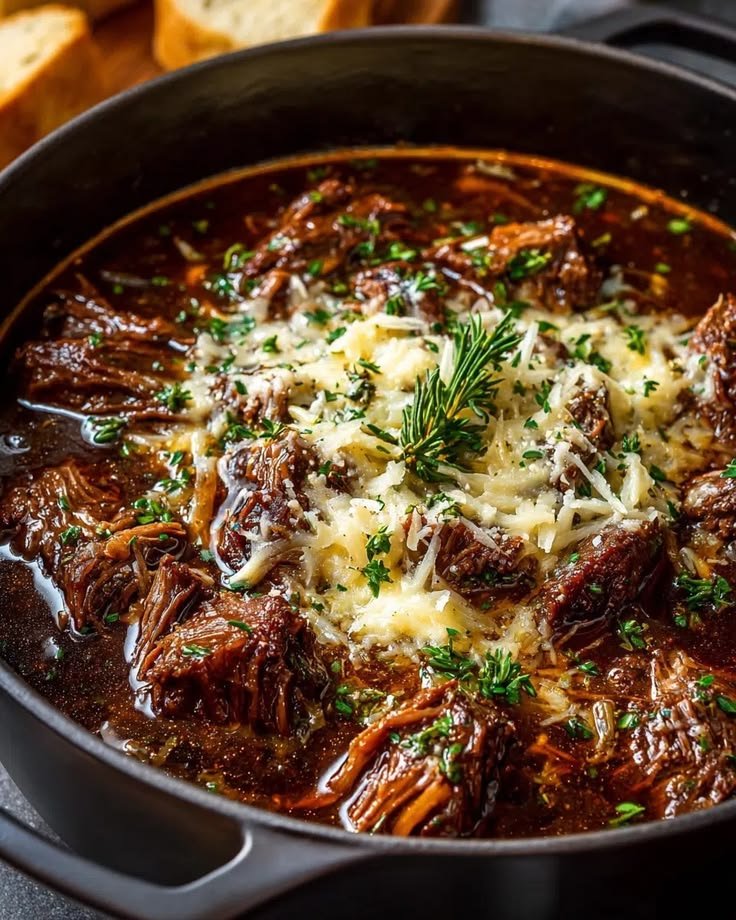
There is something about a pot of slowly braised beef that makes the whole kitchen feel warm and inviting. The smell of garlic, rosemary, thyme, and beef simmering together is honestly one of my favorite things about cooking comfort food at home. And when the beef becomes so tender that it practically falls apart with a fork? That is when I know dinner is going to be something special.
These slow-braised beef short ribs are cooked in a rich, savory gravy made with beef broth, aromatic vegetables, tomato paste, and herbs. The long, gentle cooking process transforms the beef into beautifully tender bites while creating a deep, flavorful sauce that is perfect for spooning over mashed potatoes or soaking up with crusty bread.
I usually finish the dish with freshly grated Parmesan and a little fresh parsley. The cheese melts into the hot gravy, adding a lovely savory touch without overpowering the beef. A sprig of rosemary on top makes the whole pot look beautiful, too.
The best part? Although this dish tastes like something you would order at a cozy restaurant, most of the work is hands-off. Once everything is in the pot, the oven does the hard work.
If you are looking for an impressive Sunday dinner, a comforting cold-weather meal, or a special dinner to share with family, these garlic herb braised beef short ribs deserve a spot on your menu.
Why You’ll Love This Recipe
- Fall-apart tender beef: Slow cooking breaks down the connective tissue, leaving the meat soft, juicy, and flavorful.
- Rich homemade gravy: Beef broth, garlic, herbs, and browned meat create a delicious sauce without complicated techniques.
- One-pot convenience: After browning the beef and preparing the sauce, everything cooks together in one Dutch oven.
- Perfect for entertaining: The dish looks impressive but does not require constant attention.
- Great for meal prep: The flavors develop beautifully overnight, making leftovers especially delicious.
Recipe Overview
- Prep time: 25 minutes
- Cook time: 3–3½ hours
- Total time: Approximately 4 hours
- Servings: 4
- Cooking method: Oven braising
- Cuisine: American-inspired comfort food
Ingredients for Slow-Braised Beef Short Ribs
These ingredients create a deeply savory gravy with plenty of garlic and fresh herb flavor.
For the Beef
- 3–3½ pounds (1.4–1.6 kg) bone-in beef short ribs
- 2 tablespoons olive oil
- 1½ teaspoons salt, or to taste
- 1 teaspoon freshly ground black pepper
- 1 medium yellow onion, finely chopped
- 2 medium carrots, chopped
- 4–5 garlic cloves, minced
- 2 tablespoons tomato paste
- 1 tablespoon all-purpose flour, optional, for a thicker gravy
- 2 cups beef broth, preferably low-sodium
- 1 cup dry red wine, or additional beef broth
- 1 tablespoon Worcestershire sauce
- 2 sprigs fresh rosemary
- 4–5 sprigs fresh thyme
- 2 bay leaves
For the Parmesan Herb Finish
- ½ cup freshly grated Parmesan cheese
- 2 tablespoons chopped fresh parsley
- 1 teaspoon fresh thyme leaves, optional
- 1 small rosemary sprig, for garnish
Optional Additions
- 8 ounces mushrooms, sliced
- 1 teaspoon smoked paprika
- 1 tablespoon butter for extra richness
- A small pinch of red pepper flakes for gentle heat
A quick ingredient note: Bone-in short ribs are my first choice because they develop wonderful flavor during slow cooking. If you prefer boneless short ribs, those can work too, although cooking time may vary depending on their size.
How to Make Slow-Braised Beef Short Ribs
Step 1: Prepare the Beef
Preheat your oven to 325°F (165°C).
Pat the short ribs dry with paper towels. This little step makes a difference because dry meat browns much better than damp meat.
Season all sides generously with salt and black pepper.
I usually let the seasoned beef sit at room temperature for about 15–20 minutes while I prepare the vegetables. Avoid leaving raw meat out for extended periods.
Step 2: Sear the Short Ribs
Heat the olive oil in a large, heavy-bottomed Dutch oven over medium-high heat.
Working in batches, add the short ribs and sear them for approximately 3–4 minutes per side, until they develop a deep brown crust.
Do not crowd the pot. If the ribs are packed too tightly, they will steam instead of browning.
Transfer the browned ribs to a plate and set aside. Leave the flavorful browned bits in the bottom of the pot because they will help build the gravy.
Step 3: Cook the Aromatic Vegetables
Reduce the heat to medium and add the chopped onion and carrots to the same pot.
Cook for 5–7 minutes, stirring occasionally, until the onion softens and begins to turn golden.
Add the minced garlic and cook for another 30 seconds, just until fragrant.
Stir in the tomato paste and cook for 1–2 minutes. It should darken slightly and become fragrant rather than taste raw.
If you are using mushrooms, add them now and cook until they begin to soften.
Step 4: Build the Garlic Herb Gravy
Sprinkle in the flour, if using, and stir well for about one minute.
Slowly pour in the red wine, scraping the bottom of the pot with a wooden spoon to loosen the browned bits. Let it simmer for 2–3 minutes so some of the alcohol cooks off.
If you prefer not to use wine, simply substitute additional beef broth.
Add the beef broth and Worcestershire sauce. Stir everything together, then add the rosemary, thyme, and bay leaves.
The liquid should come partway up the sides of the short ribs rather than completely submerge them. This helps the beef braise gently while the sauce concentrates.
Step 5: Braise the Beef Until Tender
Return the short ribs to the pot, arranging them in a single layer as much as possible. Spoon a little gravy over the top.
Cover the Dutch oven with its lid and transfer it to the preheated oven.
Braise for approximately 3–3½ hours, checking toward the end of the cooking time.
The beef is ready when a fork slides into the meat easily and the meat pulls apart with little resistance. If it still feels tough, give it another 20–30 minutes and check again.
Honestly, patience is the secret here. Beef short ribs can look done before their connective tissue has softened enough, so tenderness is a better guide than the clock alone.
Step 6: Adjust the Gravy
Carefully remove the pot from the oven and transfer the short ribs to a plate.
Discard the rosemary stems, thyme stems, and bay leaves.
If the gravy looks too thin, simmer it uncovered on the stovetop for 5–10 minutes until it reaches your preferred consistency. For a thicker sauce, you can also stir in a small cornstarch slurry made with equal parts cornstarch and cold water.
Taste the gravy and adjust the salt and pepper as needed.
For an especially silky finish, stir in a tablespoon of butter. I like this option when serving the dish for a special dinner.
Step 7: Add the Parmesan and Fresh Herbs
Return the short ribs to the gravy and spoon the sauce generously over the meat.
Sprinkle the freshly grated Parmesan over the beef. Cover the pot for a minute or two, just until the cheese begins to soften and melt into the hot sauce.
Finish with chopped parsley, fresh thyme leaves, and a small rosemary sprig.
If you prefer a more golden, melted-cheese topping, transfer the beef and gravy to an oven-safe serving dish and briefly place it under the broiler. Watch it closely, as Parmesan can brown quickly.
Serve immediately while the gravy is hot and the beef is wonderfully tender.
Cooking Tips for the Best Beef Short Ribs
1. Never Skip the Searing Step
Searing creates a rich brown crust and leaves flavorful browned bits in the pot. Those bits become part of the gravy, giving it a much deeper flavor.
2. Cook Low and Slow
Short ribs benefit from a gentle, extended cooking time. If you rush the process, the meat may remain chewy instead of becoming tender.
Keep the oven temperature around 325°F (165°C), and check the meat toward the end of the cooking period.
3. Choose the Right Pot
A heavy Dutch oven with a tight-fitting lid is ideal because it retains heat and moisture. If you do not have one, use a deep, oven-safe pot with a secure lid.
4. Use Fresh Herbs When Possible
Fresh rosemary and thyme bring a lovely aroma to the sauce. Dried herbs can work in a pinch, but use less because their flavor is more concentrated.
As a general starting point, substitute about one teaspoon of dried herbs for one tablespoon of fresh herbs.
5. Grate Your Own Parmesan
Freshly grated Parmesan melts more naturally into the hot gravy than many packaged pre-shredded varieties. It also provides a more pronounced savory flavor.
6. Make It Ahead
This dish is excellent for preparing a day in advance. Let it cool promptly, refrigerate it in a covered container, and reheat it gently the next day.
The flavors have time to mingle, and any solidified fat can be removed from the surface before reheating.
7. Do Not Worry If the Beef Is Not Tender Yet
If the meat is still resistant when you test it with a fork, it probably needs more time. Add a little broth if the liquid level becomes too low, cover the pot, and continue cooking.
What to Serve With Garlic Herb Beef Short Ribs
The rich gravy is one of the best parts of this recipe, so I always like to serve it with something that can soak it up.
Creamy mashed potatoes: A classic pairing that makes the meal feel especially comforting. Spoon the gravy right over the potatoes.
Crusty bread: Warm sourdough, a baguette, or homemade dinner rolls are perfect for dipping into the sauce.
Roasted vegetables: Roasted carrots, green beans, Brussels sprouts, or asparagus add freshness and balance the richness of the beef.
Buttered egg noodles: These make a simple, satisfying base for the short ribs and gravy.
Creamy polenta: Soft polenta works beautifully with the slow-cooked beef and its savory sauce.
A fresh green salad: A salad with crisp greens and a light vinaigrette helps cut through the richness of the dish.
For a cozy dinner, I usually serve the short ribs over mashed potatoes with roasted green beans on the side. Add warm bread to the table, and you have a meal that feels special without needing lots of extra dishes.
Variations to Try
- Mushroom garlic short ribs: Add sliced cremini mushrooms for an earthier gravy.
- Red wine-free version: Replace the wine with beef broth and add a small splash of balsamic vinegar for extra depth.
- Extra-garlicky version: Add another two cloves of garlic if you love a stronger garlic flavor.
- Creamier gravy: Stir in a small splash of heavy cream at the end, if desired. This will make the sauce richer and less traditional.
- Spicy herb version: Add a pinch of red pepper flakes for a subtle kick.
- Slow cooker version: Sear the beef and cook the aromatics first, then transfer everything to a slow cooker. Cook on LOW for approximately 7–9 hours, or until fork-tender. Timing varies by appliance and rib size.
Storage and Reheating
Refrigerator: Store cooled leftovers in an airtight container with the gravy for up to 3–4 days.
Freezer: Freeze the cooked beef and gravy in freezer-safe containers for about 2–3 months for best quality.
Reheating: Warm gently in a covered saucepan over low heat, adding a splash of beef broth if the gravy has thickened too much. You can also reheat it in a covered oven-safe dish at 300°F (150°C) until thoroughly heated.
For food safety, refrigerate leftovers within two hours of cooking, or sooner in very hot conditions, and reheat to 165°F (74°C).
Nutrition Information
The following values are estimates for one serving, assuming the recipe makes four servings and includes the beef, gravy, and Parmesan topping. Actual nutrition will vary with the cut of beef, amount of rendered fat, and portion size.
| Nutrient | Approximate amount per serving |
|---|---|
| Calories | 700–850 kcal |
| Protein | 45–55 g |
| Total fat | 45–60 g |
| Saturated fat | 18–25 g |
| Carbohydrates | 10–16 g |
| Fiber | 2–3 g |
| Sugars | 4–6 g |
| Sodium | 700–1,100 mg |
These estimates do not include optional side dishes such as mashed potatoes, noodles, or bread. Using low-sodium broth and trimming excess fat can reduce the overall fat or sodium content.
Conclusion
These slow-braised beef short ribs in garlic herb gravy are the kind of meal that makes staying in for dinner feel like a treat. The beef becomes incredibly tender, the gravy develops layers of savory flavor, and the Parmesan and fresh herbs bring everything together.
I love that this recipe looks impressive enough for guests but relies on simple ingredients and a little patience rather than complicated cooking techniques. Once the pot is in the oven, you have plenty of time to prepare your sides or simply enjoy the wonderful smell filling your kitchen.
Serve the short ribs with creamy mashed potatoes, warm crusty bread, or your favorite roasted vegetables, and do not forget an extra spoonful of gravy over the top.
If you try this recipe, save it for your next cozy family dinner. It is the sort of comforting, slow-cooked meal you will want to make again.
Frequently Asked Questions
1. Why are my beef short ribs still tough after several hours?
Short ribs may remain tough if their connective tissue has not had enough time to break down. Continue braising in 20–30-minute increments until the meat is fork-tender. Also check that the pot is covered and contains enough liquid to maintain a moist cooking environment.
2. Can I make these braised beef short ribs without red wine?
Absolutely. Replace the red wine with an equal amount of beef broth. For a little extra depth, add a teaspoon of balsamic vinegar, taste the sauce, and adjust as needed.
3. Can I prepare beef short ribs the day before serving?
Yes, and they are often even better the next day. Cool and refrigerate them promptly in their gravy. Before reheating, remove any excess solidified fat from the surface, then warm gently until the beef is heated through.
4. Can I use boneless beef short ribs instead of bone-in ribs?
Yes. Boneless short ribs work well in this recipe and can be easier to portion. Their cooking time may differ depending on their size, so check for tenderness rather than relying only on the stated cooking time.
5. What is the best way to thicken the gravy?
For a simple approach, simmer the gravy uncovered until some of the liquid evaporates. If you prefer a thicker sauce quickly, mix one teaspoon of cornstarch with one teaspoon of cold water, stir it into the simmering gravy, and allow it to cook briefly until thickened. Repeat in small amounts if needed.