
Slow Cooker Beef Stew with Potatoes and Carrots

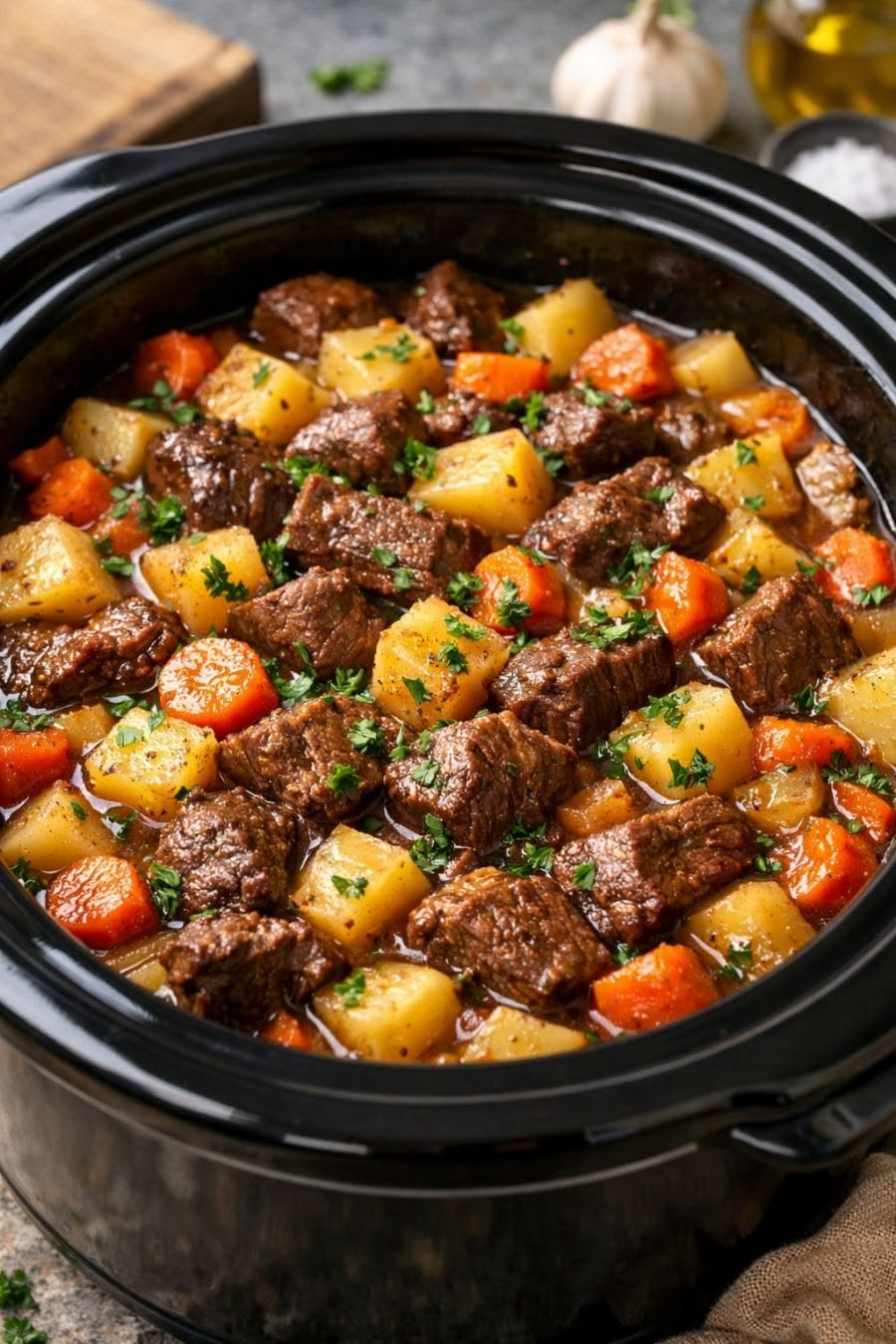
There is something special about a warm bowl of homemade beef stew, especially when the beef is tender, the potatoes are soft, and the carrots soak up all that delicious, savory broth. This Slow Cooker Beef Stew with Potatoes and Carrots is the kind of comforting meal that makes an ordinary dinner feel extra special.
I usually love recipes that don’t require me to spend hours in the kitchen, and slow cooker meals are perfect for that. You simply prepare the ingredients, let everything cook slowly, and enjoy a delicious homemade dinner later. Honestly, the smell of beef, garlic, herbs, and vegetables cooking together is enough to make everyone hungry before dinner is even ready!
What makes this recipe so wonderful is its simplicity. Tender beef chuck, chunky potatoes, sweet carrots, and a flavorful broth come together to create a classic comfort food dish. Whether you’re preparing dinner for your family on a busy weekday or looking for something cozy on a chilly evening, this easy crockpot beef stew is a recipe worth keeping.
Serve it with warm bread, biscuits, or a simple side salad for a satisfying meal everyone can enjoy.
Ingredients for Slow Cooker Beef Stew
You don’t need complicated ingredients to make a delicious beef stew. Most of these items are pantry staples or easy to find at your local grocery store.
- 2 pounds beef chuck: Cut into bite-sized cubes for tender, flavorful meat.
- 1½ pounds potatoes: Yukon Gold or red potatoes work well because they hold their shape during slow cooking.
- 4 medium carrots: Peeled and cut into thick slices.
- 1 medium yellow onion: Chopped to add sweetness and depth.
- 3 cloves garlic: Minced for extra flavor.
- 3 cups beef broth: Provides the savory base for the stew.
- 2 tablespoons tomato paste: Adds richness and a deeper flavor.
- 2 tablespoons olive oil: For browning the beef.
- 2 tablespoons all-purpose flour: Optional, for thickening the gravy.
- 1 teaspoon dried thyme: Adds an earthy, savory note.
- 1 teaspoon dried rosemary: Gives the stew a comforting herbal aroma.
- 1 teaspoon Worcestershire sauce: Adds extra savory flavor.
- 2 bay leaves: For additional depth.
- 1 teaspoon salt: Adjust according to the broth you use.
- ½ teaspoon black pepper: For gentle warmth.
- 2 tablespoons fresh parsley: Chopped, for garnish.
How to Make Slow Cooker Beef Stew
Step 1: Prepare the Beef
Cut the beef chuck into roughly 1½-inch cubes and pat the pieces dry with paper towels. Season them with salt and black pepper.
Heat olive oil in a large skillet over medium-high heat. Add the beef in batches and brown it on several sides. Avoid overcrowding the pan because the beef needs enough space to brown instead of steam.
I usually take a few extra minutes for this step because browning adds a richer, more savory flavor to the finished stew. You can skip it when you’re short on time, but honestly, it’s worth the extra effort.
Step 2: Chop the Vegetables
Peel the carrots and cut them into thick slices. Wash and chop the potatoes into large chunks, then chop the onion and mince the garlic.
Try to keep the vegetable pieces relatively uniform in size. Larger potato chunks are especially helpful because they are less likely to fall apart during several hours of cooking.
Step 3: Add Everything to the Slow Cooker
Place the potatoes, carrots, and chopped onion in the bottom of your slow cooker. Arrange the browned beef over the vegetables and add the minced garlic.
In a separate bowl, whisk together the beef broth, tomato paste, Worcestershire sauce, thyme, and rosemary until combined.
Pour the mixture over the beef and vegetables, then add the bay leaves. The broth doesn’t need to cover every ingredient completely because slow cookers retain moisture during cooking.
Step 4: Cook Until the Beef Is Tender
Cover the slow cooker with its lid and cook according to your appliance’s instructions:
- LOW: Approximately 7–8 hours.
- HIGH: Approximately 4–5 hours.
Cooking times can vary depending on the slow cooker, the size of the beef pieces, and the cut of meat.
Try not to lift the lid too frequently because heat escapes each time you open it. The stew is ready when the beef is fork-tender and the vegetables are cooked through.
If the beef still feels chewy, allow it to cook longer. Beef chuck often needs sufficient time for its connective tissue to soften properly.
Step 5: Thicken the Gravy
If you prefer a thicker, richer gravy, mix 2 tablespoons of flour with 3 tablespoons of cold water in a small bowl until smooth.
Stir the mixture into the hot stew, cover, and cook on HIGH for another 15–20 minutes, stirring gently if necessary.
For a gluten-free alternative, mix 1 tablespoon of cornstarch with 1 tablespoon of cold water and stir it into the stew. Allow several minutes for the gravy to thicken.
Remove the bay leaves and taste the broth. Add more salt or black pepper if needed.
Step 6: Garnish and Serve
Sprinkle freshly chopped parsley over the finished stew just before serving.
Ladle the beef, potatoes, carrots, and rich gravy into bowls while everything is hot. Make sure each serving has a generous amount of tender beef and vegetables.
I would serve this stew with crusty bread or warm dinner rolls. Trust me, the bread is perfect for soaking up every last bit of that delicious gravy!
Cooking Tips and Tricks for the Best Beef Stew
A few simple techniques can make a big difference in the flavor and texture of your slow cooker beef stew.
1. Choose the Right Cut of Beef
Beef chuck is an excellent choice because it becomes tender and flavorful during slow cooking. Its connective tissue gradually softens, helping create that classic, melt-in-your-mouth texture.
Avoid very lean cuts if you want a traditional, hearty stew.
2. Brown the Beef Before Slow Cooking
Browning creates a delicious crust and adds extra depth to the stew. Work in small batches and let the skillet get hot before adding the meat.
If browned bits remain in the pan, you can add a little broth and scrape them up to capture even more flavor.
3. Cut the Vegetables Into Large Pieces
Potatoes and carrots should be cut into reasonably large, even pieces. Small pieces can become mushy during a long cooking period.
Yukon Gold and red potatoes are particularly good options because they generally hold their shape well.
4. Don’t Add Too Much Liquid
Slow cookers trap moisture, so you usually need less liquid than you would for a stovetop stew. Start with the recommended amount of beef broth and avoid adding extra water unless necessary.
Too much liquid can make the finished stew taste diluted.
5. Thicken the Stew at the End
If your gravy looks thin, don’t worry. You can thicken it near the end of cooking with a flour slurry or cornstarch slurry.
Always mix the thickener with cold water first to prevent lumps from forming.
6. Season Carefully
Beef broth and Worcestershire sauce can already contain salt. Season the beef before browning, then taste the finished stew before adding more.
I usually prefer to adjust the seasoning at the end because the broth’s flavor becomes more concentrated as the stew cooks.
7. Let the Beef Cook Long Enough
One of the most common mistakes is stopping the cooking process too early. If the beef is still tough, it may need more time rather than less.
Check the meat with a fork. Properly cooked beef chuck should be tender enough to break apart easily.
8. Make It Ahead for Even Better Flavor
This stew is an excellent make-ahead meal. The flavors can develop further overnight, making leftovers especially enjoyable the next day.
Refrigerate leftovers promptly in airtight containers and reheat them thoroughly before serving.
What to Serve With Slow Cooker Beef Stew
This beef stew is filling on its own, but pairing it with a simple side dish makes dinner even more enjoyable.
Crusty bread: A classic choice for soaking up the rich gravy.
Buttered dinner rolls: Soft, fluffy rolls complement the tender beef and vegetables.
Creamy mashed potatoes: A comforting option if you want an extra-hearty meal, although the stew already contains potatoes.
Fresh green salad: A crisp salad with a light dressing balances the richness of the stew.
Steamed green beans: These add a fresh vegetable side without much preparation.
Rice or egg noodles: Serve the stew over either for a slightly different take on the traditional recipe.
For a relaxed family dinner, I would choose crusty bread and a fresh green salad. The combination is simple, satisfying, and doesn’t require much extra work.
Family Dinner Experience
This recipe has all the qualities of a classic family meal: familiar ingredients, a rich aroma, tender meat, and plenty of vegetables.
If I were serving this for a family gathering, I would place the slow cooker on the table and let everyone help themselves. The colorful carrots, golden potatoes, and savory beef make the dish look inviting without requiring an elaborate presentation.
It’s also easy to adapt. Some people prefer extra carrots, while others enjoy a thicker gravy or a little more black pepper. You can adjust the recipe to suit your family’s tastes.
The result is a comforting dinner that works well for busy weekdays, relaxed weekends, and chilly evenings.
Serving suggestion: These are general recipe and entertaining ideas rather than a claim of personally verified cooking results or actual family feedback.
Nutrition Information
The following nutrition values are approximate estimates per serving, assuming the recipe makes six servings and includes the listed ingredients.
| Nutrient | Approximate Amount |
|---|---|
| Calories | 490 kcal |
| Protein | 38 g |
| Fat | 21 g |
| Carbohydrates | 35 g |
| Fiber | 5 g |
| Sugar | 5 g |
| Sodium | 650–900 mg |
Actual values will depend on the cut of beef, how much fat is trimmed, the type of broth, and the portion size. Using low-sodium beef broth may help reduce the sodium content.
How to Store and Reheat Leftovers
Refrigerator: Transfer leftovers to airtight containers and refrigerate within two hours. Enjoy within 3–4 days.
Freezer: Freeze the cooled stew in freezer-safe containers for approximately 2–3 months for best quality. Leave a little room at the top for expansion.
Stovetop reheating: Warm the stew over medium-low heat, stirring occasionally until heated throughout. Add a splash of broth or water if the gravy has become too thick.
Microwave reheating: Place an individual portion in a microwave-safe bowl, cover loosely, and heat in intervals, stirring between each interval.
Potatoes may soften slightly after freezing and thawing, but the stew will still make a delicious leftover meal.
Frequently Asked Questions
1. Can I put raw beef directly into the slow cooker?
Yes. Browning is optional, so you can add raw beef directly to the slow cooker with the vegetables and broth. Browning first, however, adds a deeper roasted flavor and improves the color of the finished stew.
2. Why is my slow cooker beef still tough?
Beef chuck needs enough time for its connective tissue to soften. If the meat is still chewy, continue cooking and check it again later. Tough beef doesn’t necessarily mean it has been overcooked.
3. How do I keep the potatoes from getting mushy?
Cut potatoes into larger chunks and choose varieties that hold their shape, such as Yukon Gold or red potatoes. Also, avoid cooking the stew longer than necessary once the meat and vegetables are tender.
4. Can I make this beef stew without flour?
Absolutely! You can omit the flour entirely for a thinner broth or use a cornstarch slurry to thicken the stew. If you need the recipe to be gluten-free, check the labels on your broth and Worcestershire sauce as well.
5. Can I prepare this recipe the night before?
Yes. You can chop the vegetables and measure the seasonings ahead of time. Store prepared ingredients in the refrigerator and assemble the stew when you’re ready to cook. Do not leave raw beef and vegetables sitting at room temperature overnight.
6. Can I cook beef stew on HIGH instead of LOW?
Yes. Cooking on HIGH for approximately 4–5 hours is a convenient alternative to cooking on LOW for 7–8 hours. However, cooking times vary by appliance, and the most important sign of doneness is fork-tender beef and fully cooked vegetables.
Conclusion
This Slow Cooker Beef Stew with Potatoes and Carrots is a wonderful recipe for anyone who loves hearty, homemade comfort food. Tender beef, chunky vegetables, and savory gravy come together in a meal that’s satisfying without requiring hours of active cooking.
I usually recommend taking the time to brown the beef, cutting the vegetables into generous chunks, and allowing everything to cook until tender. Honestly, those simple details can make a big difference.