
Easy Air Fryer Poached Eggs on Toast

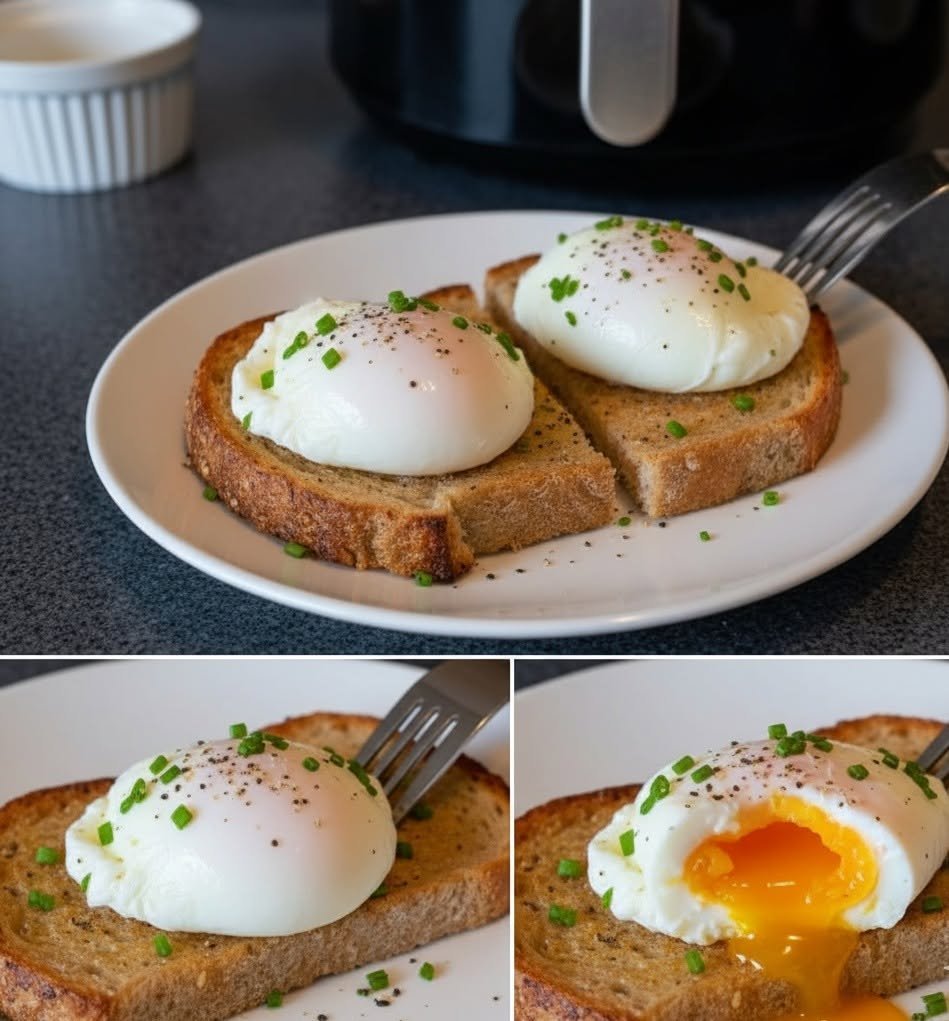
There is something incredibly satisfying about cutting into a perfectly cooked egg and watching that beautiful golden yolk slowly run over a slice of crispy toast. Honestly, it’s one of my favorite ways to start the morning!
I usually make poached eggs on toast when I want something simple, filling, and delicious without spending too much time in the kitchen. It’s a classic breakfast that feels a little fancy but requires just a few everyday ingredients.
What makes this recipe special is the combination of crispy, golden-brown bread and soft, delicate poached eggs. A little freshly ground black pepper and chopped chives add the perfect finishing touch.
And the best part? You don’t need complicated ingredients or professional cooking skills to make it.
Whether you’re preparing a quick weekday breakfast, a lazy weekend brunch, or a light lunch, these easy poached eggs on toast are always a wonderful choice.
Let’s make this simple breakfast together!
Ingredients You’ll Need
Here are the simple ingredients needed to prepare two delicious servings.
- 2 large fresh eggs: Fresh eggs are best for achieving neat, tender poached whites.
- 2 slices whole wheat bread: Sourdough or white bread also works beautifully.
- 1 teaspoon white vinegar: Optional, but helpful when poaching eggs in water.
- 1 teaspoon butter: For spreading on the toast.
- Salt: To taste.
- Freshly ground black pepper: For seasoning.
- 1 tablespoon fresh chives: Finely chopped for garnish.
Optional additions:
- A few slices of avocado.
- A sprinkle of paprika or chili flakes.
- A little grated Parmesan cheese.
- A handful of fresh spinach.
Step-by-Step Instructions
Step 1: Prepare the Bread
Start by toasting your bread slices until they become golden brown and crispy.
You can use a regular toaster, a skillet, or an oven.
I usually prefer whole wheat or sourdough bread because both have a lovely texture and pair wonderfully with soft eggs.
Spread a little butter over the warm toast and place the slices on a serving plate.
Step 2: Heat the Water
Fill a medium saucepan with approximately 3 inches of water.
Place it over medium heat and bring the water to a gentle simmer.
Add the white vinegar if desired.
Avoid boiling the water vigorously because strong bubbling can break apart the delicate egg whites.
Step 3: Prepare the Eggs
Crack each egg into a small individual bowl or ramekin.
This makes it much easier to slide the eggs gently into the water without breaking the yolks.
For the neatest results, use fresh eggs and avoid dropping them from a height.
Step 4: Poach the Eggs
Gently slide one egg into the simmering water.
Repeat with the second egg, leaving enough space between them.
Cook for approximately 3–4 minutes for a soft white and beautifully runny yolk.
If you prefer firmer yolks, cook for another 1–2 minutes.
Use a slotted spoon to carefully lift each egg out of the water.
Allow excess water to drain before serving.
Step 5: Assemble the Toast
Place one poached egg on top of each slice of buttered toast.
Arrange them gently so the eggs sit nicely in the center.
Season with a little salt and freshly ground black pepper.
Step 6: Add Fresh Garnishes
Sprinkle chopped fresh chives over the eggs.
You can also add a little paprika, chili flakes, or grated Parmesan for extra flavor.
And that’s it! Your delicious homemade poached eggs on toast are ready to enjoy.
Serve immediately while the toast is crispy and the egg yolks are warm and runny.
Cooking Tips for Perfect Poached Eggs
Making restaurant-style poached eggs at home is easier than you might think. Here are a few tricks I usually follow.
1. Always use fresh eggs: Fresh eggs have firmer whites, which helps them hold their shape while cooking.
2. Keep the water at a gentle simmer: Avoid a rolling boil because it can cause the egg whites to spread and become uneven.
3. Use small bowls: Cracking eggs into individual bowls first makes transferring them into the water much easier.
4. Add a little vinegar: A teaspoon of white vinegar can help the egg whites set more quickly. Don’t worry, the flavor is barely noticeable when used in moderation.
5. Don’t overcook: For a lovely runny yolk, 3–4 minutes is usually a good starting point.
6. Drain the eggs properly: Use a slotted spoon and briefly rest the eggs on a paper towel to remove excess water before placing them on toast.
7. Toast the bread just before serving: This keeps the bread crisp instead of allowing it to become soggy underneath the eggs.
Serving Suggestions
These poached eggs on toast are delicious on their own, but you can easily turn them into a more filling breakfast.
Here are some tasty serving ideas:
- Avocado toast: Add mashed avocado underneath the poached egg for a creamy, nutritious combination.
- Fresh salad: Serve with cherry tomatoes, cucumber, and leafy greens.
- Sautéed mushrooms: Add buttery garlic mushrooms for extra flavor.
- Smoked salmon: A few slices of smoked salmon make this breakfast feel like something from a café.
- Roasted vegetables: Serve alongside roasted tomatoes, spinach, or asparagus.
- Breakfast platter: Add fresh fruit, yogurt, and a cup of coffee or tea.
For a little extra indulgence, drizzle a small amount of hollandaise sauce over the eggs.
Storage and Make-Ahead Tips
Poached eggs taste best when freshly prepared, especially if you enjoy a runny yolk.
However, you can prepare a few things ahead of time.
Make ahead: Poached eggs can be cooked in advance and stored in a bowl of cold water in the refrigerator for up to 2 days.
Reheating: Gently warm refrigerated poached eggs in hot water for approximately 30–60 seconds, checking that they are heated through.
Toast: Always prepare the toast fresh. Storing toasted bread with the eggs will make it soggy.
For the best texture and flavor, I recommend assembling everything just before serving.
Nutrition Information (Approximate)
The following nutrition information is estimated for one serving consisting of one large egg and one slice of whole wheat toast, with a small amount of butter.
| Nutrient | Amount |
|---|---|
| Calories | 190 kcal |
| Protein | 10 g |
| Carbohydrates | 17 g |
| Fat | 9 g |
| Saturated Fat | 3 g |
| Fiber | 3 g |
| Sugar | 2 g |
| Sodium | 280 mg |
| Cholesterol | 190 mg |
Nutrition values are estimates and will vary depending on the bread, butter, and egg sizes used. Additional toppings will change the nutritional values.
Frequently Asked Questions (FAQs)
1. How long does it take to poach an egg?
For a soft egg white and runny yolk, cook the egg for approximately 3–4 minutes in gently simmering water. If you prefer a firmer yolk, cook for 5–6 minutes.
2. Why do my poached eggs fall apart in water?
This usually happens when the eggs aren’t fresh or the water is boiling too vigorously. Use fresh eggs, lower the heat to a gentle simmer, and slide each egg carefully into the water.
3. Do I really need vinegar to poach eggs?
No, vinegar is optional. However, adding a teaspoon to the poaching water can help the egg whites set more quickly and stay together.
4. Can I make poached eggs without a special poaching pan?
Absolutely! A regular saucepan, fresh eggs, water, and a slotted spoon are all you need. You don’t need any special equipment to make delicious poached eggs at home.
5. What is the best bread for poached eggs on toast?
Whole wheat, sourdough, multigrain, and white bread are all excellent options. I personally love sourdough because its slightly tangy flavor pairs beautifully with creamy egg yolks.