
Blueberry Sourdough Bread Recipe

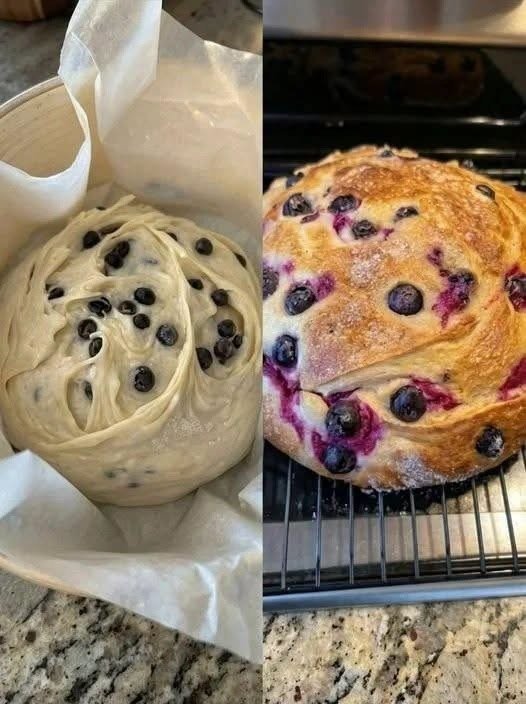
There is something so satisfying about baking a beautiful loaf of homemade sourdough bread, especially when it’s filled with juicy blueberries! This blueberry sourdough bread has quickly become one of those recipes that makes the whole kitchen smell amazing.
I love how the blueberries add little pockets of sweetness throughout the bread while the sourdough gives it that classic tangy flavor. And honestly, the best part is cutting into a freshly baked loaf and seeing those beautiful purple-blue blueberry swirls inside.
The outside bakes up golden, slightly crispy, and beautifully rustic, while the inside stays soft, chewy, and tender. It’s delicious with a little butter, toasted for breakfast, or even enjoyed on its own with a cup of coffee.
If you’ve made traditional sourdough bread before, you’ll find this recipe quite familiar. We’re simply adding fresh blueberries to a basic sourdough dough to create something a little more special.
Let’s get baking!
Why You’ll Love This Blueberry Sourdough Bread
- Naturally delicious: Made with an active sourdough starter instead of commercial yeast.
- Beautiful appearance: Fresh blueberries create gorgeous purple streaks throughout the loaf.
- Perfect texture: A crispy golden crust with a soft, chewy interior.
- Not overly sweet: The natural sweetness of blueberries balances the tanginess of sourdough.
- Versatile: Enjoy it for breakfast, brunch, an afternoon snack, or dessert.
- Homemade goodness: Simple ingredients come together to make an impressive artisan-style loaf.
Ingredients You’ll Need
You only need a handful of basic ingredients to make this homemade blueberry sourdough bread.
Ingredients
- 500g bread flour (approximately 4 cups)
- 350g water (approximately 1 ½ cups)
- 100g active sourdough starter (approximately ½ cup)
- 10g salt (approximately 1 ¾ teaspoons)
- 150g fresh blueberries (approximately 1 cup)
- 1–2 tablespoons honey or sugar (optional, for a slightly sweeter loaf)
A quick note about blueberries: Fresh blueberries work especially well because they hold their shape during folding. Frozen blueberries can also be used, but keep them frozen until you’re ready to incorporate them.
How to Make Blueberry Sourdough Bread
Don’t let the beautiful artisan appearance fool you. Making this bread is easier than it looks! The key is giving the dough enough time to ferment and handling the blueberries gently.
Step 1: Mix the Dough
In a large mixing bowl, combine the bread flour and water. Mix until no dry flour remains.
Cover the bowl and let the dough rest for about 30–45 minutes. This resting period helps hydrate the flour and makes the dough easier to work with.
Next, add the active sourdough starter and salt. If you’re using honey or sugar, add it now as well.
Mix everything until the ingredients are fully incorporated. The dough will feel sticky, and that’s completely normal.
Step 2: Begin Stretching and Folding
Cover the bowl and let the dough rest for about 30 minutes.
With slightly wet hands, grab one side of the dough, gently stretch it upward, and fold it toward the center.
Rotate the bowl and repeat on all four sides.
This is called a stretch-and-fold technique, and it helps build the gluten structure without needing to knead the dough traditionally.
Repeat this process every 30 minutes for approximately 2 hours, completing 4 sets of stretch and folds.
Step 3: Add the Blueberries
Now comes my favorite part!
After the first couple of folds, gently spread the dough out on a lightly dampened surface.
Scatter the blueberries evenly over the dough. Fold the dough over itself to help distribute the berries throughout.
I usually work gently at this stage because blueberries can burst easily, especially when they’re very ripe.
Some blueberries may release a little juice, creating beautiful purple streaks in the dough. That’s perfectly fine!
Return the dough to the bowl and continue with the remaining folds.
Step 4: Let the Dough Rise
Cover the bowl and allow the dough to rise at room temperature.
This bulk fermentation stage usually takes around 4–6 hours, depending on your kitchen temperature and the strength of your sourdough starter.
Instead of watching the clock alone, look for these signs:
- The dough should increase in volume by approximately 50–75%.
- It should look slightly domed and bubbly.
- It should feel lighter and more airy.
- You should notice some bubbles along the sides of the bowl.
Avoid letting the dough overproof, as the blueberries can make the dough more delicate.
Step 5: Shape the Bread
Lightly flour your work surface and gently transfer the dough onto it.
Shape the dough into a round loaf by folding the edges toward the center.
Turn it over so the smooth side faces upward. Using your hands or a dough scraper, gently pull the dough toward yourself to create surface tension.
Be careful not to press too hard because you want to preserve as much of the air inside as possible.
Place the shaped dough seam-side up into a floured banneton or a bowl lined with a clean, well-floured kitchen towel.
Step 6: Refrigerate Overnight
Cover the dough and place it in the refrigerator for approximately 8–12 hours.
This cold fermentation develops the sourdough flavor and makes the dough easier to score before baking.
I usually prepare the dough in the evening and bake it the following morning. It’s a convenient way to enjoy freshly baked bread without doing everything in one day.
Step 7: Bake the Blueberry Sourdough Bread
Preheat your oven to 230°C (450°F) with a Dutch oven inside for approximately 30–45 minutes.
Carefully remove the dough from the refrigerator and turn it onto a piece of parchment paper.
Score the top with a sharp bread lame or knife.
Carefully transfer the dough into the preheated Dutch oven.
Cover and bake for 20 minutes.
Remove the lid and continue baking for another 20–25 minutes, or until the crust becomes deeply golden brown.
The blueberries may create a few darker spots on the crust, which is perfectly normal.
Step 8: Cool Before Slicing
Once baked, remove the bread from the Dutch oven and place it on a wire cooling rack.
Allow it to cool for at least 2 hours before slicing.
Honestly, this is probably the hardest part of the recipe because the bread smells so good!
However, allowing it to cool helps the inside finish setting and prevents a gummy texture.
Once cooled, slice it and enjoy!
Helpful Tips for the Best Blueberry Sourdough Bread
A few small details can make a big difference when making this recipe.
1. Use an Active Sourdough Starter
Your starter should be bubbly, active, and recently fed. Ideally, use it when it reaches its peak or just before it begins to fall.
An active starter helps the dough rise properly and gives the bread its lovely texture.
2. Choose Firm Blueberries
I recommend using fresh, firm blueberries rather than very soft or overripe ones.
They are easier to incorporate into the dough and are less likely to burst during folding.
3. Don’t Add Too Many Blueberries
It’s tempting to add extra blueberries, but too many can make the dough difficult to handle and affect its structure.
Around 150g per 500g of flour is a good starting point.
4. Handle the Dough Gently
Blueberry sourdough dough can become sticky and delicate.
Use wet hands when stretching and folding, and avoid aggressively kneading the dough after adding the fruit.
5. Watch the Dough, Not Just the Clock
Fermentation times depend on room temperature, starter strength, and flour.
A warm kitchen will speed things up, while a cooler kitchen may require additional time.
6. Don’t Skip the Cooling Time
Cutting into hot sourdough can make the crumb appear gummy. Letting the loaf cool completely gives you a much better texture.
How to Serve Blueberry Sourdough Bread
One of my favorite things about this bread is how many ways you can enjoy it!
Here are a few delicious serving ideas:
- With butter: Spread a little salted butter over a warm slice for a simple treat.
- With cream cheese: The creamy, slightly tangy flavor pairs beautifully with blueberries.
- As French toast: Use thick slices to make delicious blueberry sourdough French toast.
- With honey: Drizzle a little honey over toasted bread for extra sweetness.
- With breakfast: Serve alongside scrambled eggs, yogurt, or fresh fruit.
- As a dessert: Add a little whipped cream and extra fresh blueberries.
You can also toast a slice and add almond butter for a quick and satisfying snack.
How to Store Blueberry Sourdough Bread
At room temperature: Store the completely cooled loaf in a bread bag or wrapped in a clean kitchen towel for approximately 2 days.
In the refrigerator: You can refrigerate it in an airtight container for up to 5 days, although refrigeration may dry out the bread.
In the freezer: Slice the bread and freeze it in a freezer-safe bag for up to 2–3 months.
For the best results, freeze individual slices so you can easily take out exactly what you need.
To enjoy frozen slices, pop them directly into the toaster or allow them to thaw at room temperature.
Approximate Nutrition Information
The following nutrition information is an estimate based on 12 slices per loaf and the ingredients listed above.
| Nutrient | Amount per serving |
|---|---|
| Calories | 190 kcal |
| Carbohydrates | 39g |
| Protein | 6g |
| Fat | 1g |
| Fiber | 2g |
| Sugar | 3g |
| Sodium | 325mg |
Actual nutritional values will vary depending on the flour, blueberries, optional sweetener, and slice size.
Frequently Asked Questions
1. Can I use frozen blueberries instead of fresh blueberries?
Yes! Frozen blueberries work well in this recipe. I recommend adding them directly from the freezer without thawing.
Thawed blueberries release more liquid and can make the dough extra wet and sticky. Keep in mind that frozen berries may create more purple streaks throughout your bread.
2. Why is my blueberry sourdough bread gummy inside?
There are several possible reasons. The bread may have been underbaked, sliced before it cooled completely, or overhydrated.
Make sure the loaf is baked thoroughly and allow it to cool for at least 2 hours before slicing.
3. Can I make blueberry sourdough bread without a Dutch oven?
Absolutely! A Dutch oven helps trap steam, creating a beautiful crust, but it’s not essential.
You can bake the loaf on a preheated baking stone or heavy baking sheet. Place a separate oven-safe pan with hot water in the oven during the initial baking period to create steam. Follow appropriate precautions when handling hot water and steam.
4. Can I add lemon zest to blueberry sourdough bread?
Yes, and it’s a delicious addition!
I recommend adding 1–2 teaspoons of freshly grated lemon zest to the dough. Lemon complements the blueberries beautifully and gives the bread a fresh, bright flavor.
5. How do I know when my sourdough bread is fully baked?
The crust should be a deep golden brown, and the loaf should sound hollow when tapped on the bottom.
For a more reliable check, the internal temperature should generally reach approximately 96–99°C (205–210°F).