
Creamy Garlic Seafood Skillet Recipe

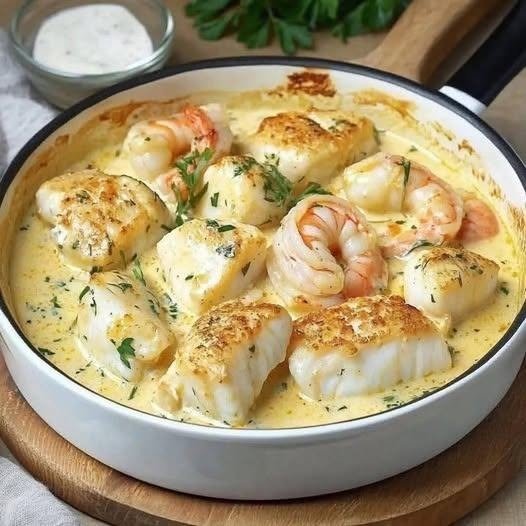
If you’re looking for a seafood dinner that feels like something you’d order at a restaurant but is easy enough to make at home, this creamy garlic seafood skillet is one to try. It combines tender white fish, juicy shrimp, and a rich, buttery garlic cream sauce in one beautiful pan. Finish it with fresh parsley, a little black pepper, and a squeeze of lemon, and you’ve got a meal that feels special without requiring hours in the kitchen.
Honestly, I love recipes like this because they look impressive but don’t need complicated ingredients. Sometimes, when I want to prepare something a little different for dinner, I reach for shrimp and white fish. They cook quickly, absorb the flavor of the sauce beautifully, and pair perfectly with garlic, butter, and cream.
The sauce is the real star here. It’s smooth, savory, and creamy, with just enough garlic to make every bite flavorful without overpowering the delicate seafood. And the best part? Everything comes together in one skillet, which means less washing up afterward!
Whether you’re planning a cozy family dinner, a weekend meal, or a special dinner for guests, this creamy garlic shrimp and fish recipe is a delicious option.
Why You’ll Love This Creamy Garlic Seafood Skillet
- Ready in about 30 minutes: Perfect for busy evenings when you want something satisfying without spending hours cooking.
- One-pan convenience: Cook the seafood and prepare the sauce in the same skillet.
- Rich and creamy: Butter, garlic, cream, and Parmesan create a flavorful sauce.
- Tender, juicy seafood: Shrimp and white fish cook quickly and pair beautifully together.
- Easy to customize: Add spinach, mushrooms, cherry tomatoes, or your favorite herbs.
- Great for special occasions: It looks elegant enough for entertaining but is simple enough for an ordinary weeknight.
Recipe Details
- Prep time: 10 minutes
- Cook time: 20 minutes
- Total time: 30 minutes
- Servings: 4
- Cuisine: Seafood-inspired
- Cooking method: Stovetop
- Difficulty: Easy
Ingredients for Creamy Garlic Seafood Skillet
These ingredients create a rich, flavorful sauce without making the dish overly complicated. I usually recommend fresh seafood when available, but good-quality frozen seafood works well too.
For the Seafood
- 450 g white fish fillets, such as cod, haddock, or tilapia
- 300 g large shrimp, peeled and deveined
- 1/2 teaspoon salt, or to taste
- 1/2 teaspoon freshly ground black pepper
- 1 teaspoon paprika
- 1/2 teaspoon dried Italian seasoning
- 1 tablespoon olive oil
- 1 tablespoon butter
For the Creamy Garlic Sauce
- 2 tablespoons butter
- 5–6 garlic cloves, finely minced
- 1 small shallot, finely chopped (optional)
- 1 cup (240 ml) heavy cream
- 1/2 cup (120 ml) seafood stock or low-sodium chicken broth
- 1/3 cup (about 30 g) freshly grated Parmesan cheese
- 1 teaspoon Dijon mustard (optional)
- 1 tablespoon fresh lemon juice
- 1/2 teaspoon Italian seasoning
- Salt and black pepper, to taste
- A pinch of chili flakes, optional
For Garnishing
- 2 tablespoons freshly chopped parsley
- Lemon wedges
- A little extra grated Parmesan
- Freshly cracked black pepper
Ingredient tip: If you prefer a lighter sauce, you can replace some of the heavy cream with whole milk. Just remember that the sauce will be thinner and may need a little extra simmering. Avoid boiling it aggressively.
How to Make Creamy Garlic Seafood Skillet
Follow these simple steps to make tender shrimp and flaky fish in a silky garlic cream sauce.
Step 1: Prepare the Seafood
Pat the fish fillets and shrimp dry with paper towels. Removing excess moisture helps the seafood brown instead of steam.
Cut the fish into large, even-sized pieces so they cook at a similar rate.
Season the fish and shrimp with salt, black pepper, paprika, and Italian seasoning.
I usually keep the seasoning simple because the garlic cream sauce already has plenty of flavor. You want to taste the seafood, not cover it up with too many spices.
Step 2: Sear the Fish
Heat a large skillet over medium-high heat. Add the olive oil and one tablespoon of butter.
Once the butter has melted and the pan is hot, add the fish pieces in a single layer. Avoid overcrowding the skillet.
Sear the fish for approximately 2–3 minutes per side, depending on thickness. You’re looking for a lightly golden surface, not necessarily fully cooked fish at this stage.
Transfer the fish carefully to a plate.
My tip: White fish can break apart easily, so use a thin spatula and turn each piece gently. Don’t worry if the centers aren’t fully cooked yet; they’ll finish cooking in the sauce.
Step 3: Cook the Shrimp
Add the shrimp to the same skillet. If the pan looks dry, add a small amount of butter or olive oil.
Cook the shrimp for approximately 1–2 minutes per side, just until they turn pink and opaque.
Transfer them to the plate with the fish.
Try not to overcook the shrimp at this stage. They’ll return to the skillet later, and a little extra cooking can quickly make them rubbery.
Step 4: Sauté the Garlic
Reduce the heat to medium and add two tablespoons of butter to the skillet.
If using shallot, add it now and cook for 1–2 minutes until softened.
Add the minced garlic and stir for about 30–45 seconds, just until fragrant.
Don’t let the garlic turn dark brown, as burnt garlic can make the sauce taste bitter.
At this point, the kitchen should smell wonderful. Honestly, garlic and butter are such a simple combination, but they make the whole dish feel special.
Step 5: Make the Creamy Garlic Sauce
Pour the seafood stock or chicken broth into the skillet. Use a wooden spoon to scrape up the flavorful browned bits from the bottom of the pan.
Let the broth simmer for 1–2 minutes.
Add the heavy cream, Italian seasoning, Dijon mustard if using, and chili flakes if you like a little heat.
Stir gently and allow the sauce to simmer over medium-low heat for approximately 3–5 minutes, until it begins to thicken slightly.
Stir in the freshly grated Parmesan cheese until melted and smooth.
Finish with the lemon juice and taste the sauce. Add salt and black pepper as needed.
Important: Keep the sauce at a gentle simmer rather than a rapid boil. This helps maintain a smooth, creamy texture.
Step 6: Return the Seafood to the Skillet
Carefully return the seared fish and shrimp to the skillet.
Spoon the creamy garlic sauce over each piece so everything is coated.
Simmer gently for another 3–5 minutes, or until the fish flakes easily with a fork and the shrimp are fully cooked. The exact time depends on the thickness of the fish and how much it cooked during searing.
For food safety, fish should reach an internal temperature of 63°C (145°F), and shrimp should be opaque and firm.
Avoid stirring vigorously, as the fish may break into smaller pieces.
Step 7: Garnish and Serve
Remove the skillet from the heat.
Sprinkle freshly chopped parsley over the seafood and finish with a little extra Parmesan and freshly cracked black pepper.
Add lemon wedges on the side for anyone who wants a little extra citrus flavor.
Serve the dish while the sauce is warm and creamy. The combination of golden fish, pink shrimp, fresh herbs, and pale garlic sauce makes this skillet look just as good as it tastes.
Tips for the Best Creamy Garlic Seafood Skillet
1. Choose Firm White Fish
Cod, haddock, and tilapia all work well. Choose thick, evenly cut pieces when possible so the fish cooks consistently.
2. Pat the Seafood Dry
This small step makes a noticeable difference. Dry seafood browns more easily and adds better flavor to the finished sauce.
3. Don’t Overcook the Shrimp
Shrimp cook quickly, so remove them from the pan as soon as they turn pink and opaque. They’ll finish cooking when returned to the sauce if necessary.
4. Use Fresh Garlic
Freshly minced garlic provides the best flavor in this recipe. Garlic powder can work in a pinch, but the sauce won’t have quite the same aromatic taste.
5. Grate the Parmesan Yourself
Freshly grated Parmesan usually melts more smoothly than pre-shredded cheese, which may contain anti-caking ingredients.
6. Add Lemon at the End
Lemon juice brightens the richness of the cream and butter. Adding it near the end helps preserve its fresh flavor.
7. Keep the Heat Gentle
Cream sauces can separate if boiled too aggressively. Once the cream goes into the pan, reduce the heat and allow the sauce to thicken gradually.
8. Adjust the Sauce Consistency
If the sauce is too thick, add a splash of stock. If it’s too thin, let it simmer gently for another minute or two before returning the seafood to the pan.
Delicious Variations to Try
One thing I love about this recipe is how easy it is to adapt to your taste.
Creamy Garlic Shrimp and Salmon
Replace the white fish with salmon cut into large chunks. Sear the salmon first and adjust the cooking time based on the thickness of the pieces.
Spicy Garlic Seafood Skillet
Add extra red chili flakes or a little finely chopped fresh chili to the garlic butter. The gentle heat works beautifully with the rich cream sauce.
Creamy Seafood and Spinach
Stir in two generous handfuls of fresh baby spinach just before returning the seafood to the pan. Let it wilt into the sauce for a few minutes.
Mushroom Garlic Seafood Skillet
Sauté sliced mushrooms after removing the seafood and before adding the garlic. Let the mushrooms brown slightly to develop a deeper, savory flavor.
Lemon Herb Seafood Skillet
Add fresh dill, chives, or extra parsley for a brighter, herb-forward sauce. This variation is especially lovely with cod or haddock.
Dairy-Free Alternative
Use a suitable plant-based cooking cream and dairy-free butter alternative. The sauce will have a slightly different flavor and texture, so choose products designed for cooking.
What to Serve with Creamy Garlic Seafood
Because the sauce is rich and flavorful, I usually serve this dish with something that can soak up every last spoonful.
- Steamed rice: White rice or basmati rice makes an easy, satisfying side.
- Garlic bread: Perfect for dipping into the creamy sauce.
- Mashed potatoes: A comforting choice that pairs beautifully with the fish and shrimp.
- Pasta: Toss cooked linguine or fettuccine with extra sauce for a complete seafood pasta dinner.
- Roasted vegetables: Broccoli, asparagus, zucchini, or carrots add color and balance.
- Fresh green salad: A crisp salad with lemon vinaigrette helps cut through the richness.
- Crusty bread: Simple, rustic bread is excellent for soaking up the garlic cream sauce.
For a special dinner, I would serve this skillet with buttery mashed potatoes and roasted asparagus. For a quick weekday meal, rice and a simple salad are more than enough.
Storage and Reheating Instructions
How to Store Leftovers
Allow leftovers to cool slightly, then transfer them to an airtight container and refrigerate promptly. Use within 1–2 days for the best quality.
Because seafood is delicate, it’s best to avoid storing it for too long.
How to Reheat
Reheat gently in a covered skillet over low heat, adding a splash of stock or cream if the sauce has thickened.
Stir carefully to keep the fish pieces intact. Heat until the seafood is thoroughly hot, but avoid prolonged cooking because it can become dry or rubbery.
You can also reheat individual portions in the microwave using short intervals at reduced power, stirring the sauce gently between intervals where possible.
Can You Freeze It?
Freezing isn’t ideal for this recipe. Cooked shrimp and fish can become softer after thawing, and cream sauces may separate. For the best flavor and texture, I recommend enjoying this dish freshly made or refrigerated for a short time.
Can You Make It Ahead?
You can prepare the ingredients ahead by cleaning the seafood, chopping the garlic, measuring the seasonings, and grating the Parmesan. I recommend cooking the seafood and sauce just before serving for the best texture.
Nutrition Information
The following nutrition estimates are per serving, assuming the recipe makes four servings and is prepared with the listed ingredients.
| Nutrient | Approximate amount |
|---|---|
| Calories | 450–550 kcal |
| Protein | 35–45 g |
| Carbohydrates | 5–9 g |
| Total fat | 30–38 g |
| Saturated fat | 17–22 g |
| Fiber | 0–1 g |
| Sugar | 2–4 g |
| Sodium | 500–800 mg |
These figures are approximate and will vary depending on the type of fish, shrimp size, cream, Parmesan, broth, and amount of salt used. Rice, pasta, bread, and other sides are not included.
Frequently Asked Questions
1. What fish is best for creamy garlic seafood skillet?
Cod, haddock, and tilapia are excellent options because their mild flavor pairs well with garlic cream sauce. Cod and haddock tend to hold their shape nicely when handled carefully. You can also use salmon, although it will give the dish a richer flavor.
2. Can I use frozen shrimp and fish?
Yes! Frozen seafood works well as long as it is thawed safely and dried thoroughly before cooking. The easiest approach is to thaw it in the refrigerator overnight. Avoid leaving raw seafood at room temperature to thaw.
3. How do I thicken the creamy garlic sauce?
Let the sauce simmer gently for a few minutes to reduce. Parmesan also helps give it body. If you need more thickening, you can mix a small amount of cornstarch with cold water and stir it into the simmering sauce gradually. Avoid adding too much at once.
4. Can I make this recipe without heavy cream?
Yes. You can use a cooking cream with a lower fat content or a mixture of whole milk and a small amount of cream cheese. Keep the heat low because lower-fat dairy products can be more likely to separate. The final sauce may be less rich than the original.
5. How do I know when the shrimp and fish are cooked?
Shrimp should be opaque and pink, with firm flesh. White fish should turn opaque and flake easily with a fork. For a reliable temperature check, cook both fish and shrimp to an internal temperature of 63°C (145°F). Avoid relying on color alone when the pieces are thick.