
Easy Beef and Vegetable Stir

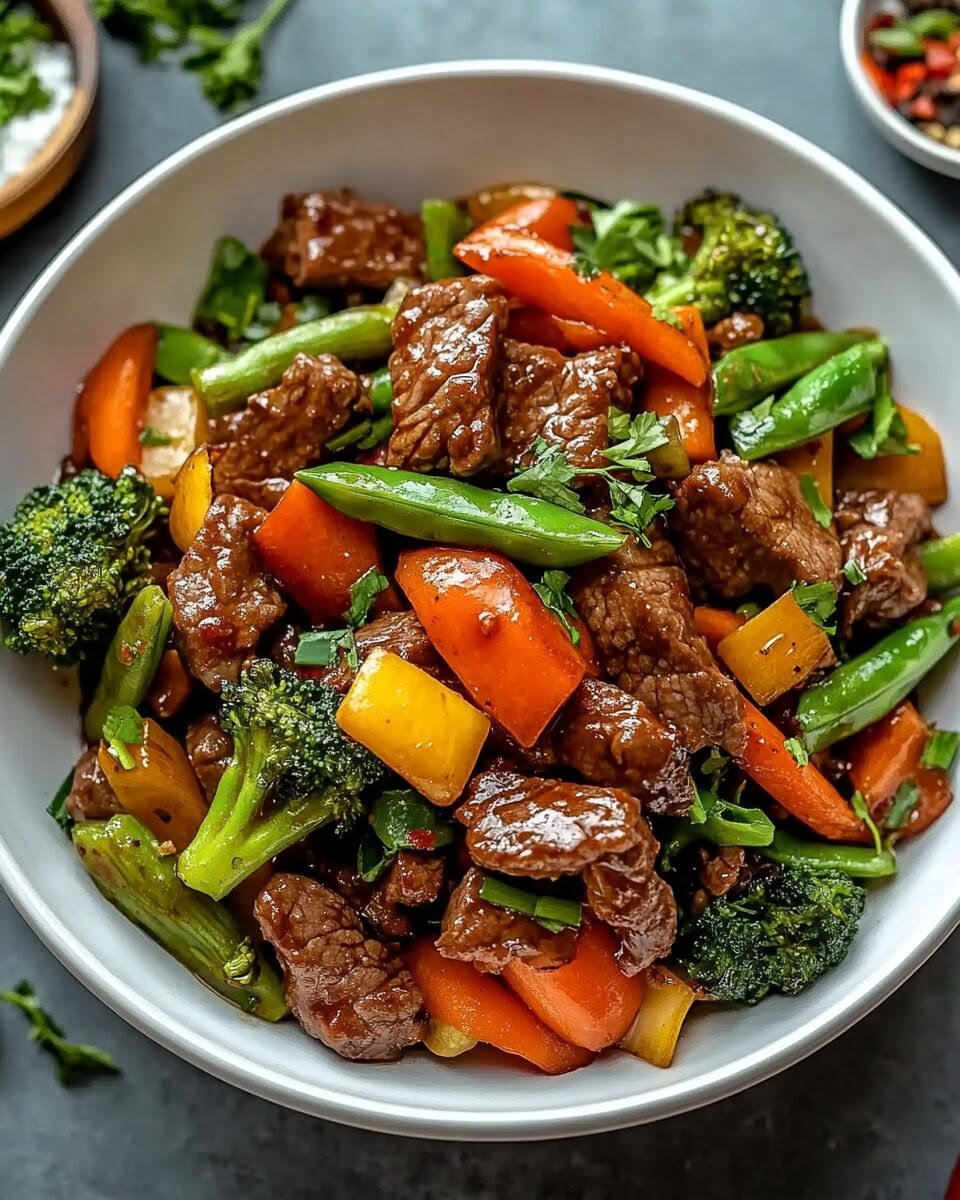
This beef and vegetable stir fry recipe is inspired by the beautiful bowl of stir-fried beef, broccoli, carrots, bell peppers, and green snap peas you see in the photo. It’s colorful, hearty, and packed with flavor, making it perfect for busy weeknights when everyone is hungry and you don’t want a pile of dishes waiting for you afterward.
I usually prepare all the vegetables before I start cooking because stir-frying happens quickly. Once the beef hits the hot pan, everything comes together in just a few minutes. The homemade sauce brings everything together with the perfect balance of salty, savory, slightly sweet, and garlicky flavors.
The best part? You can serve it over fluffy rice, noodles, or even enjoy it on its own for a lighter meal. It’s also an easy way to use up vegetables sitting in your refrigerator.
Let’s make this easy homemade beef and vegetable stir fry!
Why You’ll Love This Beef Stir Fry
- Quick and easy: This recipe takes around 30 minutes from preparation to serving.
- Better than takeout: You get fresh ingredients and a flavorful homemade sauce without needing to order food.
- Packed with vegetables: Broccoli, carrots, bell peppers, and snap peas add color, crunch, and variety.
- Easy to customize: Swap the vegetables or adjust the sauce to suit your family’s preferences.
- Perfect for meal prep: It reheats well and makes a convenient lunch for the next day.
Recipe Overview
- Prep time: 15 minutes
- Cook time: 15 minutes
- Total time: 30 minutes
- Servings: 4
- Cuisine: Asian-inspired
- Course: Main course
- Cooking method: Stir-frying
- Difficulty: Easy
Ingredients for Beef and Vegetable Stir Fry
For the Beef and Vegetables
- 1 pound (450 g) beef sirloin or flank steak, thinly sliced against the grain
- 2 cups broccoli florets
- 1 medium carrot, thinly sliced
- 1 red bell pepper, cut into strips
- 1 yellow bell pepper, cut into bite-sized pieces
- 1 cup sugar snap peas
- 1 small onion, sliced (optional)
- 3 cloves garlic, minced
- 1 teaspoon freshly grated ginger
- 2 tablespoons neutral cooking oil, such as vegetable or canola oil
- 2 green onions, sliced (optional)
- 1 tablespoon chopped fresh cilantro or parsley, for garnish (optional)
- Sesame seeds, for garnish (optional)
For the Homemade Stir Fry Sauce
- ¼ cup (60 ml) low-sodium soy sauce
- 2 tablespoons oyster sauce
- 1 tablespoon honey or brown sugar
- 1 tablespoon rice vinegar
- ½ cup (120 ml) beef broth or water
- 1 teaspoon sesame oil
- 1 tablespoon cornstarch
- ¼ teaspoon black pepper
- ¼ teaspoon red pepper flakes (optional)
A quick ingredient note: Oyster sauce adds a rich, savory flavor, while honey balances the saltiness of the soy sauce. Cornstarch helps the sauce cling to the beef and vegetables, creating that glossy finish you often see in restaurant-style stir fries.
For a gluten-free version, use certified gluten-free soy sauce or tamari and check that your oyster sauce and broth are gluten-free.
How to Make Beef and Vegetable Stir Fry
Step 1: Prepare the Beef
Start by slicing the beef into thin, bite-sized strips. I usually place the beef in the freezer for about 15–20 minutes beforehand if it’s difficult to slice neatly.
Make sure to cut against the grain. This shortens the muscle fibers and helps the beef feel more tender when you bite into it.
Pat the beef dry with paper towels. If you like, season it lightly with a little black pepper and a teaspoon of soy sauce.
Step 2: Mix the Stir Fry Sauce
In a small bowl, whisk together the soy sauce, oyster sauce, honey, rice vinegar, beef broth, sesame oil, cornstarch, black pepper, and red pepper flakes if you’re using them.
Mix until the cornstarch is fully dissolved.
I always make the sauce before turning on the stove. Honestly, it’s much easier than trying to measure ingredients while the beef is already sizzling in the pan.
Give the sauce another quick stir just before adding it to the pan because the cornstarch can settle at the bottom.
Step 3: Prepare the Vegetables
Wash and cut the broccoli, carrots, bell peppers, snap peas, and onion.
Try to keep the vegetables relatively similar in size so they cook evenly. Cut the carrots thinly because they generally take longer to soften than bell peppers and snap peas.
Keep the garlic and ginger ready in a separate small bowl. You’ll add them later to prevent them from burning.
Step 4: Sear the Beef
Heat a large wok or skillet over medium-high to high heat. Add one tablespoon of cooking oil.
Once the oil is hot, add the beef in a single layer. Work in batches if necessary rather than overcrowding the pan.
Let the beef sear briefly before stirring, then cook until nicely browned and almost cooked through. Depending on the thickness of your slices, this usually takes around 2–4 minutes per batch.
Transfer the beef to a clean plate.
My favorite tip: Don’t keep moving the beef around the pan. Giving it a little time to sear helps develop a deeper, richer flavor.
Step 5: Stir-Fry the Vegetables
Add the remaining tablespoon of oil to the same pan.
Start with the broccoli and carrots. Stir-fry for about 2–3 minutes, adding a small splash of water if the broccoli needs help steaming.
Next, add the bell peppers, snap peas, and onion. Cook for another 2–3 minutes, stirring frequently.
The vegetables should become bright in color and slightly tender while retaining some crunch. That’s what gives a great beef and vegetable stir fry its appealing texture.
Step 6: Add the Garlic and Ginger
Add the minced garlic and grated ginger to the vegetables.
Stir continuously for about 30 seconds, or until fragrant. Be careful not to let the garlic burn, as it can turn bitter.
This is the moment when the kitchen starts smelling wonderful!
Step 7: Combine the Beef and Sauce
Return the beef and any accumulated juices to the pan.
Give the prepared sauce another stir, then pour it over the beef and vegetables.
Toss everything together and cook for another 1–3 minutes, until the sauce bubbles and thickens and the beef is cooked through.
If the sauce becomes too thick, add a tablespoon or two of water or broth. If you’d prefer a thicker coating, allow it to simmer briefly while stirring.
For food safety, cook beef strips to a safe internal temperature of 145°F (63°C), followed by a three-minute rest, measured using a food thermometer. Avoid relying on color alone to determine doneness.
Step 8: Garnish and Serve
Remove the pan from the heat.
Sprinkle with sliced green onions, sesame seeds, or fresh cilantro if desired.
Serve immediately while the vegetables are still crisp and the sauce is warm and glossy.
I usually bring the entire pan to the table and let everyone serve themselves. Pair it with steamed rice or noodles for a filling dinner that feels like takeout made at home.
Tips for the Best Beef and Vegetable Stir Fry
A few small details make a big difference in the final result.
1. Choose the Right Cut of Beef
Flank steak, sirloin, and flat iron steak are all good options. They’re flavorful and work well when sliced thinly against the grain.
If you’re using a tougher cut, slicing it thinly is especially important.
2. Use a Hot Pan
Stir-frying works best over high heat. A hot pan helps brown the beef quickly and keeps the vegetables from becoming soggy.
If your pan is small, cook in batches.
3. Don’t Overcook the Vegetables
The vegetables should still have a little bite. I prefer broccoli that’s tender but not mushy and snap peas that remain bright green and crisp.
Remember that they’ll continue cooking slightly when you add the sauce.
4. Prep Everything Before Cooking
This is probably the most useful tip I can share. Slice the beef, chop the vegetables, mince the garlic, and mix the sauce before heating the pan.
Once you begin stir-frying, things move quickly.
5. Adjust the Sauce to Your Taste
For a sweeter sauce, add a little more honey. For extra tang, increase the rice vinegar slightly. If you like spicy food, add more red pepper flakes or a little chili garlic sauce.
Taste the finished sauce before adding extra salt because soy sauce and oyster sauce already contain plenty.
6. Avoid Crowding the Pan
Too much food in the pan traps steam and prevents proper browning. Cook the beef in batches and give the vegetables enough room to stir-fry.
7. Cut Vegetables to Similar Sizes
Thin carrot slices cook faster, while large broccoli florets need more time. Cutting everything into manageable pieces makes it easier to get an even texture.
Easy Variations to Try
One reason I love this recipe is how flexible it is. You can change it based on what you have at home.
- Beef and broccoli stir fry: Use extra broccoli and skip the other vegetables if you want a simpler version.
- Spicy beef stir fry: Add chili garlic sauce, sriracha, or extra red pepper flakes.
- Garlic beef stir fry: Increase the garlic to four or five cloves for a stronger garlic flavor.
- Beef and mushroom stir fry: Add sliced mushrooms for an earthy, savory flavor.
- Healthy beef stir fry: Use lean beef, plenty of vegetables, and reduced-sodium soy sauce.
- Low-carb beef stir fry: Serve it over cauliflower rice or enjoy it on its own.
- Beef noodle stir fry: Toss the cooked mixture with prepared egg noodles or rice noodles and a splash of extra sauce.
What to Serve with Beef and Vegetable Stir Fry
This dish is satisfying on its own, but the right side dish can turn it into a complete family meal.
Steamed White Rice
Fluffy jasmine rice or long-grain white rice is my usual choice. It soaks up the savory sauce and makes every bite satisfying.
Brown Rice
Brown rice adds a nuttier flavor and a slightly chewier texture. It’s a great option if you prefer whole grains.
Stir-Fried or Steamed Noodles
Serve the beef and vegetables with egg noodles, udon, or rice noodles. You can even toss everything together with the noodles for a one-pan-style meal.
Cauliflower Rice
For a lower-carbohydrate option, cauliflower rice works nicely with the rich sauce and colorful vegetables.
Simple Cucumber Salad
A fresh cucumber salad with rice vinegar and a little sesame oil adds a refreshing contrast to the warm stir fry.
Spring Rolls or Dumplings
If you’re planning a homemade takeout night, serve this beef stir fry alongside vegetable spring rolls or dumplings.
How to Store and Reheat Leftovers
If you have leftovers, don’t worry. This beef and vegetable stir fry makes a convenient lunch the next day.
Refrigeration: Transfer leftovers to an airtight container and refrigerate within two hours of cooking. Eat within 3–4 days.
Reheating on the stove: Add the stir fry to a skillet with a tablespoon of water. Warm over medium heat, stirring occasionally, until heated through.
Reheating in the microwave: Place a portion in a microwave-safe container, cover loosely, and heat in short intervals, stirring between intervals, until steaming hot.
Freezing: You can freeze the cooked stir fry in an airtight freezer-safe container for around 2–3 months for best quality. Keep in mind that the vegetables may soften after thawing.
Thaw frozen leftovers in the refrigerator before reheating. Reheat leftovers to 165°F (74°C).
Make-Ahead Instructions
You can do most of the preparation several hours in advance.
- Slice the beef and refrigerate it in a covered container.
- Wash and chop the vegetables, then store them separately.
- Mix the sauce and refrigerate it in a sealed jar or container.
- Cook everything just before serving for the best texture.
I don’t recommend fully cooking the stir fry too far ahead if you want the vegetables to remain crisp. Freshly cooked vegetables have the best texture.
Nutrition Information
The following nutrition information is an estimate for one serving of beef and vegetable stir fry, assuming the recipe makes four servings and is prepared with the ingredients listed above.
| Nutrient | Approximate amount per serving |
|---|---|
| Calories | 390 kcal |
| Protein | 34 g |
| Carbohydrates | 22 g |
| Fat | 17 g |
| Saturated fat | 4 g |
| Fiber | 5 g |
| Sugar | 11 g |
| Sodium | 850–1,100 mg |
Actual values will vary depending on the cut of beef, exact vegetable quantities, brand of sauces, and amount of oil used. Serving the stir fry with rice or noodles will increase the overall calories and carbohydrates.
To reduce sodium, choose low-sodium soy sauce, use a reduced-sodium oyster sauce if available, and select an unsalted broth.
Frequently Asked Questions
1. What is the best beef for stir fry?
Flank steak and sirloin are two of the best choices because they have good flavor and can become tender when sliced thinly against the grain. Flat iron steak is another excellent option. Avoid cutting the beef into thick chunks, as they take longer to cook and may become tougher.
2. How do I keep beef tender in a stir fry?
Start by slicing the beef thinly against the grain. Pat it dry and sear it in a hot pan without overcrowding. Cook it quickly, then return it to the pan to finish in the sauce. Overcooking is a common reason beef becomes tough.
3. Can I make beef and vegetable stir fry without oyster sauce?
Yes! You can replace oyster sauce with additional soy sauce and a little extra honey, although the flavor will be slightly different. For a vegetarian alternative, try a mushroom-based stir fry sauce. Check product labels if you need a gluten-free option.
4. What vegetables work best in beef stir fry?
Broccoli, carrots, bell peppers, snap peas, mushrooms, onions, cabbage, and zucchini all work well. Use whichever vegetables you enjoy or already have in your refrigerator. Add firmer vegetables first and softer vegetables toward the end.
5. Can I make this beef stir fry ahead of time?
Absolutely. You can prepare the beef, chop the vegetables, and mix the sauce in advance. For the best results, cook the stir fry shortly before serving. Cooked leftovers can be refrigerated for 3–4 days and reheated until steaming hot.
Final Thoughts
This easy beef and vegetable stir fry is one of those recipes that proves a homemade dinner doesn’t have to be complicated to taste amazing. With tender beef, crisp vegetables, and a rich garlic soy sauce, every bite is full of flavor.
Honestly, what I appreciate most is how easy it is to make the recipe your own. Use your favorite vegetables, adjust the sweetness or spice, and serve it with rice or noodles for a satisfying meal.
Whether you’re looking for a quick weeknight dinner, a homemade alternative to takeout, or a simple way to add more vegetables to your meals, this beef and vegetable stir fry is worth keeping in your regular dinner rotation.
Give it a try, and don’t forget to make a little extra sauce if you’re serving it over rice. That’s often the best part!