
Mediterranean Giant Muffaletta Italian Sandwich

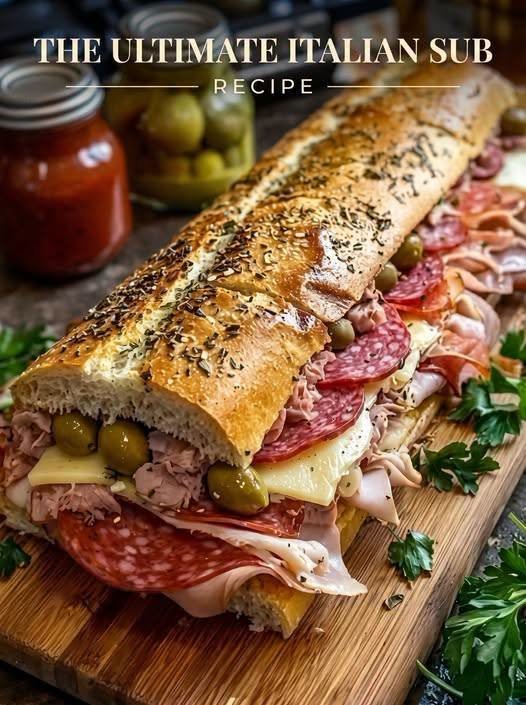
There is something incredibly satisfying about a giant Italian sandwich filled with layers of savory meats, creamy cheese, tangy olives, and fresh Mediterranean flavors. Honestly, whenever I want to make something impressive without spending hours cooking, a homemade muffaletta-style sandwich is one of my favorite choices.
This Mediterranean giant muffaletta Italian sandwich is inspired by the famous Italian-American muffuletta, traditionally associated with New Orleans. It combines a large, crusty loaf of bread with a flavorful olive spread, layers of deli meats, sliced cheese, and a few delicious Mediterranean extras.
What really makes this sandwich special is the olive tapenade. I usually make mine with a mixture of green olives, Kalamata olives, capers, sun-dried tomatoes, and roasted red peppers. The combination creates a salty, tangy, slightly sweet spread that soaks into the bread and brings every ingredient together.
The best part? You don’t need to turn on the oven for hours or prepare complicated ingredients. Most of the work involves chopping, layering, and assembling. Once everything is stacked inside the bread, you have a beautiful, generously filled sandwich that can feed a crowd.
Whether you’re planning a family picnic, a weekend lunch, a game-day gathering, or a casual dinner with friends, this giant Italian sandwich is always a crowd-pleaser.
Let’s make it!
What Is a Muffaletta Sandwich?
A muffaletta, also spelled muffuletta, is a large round sandwich traditionally made with a sesame-topped Italian loaf, olive salad, cured meats, and cheese. It originated in the Italian-American community of New Orleans and is known for its rich, savory flavor and generous layers.
This Mediterranean-inspired version keeps the spirit of the classic sandwich while adding ingredients such as sun-dried tomatoes and roasted red peppers for extra color and flavor.
Instead of using only a round loaf, you can also make this recipe with a large Italian sub roll or crusty baguette. I usually choose a wide, sturdy loaf because it holds the filling beautifully without becoming too soggy.
Recipe Overview
- Preparation time: 25 minutes
- Cooking time: None required
- Optional warming time: 5–10 minutes
- Total time: Approximately 25–35 minutes
- Servings: 6–8
- Difficulty: Easy
- Cuisine: Italian-American, Mediterranean-inspired
- Best for: Lunches, picnics, parties, and casual gatherings
Ingredients for the Mediterranean Giant Muffaletta
The recipe has three main parts: the olive tapenade, the sandwich filling, and the bread.
1. Ingredients for the olive tapenade spread
- 1 cup mixed olives, green and Kalamata, pitted
- 2 tablespoons capers, drained
- ¼ cup sun-dried tomatoes packed in oil, drained
- 2 tablespoons roasted red peppers, drained
- 2 tablespoons extra-virgin olive oil, or as needed
- 1 tablespoon red wine vinegar
- 1 small garlic clove, minced
- ½ teaspoon dried oregano
- ¼ teaspoon freshly ground black pepper
- 1 teaspoon chopped fresh parsley (optional)
A little personal tip: I usually keep the tapenade slightly chunky rather than blending it into a smooth paste. Those little pieces of olive, tomato, and pepper add texture and make every bite more interesting.
Because olives and capers are already salty, taste the mixture before adding any extra salt.
2. Ingredients for the sandwich
- 1 large round Italian loaf, approximately 25–30 cm in diameter, or 1 large crusty Italian sub loaf
- 150 g thinly sliced salami
- 150 g thinly sliced ham
- 150 g mortadella
- 150 g thinly sliced turkey breast, optional
- 200 g provolone cheese, sliced
- 100 g mozzarella cheese, sliced, optional
- ½ cup roasted red peppers, drained and sliced
- ½ cup green olives, pitted and halved, optional
- 1 small handful fresh parsley or arugula, optional
You don’t have to use every type of meat. For a more traditional muffaletta-style sandwich, I usually focus on salami, mortadella, ham, and provolone.
3. Optional finishing ingredients
- 1 tablespoon olive oil
- ½ teaspoon dried Italian seasoning
- A few fresh basil leaves
- Freshly ground black pepper
These finishing ingredients are optional, but a light drizzle of olive oil and a sprinkle of Italian seasoning can give the sandwich a lovely Mediterranean aroma.
Step-by-Step Instructions
Step 1: Prepare the olive tapenade
Start by draining the olives, capers, sun-dried tomatoes, and roasted red peppers. Removing excess liquid helps prevent the tapenade from making the bread too wet.
Roughly chop the mixed olives and sun-dried tomatoes. Chop the roasted red peppers into small pieces as well.
Place everything in a food processor along with the capers, garlic, oregano, black pepper, red wine vinegar, and olive oil.
Pulse several times until the ingredients are finely chopped but still retain some texture. Avoid processing continuously unless you prefer a smoother spread.
If you don’t have a food processor, simply chop everything by hand and mix it in a bowl.
Taste the tapenade and adjust the seasoning if necessary. You can add a little more vinegar for brightness or olive oil if the mixture seems too dry.
Cover and refrigerate for 10–15 minutes if you have time. This allows the flavors to mingle.
My tip: Making the olive tapenade a few hours ahead can make the sandwich even more flavorful. The garlic, olives, and herbs have more time to blend together.
Step 2: Prepare the bread
Place the loaf on a large cutting board.
If using a round loaf, slice it horizontally through the middle to create a top and bottom half. Keep the halves connected as neatly as possible so they are easy to reassemble.
For a large sub loaf, cut it lengthwise in the same way.
If the bread has a very thick interior, you can gently remove a little of the soft crumb from the center. Don’t remove too much, though, because the bread needs enough structure to hold the generous filling.
I usually prefer a crusty Italian loaf with a soft interior. The crust provides support, while the inside absorbs a little of the olive dressing.
If your bread is particularly soft, you can lightly toast the cut surfaces for 2–3 minutes. Let them cool before assembling.
Step 3: Spread the olive tapenade
Spoon the olive tapenade over the cut surfaces of both bread halves.
Spread it evenly from edge to edge, paying special attention to the center where the filling will be thickest.
Use a generous layer, but avoid adding so much oil that it pools inside the bread.
The bottom half acts as the foundation for the sandwich, while the tapenade on the top half adds flavor to every bite.
This olive spread is what gives the muffaletta its signature character. The combination of salty olives, tangy capers, sweet sun-dried tomatoes, and roasted peppers balances the rich deli meats beautifully.
Step 4: Add the cheese
Arrange the provolone slices over the olive spread on the bottom half of the loaf.
If you’re using mozzarella, add a few slices as well.
I usually place the cheese near the bottom because it creates a nice base for the meat layers and helps keep the bread from becoming too wet.
Provolone is an excellent choice because it has a savory, slightly sharp flavor that complements the olives and cured meats. Mozzarella provides a milder, creamier texture.
For the most even distribution, overlap the slices slightly instead of leaving large gaps.
Step 5: Layer the Italian meats
Now comes the fun part!
Begin with a layer of salami, folding or loosely arranging the slices to create a little height.
Add the mortadella next, followed by the ham and optional turkey.
You don’t need to arrange every slice perfectly. In fact, loosely folded meat creates a more attractive, generous sandwich and gives it a better texture than tightly compressed layers.
Distribute the meat evenly across the bread, making sure each section gets a little of everything.
If you enjoy a stronger Italian deli flavor, add extra salami. For a milder sandwich, increase the ham or turkey and reduce the cured meats.
Step 6: Add roasted peppers and extra olives
Scatter the sliced roasted red peppers over the meat.
If desired, add a few halved green olives and some fresh parsley or arugula.
Roasted red peppers provide sweetness and a soft texture that contrast nicely with the salty meat and tangy tapenade.
Fresh arugula is especially good if you enjoy a slightly peppery flavor. Add it just before closing the sandwich so it stays fresh.
Be sure to drain any vegetables packed in liquid or oil. Excess moisture can make the bread soggy.
Step 7: Close the sandwich
Place the top half of the loaf over the filling.
Press down gently with your hands to help the layers settle. Avoid pressing so hard that the ingredients squeeze out of the sides.
If you’re preparing a large round muffaletta, wrap the entire sandwich tightly in parchment paper or food-safe wrap.
For an especially neat result, place a light cutting board or another flat tray on top and press gently for a few minutes.
This helps the sandwich hold together and allows the olive tapenade to mingle with the other ingredients.
Step 8: Rest the sandwich
Although you can serve the sandwich immediately, I recommend allowing it to rest for approximately 15–30 minutes before cutting.
If you have more time, refrigerate it while wrapped for 30–60 minutes, then slice just before serving.
Resting allows the flavors to combine and makes the sandwich easier to cut cleanly.
However, don’t leave a sandwich containing meat and cheese at room temperature for an extended period. Refrigerate it if you’re preparing it well ahead of serving.
Step 9: Slice and serve
Use a large serrated knife to cut the sandwich into wedges or thick portions.
For a round loaf, cut it into six or eight wedges. For a long sub loaf, cut it into six to eight individual sections.
Wipe the knife between cuts if the filling begins to drag.
Arrange the portions on a wooden board or large serving platter. Garnish with parsley or basil if desired.
Serve with potato chips, roasted potatoes, a simple salad, or a bowl of soup.
The result is a colorful, generously filled sandwich with a crisp crust, savory meat, creamy cheese, and a bold olive tapenade.
Expert Tips for the Best Muffaletta Sandwich
1. Choose sturdy bread
A good muffaletta needs bread that can hold a generous filling without collapsing. Italian bread, focaccia, and sturdy sub rolls are excellent choices.
Avoid very thin or delicate bread because the olive dressing and meat layers can make it fall apart.
2. Don’t make the tapenade too watery
Drain the olives, capers, and roasted peppers well. If your tapenade contains too much liquid, the bread may become soggy before serving.
3. Balance the salty flavors
Olives, capers, salami, and many cheeses already contain salt. Taste the tapenade before adding extra salt, and consider using less salty meat if needed.
4. Layer the ingredients evenly
Distribute the meat and cheese from edge to edge. This ensures every portion has a balanced combination of flavors.
5. Prepare the tapenade ahead
The tapenade can be prepared in advance and refrigerated in an airtight container. This is particularly helpful when making the sandwich for a party.
6. Use good-quality deli meats
Because this sandwich relies on a relatively small number of ingredients, quality makes a difference. Choose freshly sliced deli meats and cheese from a reliable source.
7. Don’t overload the sandwich with wet ingredients
Roasted peppers and olives are delicious, but too much liquid can soften the bread excessively. Drain them thoroughly before adding them.
8. Slice with a serrated knife
A serrated bread knife cuts through the crust without crushing the sandwich. Use gentle sawing motions rather than pressing straight down.
Easy Variations to Try
Vegetarian Mediterranean Muffaletta
Skip the deli meats and add grilled zucchini, roasted eggplant, artichoke hearts, roasted red peppers, and extra provolone or mozzarella.
The olive tapenade provides plenty of flavor, making this a satisfying vegetarian option.
Spicy Italian Muffaletta
Add sliced pepperoncini, hot cherry peppers, or a pinch of red pepper flakes to the tapenade.
You can also use spicy salami for an extra kick.
Chicken Muffaletta Sub
Replace some or all of the deli meats with cooked, sliced chicken breast. Season the chicken with Italian herbs and black pepper before adding it to the sandwich.
This creates a milder version that still works beautifully with the olive spread and provolone.
Mozzarella and Pesto Muffaletta
Add a thin layer of basil pesto and fresh mozzarella for a slightly different Mediterranean flavor.
Use the pesto sparingly so it doesn’t compete with the olive tapenade.
Toasted Muffaletta Sandwich
For a warm version, assemble the sandwich with heat-safe ingredients and toast it in an oven at approximately 180°C (350°F) until the cheese softens and the bread is lightly crisp, usually around 8–12 minutes.
If using deli meats, heat the sandwich until the filling is thoroughly hot. Add delicate greens after warming.
What to Serve with a Giant Italian Sandwich
This sandwich is filling enough to serve on its own, but a few simple sides can turn it into a complete meal.
Potato chips: Their crisp texture contrasts nicely with the soft cheese and tender meat.
Roasted potatoes: Season potato wedges with olive oil, garlic, and Italian herbs.
Fresh green salad: Toss lettuce, cucumber, cherry tomatoes, and red onion with a light vinaigrette.
Tomato soup: A warm bowl of tomato soup makes a comforting companion, especially during cooler weather.
Marinated vegetables: Artichokes, pepperoncini, and marinated mushrooms complement the olive tapenade.
Fresh fruit: Grapes, melon, or sliced apples provide a refreshing contrast to the salty, savory sandwich.
For a party, I usually serve the muffaletta sliced on a large board with a few bowls of olives, pickles, chips, and dipping sauces.
Make-Ahead and Storage Instructions
One of the best things about this recipe is that several components can be prepared in advance.
Making the tapenade ahead
Prepare the tapenade up to 3 days ahead and store it in a clean, airtight container in the refrigerator. Use a clean spoon whenever you remove some.
Assembling the sandwich ahead
You can assemble the sandwich a few hours before serving. Wrap it well and refrigerate it until needed.
For the best texture, add fresh leafy greens shortly before serving.
Storing leftovers
Store leftover sandwich portions in an airtight container in the refrigerator and consume within 3–4 days, provided the ingredients were fresh and handled safely. For the best bread texture, enjoy the sandwich within 1–2 days.
Do not leave the sandwich at room temperature for more than 2 hours, or more than 1 hour when the temperature is above 32°C (90°F).
Freezing the fully assembled sandwich is generally not recommended because the bread, fresh vegetables, and cheese may change texture after thawing.
Approximate Nutrition Information
The following values are estimates for one serving, assuming the sandwich is divided into eight portions and includes the listed meats and cheeses.
| Nutrient | Approximate amount per serving |
|---|---|
| Calories | 600–750 kcal |
| Protein | 30–40 g |
| Carbohydrates | 45–60 g |
| Fat | 30–40 g |
| Saturated fat | 9–14 g |
| Fiber | 3–5 g |
| Sodium | 1,200–1,800 mg |
Actual nutrition will depend on the loaf size, specific deli meats, cheese quantities, and amount of olive oil used. Sodium can be particularly high because olives, capers, cured meats, and cheese are naturally salty.
To reduce the sodium, use fewer capers, choose lower-sodium deli meats and cheese, and avoid adding extra salt to the tapenade.
Frequently Asked Questions
1. What is the difference between a muffaletta and an Italian sub?
A traditional muffaletta is associated with New Orleans and is usually made with a large round sesame loaf, olive salad, Italian deli meats, and cheese. An Italian sub is typically made with a long roll and may contain lettuce, tomatoes, onions, and oil-and-vinegar dressing.
This recipe combines the generous layers of a muffaletta with Mediterranean ingredients and the convenient shape of a giant Italian sub.
2. Can I make the olive tapenade without a food processor?
Absolutely! Finely chop the olives, capers, sun-dried tomatoes, roasted peppers, and garlic with a sharp knife. Mix everything with olive oil, vinegar, oregano, and black pepper in a bowl.
Hand-chopping takes a little longer, but it gives you excellent control over the texture.
3. Which bread is best for a giant muffaletta?
A sturdy Italian loaf is ideal. A large round sesame loaf is closest to the traditional sandwich, while a crusty baguette or long Italian sub roll works well for individual portions.
Choose bread with a firm crust and a soft but substantial interior.
4. Can I make this sandwich without meat?
Yes! Replace the meat with grilled vegetables, marinated artichokes, roasted eggplant, zucchini, and extra cheese. You can also add chickpea spread or hummus for a different Mediterranean-inspired variation.
Check that your cheese and other packaged ingredients meet your dietary requirements.
5. Can I prepare the giant muffaletta the night before?
You can prepare the tapenade the night before and refrigerate it. You can also assemble the sandwich in advance and keep it tightly wrapped in the refrigerator.
For the best texture, I prefer assembling it a few hours before serving rather than leaving it overnight, because the olive dressing can gradually soften the bread. Add fresh greens shortly before serving.
Conclusion
This Mediterranean giant muffaletta Italian sandwich is one of those recipes that looks impressive but is surprisingly easy to make. With crusty bread, a chunky homemade olive tapenade, layers of salami, mortadella, ham, provolone, and sweet roasted peppers, every bite delivers a delicious combination of savory, tangy, and rich Mediterranean flavors.