
Easy Salmon Poke Bowl Recipe

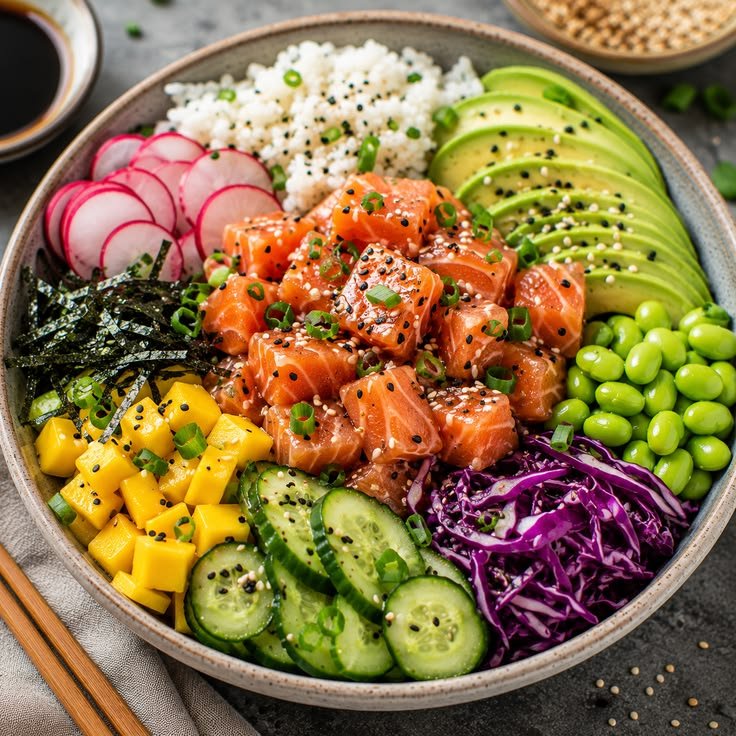
if there’s one meal I never get tired of making, it’s a colorful salmon poke bowl. Honestly, I love how something so simple can feel like a restaurant-quality meal without requiring hours in the kitchen. You get tender salmon, fluffy rice, creamy avocado, sweet mango, crunchy vegetables, and a savory dressing, all in one beautiful bowl.
The first time I made a poke bowl at home, I was surprised by how easy it was to put together. I had some rice, a ripe avocado, and a few vegetables in the fridge, so I decided to try my own version. Since then, it has become one of my favorite options for a quick lunch or a satisfying dinner.
This homemade salmon poke bowl recipe is fresh, colorful, customizable, and packed with different textures. I usually prepare the rice first, chop the toppings while it cooks, and then assemble everything just before serving. It makes the whole process feel effortless.
Whether you’re looking for a healthy salmon bowl, an easy meal-prep idea, or a homemade version of your favorite poke restaurant dish, this recipe is a great place to start.
What Is a Salmon Poke Bowl?
A salmon poke bowl is inspired by Hawaiian poke, a dish traditionally made with diced raw fish seasoned with flavorful ingredients. The word poke refers to cutting or slicing into pieces.
Modern poke bowls often combine seasoned fish with rice, fresh vegetables, fruit, seaweed, and sauces. My version brings together salmon, avocado, mango, edamame, cucumber, shredded purple cabbage, and radishes for a mix of savory, creamy, sweet, and crunchy flavors.
The best part? You can easily change the ingredients based on what you have available.
Why You’ll Love This Salmon Poke Bowl Recipe
- Fresh and flavorful: Every bite offers a delicious combination of textures and tastes.
- Easy to customize: Swap vegetables, change the sauce, or use your favorite rice.
- Perfect for lunch or dinner: It’s filling without feeling overly heavy.
- Great for meal prep: Prepare the rice and vegetable toppings ahead of time.
- Beautiful to serve: The colorful ingredients make this bowl look just as good as it tastes.
Ingredients You’ll Need
For the poke bowls
- 300 g (10.5 oz) sushi-grade salmon, properly handled for raw consumption
- 2 cups cooked sushi rice or short-grain rice
- 1 ripe avocado, thinly sliced
- 1 cup shelled edamame, cooked and cooled
- 1 small cucumber, thinly sliced
- 4–6 radishes, thinly sliced
- 1 cup shredded purple cabbage
- 1 ripe mango, diced
- 2 sheets nori seaweed, cut into thin strips
- 2 tablespoons sliced spring onions
- 1 teaspoon sesame seeds, black or white
For the salmon marinade
- 2 tablespoons soy sauce
- 1 teaspoon toasted sesame oil
- 1 teaspoon rice vinegar
- 1 teaspoon honey or maple syrup
- 1 teaspoon freshly grated ginger
- 1 teaspoon sesame seeds
- 1 tablespoon finely sliced spring onions
For the rice seasoning (optional)
- 1 tablespoon rice vinegar
- 1 teaspoon sugar
- ¼ teaspoon salt
Optional toppings
- Sriracha or spicy mayonnaise
- Pickled ginger
- Chili flakes
- Extra sesame seeds
- Lime wedges
- Crispy fried onions
A quick note about the salmon: Since this recipe is designed for raw salmon, buy fish specifically intended for raw consumption from a reputable supplier. Terms such as “sushi-grade” aren’t a universal safety guarantee, so ask your fishmonger about its handling and parasite-control practices. Keep the fish refrigerated and follow local food-safety guidance. If you prefer to avoid raw fish, cooked salmon is a delicious alternative.
How to Make a Salmon Poke Bowl
Step 1: Cook the rice
Start by preparing your rice according to the package instructions. Sushi rice or short-grain rice works especially well because it has a slightly sticky texture that holds together nicely in a poke bowl.
Once the rice is cooked, gently mix in the rice vinegar, sugar, and salt if you’re using the optional seasoning.
I usually let the rice cool until it’s just warm or at room temperature before assembling the bowls. It should be fluffy rather than wet or mushy.
Step 2: Prepare the salmon marinade
In a medium bowl, combine the soy sauce, sesame oil, rice vinegar, honey, grated ginger, sesame seeds, and spring onions.
Stir everything together until the honey dissolves and the mixture is evenly combined.
The marinade should taste savory, slightly sweet, and a little nutty. If you enjoy a stronger ginger flavor, feel free to add a little extra.
Step 3: Cut and season the salmon
Using a clean knife and cutting board, cut the chilled salmon into bite-sized cubes.
Add the salmon to the marinade and gently toss until each piece is coated. Refrigerate briefly while you prepare the other ingredients, following safe handling guidance for raw fish.
I prefer cutting the salmon into evenly sized pieces because they are easier to eat and distribute throughout the bowl.
If you’re using cooked salmon instead, simply cook it thoroughly, let it cool slightly, and toss it with the marinade before assembling.
Step 4: Prepare the vegetables and fruit
Wash and prepare your toppings:
- Slice the avocado.
- Dice the mango.
- Thinly slice the cucumber and radishes.
- Shred the purple cabbage.
- Cook and cool the edamame.
- Cut the nori into thin strips.
- Slice the spring onions.
This is my favorite part because the different colors make the finished bowl look so inviting. I like to keep each ingredient separate rather than mixing everything together immediately.
Step 5: Assemble the poke bowls
Divide the cooked rice between two serving bowls.
Arrange the marinated salmon in the center or slightly to one side. Add the avocado, mango, edamame, cucumber, radishes, and purple cabbage around it.
Finish with the nori strips, spring onions, and sesame seeds.
Honestly, there isn’t one perfect way to arrange a poke bowl. I usually group each ingredient together in its own little section because it creates that beautiful, colorful presentation you see in restaurants.
Step 6: Add your favorite sauce and serve
Spoon any suitable remaining marinade over the salmon, or drizzle the bowls with a little extra soy sauce and sesame oil. For a creamy finish, add spicy mayonnaise or a squeeze of lime.
Serve immediately while the ingredients are fresh and the rice is at its best.
Your homemade salmon poke bowl is ready!
Cooking Tips for the Best Salmon Poke Bowl
1. Choose the right rice
Short-grain rice is my first choice because it has the ideal texture for poke bowls. Brown rice is another good option if you prefer a nuttier flavor and more whole grains.
2. Keep the salmon cold
Raw salmon should remain properly refrigerated during preparation. Work with clean utensils, avoid cross-contamination, and don’t leave the fish sitting at room temperature.
3. Don’t over-marinate the salmon
A short marinade gives the salmon plenty of flavor. Leaving it in an acidic marinade for too long can change its texture.
4. Use ripe but firm avocado
You want avocado that is creamy but still holds its shape when sliced. If it’s too soft, it may become mushy when you arrange the bowl.
5. Balance the flavors
A great poke bowl includes a combination of savory, sweet, creamy, and crunchy ingredients. The soy sauce adds saltiness, mango adds sweetness, avocado brings creaminess, and cucumber provides freshness.
6. Make the presentation colorful
Arrange the toppings in separate sections instead of tossing everything together. It makes the bowl look more appealing and lets everyone choose their favorite ingredients.
7. Try a cooked version
If raw fish isn’t your preference, use baked, grilled, or pan-seared salmon instead. Cook it thoroughly and allow it to cool slightly before adding it to the bowl.
Serving Suggestions
This salmon poke bowl is a complete meal on its own, but there are plenty of ways to serve it.
- With miso soup: A warm bowl of miso soup makes a lovely side.
- With seaweed salad: Add an extra layer of savory, ocean-inspired flavor.
- With crispy wonton strips: These provide a satisfying crunch.
- With spicy mayonnaise: Mix mayonnaise with a little sriracha for a creamy, spicy drizzle.
- With extra fresh fruit: Pineapple or additional mango works beautifully.
- With lime wedges: A squeeze of lime brightens the entire bowl.
Variations You Can Try
Spicy Salmon Poke Bowl
Add sriracha or chili sauce to the marinade and finish with a drizzle of spicy mayonnaise.
Teriyaki Salmon Bowl
Replace the soy-based marinade with teriyaki sauce and use cooked salmon for a sweeter, more savory bowl.
Vegetarian Poke Bowl
Replace the salmon with marinated tofu, extra edamame, or roasted chickpeas.
Brown Rice Poke Bowl
Use cooked brown rice instead of white rice for a nuttier flavor and a whole-grain option.
Low-Carb Salmon Bowl
Replace the rice with cauliflower rice and increase the cucumber, cabbage, and avocado.
Tropical Salmon Poke Bowl
Add pineapple, extra mango, and a squeeze of lime for a sweet and refreshing combination.
How to Store Leftovers
For the best quality, assemble poke bowls just before serving.
- Rice: Store cooked rice promptly in the refrigerator in a shallow, covered container and follow food-safety guidance for cooked rice.
- Vegetables: Keep prepared vegetables in separate airtight containers.
- Avocado: Slice it just before serving to reduce browning.
- Raw salmon: Keep it refrigerated and follow the supplier’s storage instructions. Don’t save leftover raw fish that has been sitting out or handled unsafely.
- Assembled bowls: It’s best to eat them immediately, especially when they contain raw salmon.
Nutrition Information (Approximate Per Serving)
The following estimates are based on two servings using the listed ingredients, including rice and salmon, but excluding optional mayonnaise and extra sauces.
- Calories: 650–750 kcal
- Protein: 35–45 g
- Carbohydrates: 65–80 g
- Fat: 22–30 g
- Fiber: 9–13 g
- Sugar: 10–16 g
- Sodium: 600–1,000 mg
Actual nutrition values will vary depending on the salmon, rice portions, marinade, and toppings you use. Soy sauce can contribute a significant amount of sodium, so choose a reduced-sodium version if preferred.
Frequently Asked Questions
1. Can I make a salmon poke bowl with regular salmon?
You can use salmon for a cooked poke bowl, but salmon intended to be eaten raw requires particular sourcing and handling. Ordinary fresh salmon isn’t automatically safe to eat raw. Ask your fish supplier about its suitability and parasite-control procedures, or cook the salmon thoroughly for a safer alternative.
2. Is a salmon poke bowl healthy?
It can be a nutritious, balanced meal. Salmon provides protein and omega-3 fats, while edamame contributes plant protein and fiber. Avocado supplies unsaturated fats, and the vegetables provide vitamins and minerals. The nutritional balance depends on portion sizes and how much sauce you add.
3. What is the best rice for a poke bowl?
Sushi rice or short-grain white rice is a popular choice because its slightly sticky texture works well with the toppings. Brown rice is another excellent option if you prefer whole grains. You can also use cauliflower rice for a lower-carbohydrate version.
4. Can I prepare salmon poke bowls ahead of time?
Yes, with a little planning. Cook the rice, prepare the vegetables, and mix the sauce ahead of time. Store everything separately in the refrigerator. For meal prep, cooked salmon is generally the more practical choice; raw fish should be handled and stored according to strict food-safety guidance.
5. What sauce goes best with a salmon poke bowl?
A simple soy sauce, sesame oil, rice vinegar, and ginger dressing is a classic choice. Spicy mayonnaise is great if you like creamy heat, while ponzu adds a bright citrus flavor. Teriyaki sauce works well with cooked salmon if you prefer a sweeter taste.
Final Thoughts
This easy salmon poke bowl recipe is one of those meals that makes healthy eating feel exciting rather than boring. Between the tender salmon, creamy avocado, sweet mango, crunchy vegetables, and flavorful rice, every bite brings something different to the table.
I love how flexible this recipe is, too. You can keep it simple for a quick weekday lunch, add extra toppings for a filling dinner, or prepare the ingredients ahead of time to make busy days easier.
My biggest tip is to focus on fresh ingredients and a good balance of flavors. You don’t need fancy equipment or complicated cooking techniques to make a delicious poke bowl at home.
Give this homemade salmon poke bowl a try, make it your own, and enjoy a fresh, colorful meal whenever the craving strikes!