
Ravioli with Tomatoes, Asparagus, Garlic, and Herbs

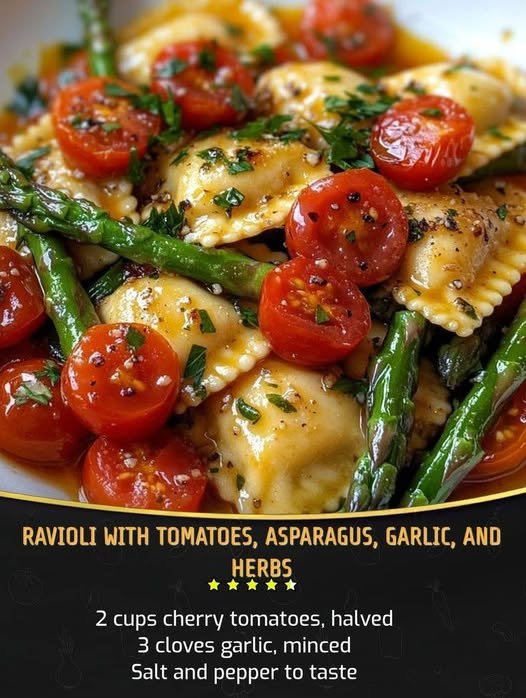
Honestly, I love recipes that look beautiful on the plate but don’t require hours in the kitchen. This is exactly that kind of meal. Tender cheese ravioli, sweet cherry tomatoes, crisp-tender asparagus, and plenty of fresh garlic come together in a simple olive oil and butter sauce that tastes absolutely wonderful.
The first thing I love about this recipe is how easily everything comes together. While the ravioli cooks, I prepare the vegetables in a skillet. The tomatoes soften and release their juices, the asparagus turns bright green and tender, and the garlic fills the kitchen with that delicious aroma that makes everyone ask what’s for dinner.
A little butter brings everything together, while fresh parsley adds a lovely finishing touch. If you enjoy a little heat, a pinch of red pepper flakes gives the dish just the right kick.
The best part? You don’t need a complicated sauce or a long list of ingredients. This easy ravioli with tomatoes and asparagus recipe is ready in about 30 minutes, making it perfect for busy weeknights, casual dinners with friends, or whenever you want something comforting but still fresh and colorful.
Let’s get started!
Why You’ll Love This Ravioli Recipe
- Quick and easy: This delicious pasta dinner comes together in around 30 minutes.
- Fresh ingredients: Cherry tomatoes, asparagus, garlic, and parsley add plenty of color and flavor.
- Simple homemade sauce: Olive oil, butter, and juicy tomatoes create a light, flavorful coating for the ravioli.
- Easy to customize: Add Parmesan, fresh basil, spinach, or your favorite vegetables.
- Perfect for meatless meals: Cheese ravioli makes this a satisfying vegetarian-friendly dinner when you choose vegetarian-compatible pasta.
- Great for any occasion: It feels special enough for guests but is simple enough for an ordinary Tuesday night.
Ingredients You’ll Need
This recipe uses everyday ingredients that work beautifully together. I usually choose fresh, ripe cherry tomatoes and bright green asparagus because they bring so much natural flavor to the dish.
Main Ingredients
1. Cheese ravioli – 1 pound
Fresh or frozen cheese ravioli both work well. I usually reach for refrigerated ravioli when I want dinner on the table quickly, but frozen ravioli is just as convenient. Follow the package instructions for cooking time.
2. Cherry tomatoes – 2 cups, halved
Cherry tomatoes add sweetness, freshness, and a little natural acidity. As they cook, they soften and release their juices, helping create a light sauce for the pasta.
3. Asparagus – 1 bunch, trimmed and cut into 2-inch pieces
Fresh asparagus gives the dish a lovely green color and a slightly earthy flavor. Choose firm stalks with tightly closed tips for the best texture.
4. Garlic – 3 cloves, minced
Garlic is one of the most important flavor ingredients here. Three cloves give the sauce a wonderful aroma without overpowering the tomatoes and asparagus.
5. Olive oil – 3 tablespoons
Olive oil helps cook the vegetables and carries the garlic flavor throughout the dish. Extra-virgin olive oil is a great choice.
6. Butter – 2 tablespoons
Butter adds richness and gives the tomato juices a silky finish. Combined with olive oil, it creates a simple sauce that coats the ravioli beautifully.
7. Salt – ¼ teaspoon
A little salt enhances the natural sweetness of the vegetables. Remember that the pasta water and ravioli may already contain salt, so taste before adding more.
8. Black pepper – ¼ teaspoon
Freshly ground black pepper adds a gentle warmth and balances the buttery sauce.
9. Red pepper flakes – ¼ teaspoon, optional
Add these if you enjoy a little heat. I sometimes use them when I want to give the dish a more lively flavor.
10. Fresh parsley – 2 tablespoons, chopped
Fresh parsley brightens the finished dish and adds a clean, herbal flavor. You can also use fresh basil if that’s what you have available.
Optional Extras
These ingredients aren’t necessary, but they’re lovely additions:
- Freshly grated Parmesan cheese
- A squeeze of fresh lemon juice
- A little lemon zest
- Fresh basil leaves
- Toasted pine nuts
- A splash of reserved pasta water
How to Make Ravioli with Tomatoes, Asparagus, Garlic, and Herbs
This recipe is straightforward, and you don’t need any special equipment. All you need is a large pot for the ravioli and a wide skillet for the vegetables and sauce.
Step 1: Cook the Ravioli
Bring a large pot of salted water to a boil. Add the cheese ravioli and cook according to the package directions.
Fresh ravioli often cooks in just a few minutes, while frozen ravioli may take longer. Check the package and avoid overcooking, since ravioli can become delicate and split if left in the water too long.
Once cooked, drain the ravioli gently. Before draining, reserve about ½ cup of pasta water.
I usually save a little pasta water because it can make a big difference when bringing the sauce together later.
Step 2: Prepare the Asparagus and Tomatoes
While the ravioli cooks, rinse the asparagus and trim off the tough, woody ends. Cut the remaining stalks into pieces about 2 inches long.
Halve the cherry tomatoes and mince the garlic.
Having everything ready before you start cooking makes the process much easier. Garlic cooks quickly, so it’s best to have the other ingredients prepared before it hits the pan.
Step 3: Sauté the Asparagus
Heat the olive oil in a large skillet over medium heat.
Add the asparagus pieces and cook for about 4–5 minutes, stirring occasionally. The asparagus should become bright green and slightly tender while retaining a little bite.
If your asparagus stalks are particularly thick, they may need an extra minute or two.
I prefer asparagus that is tender but not mushy. It gives the finished pasta a much nicer texture.
Step 4: Add the Garlic
Add the minced garlic to the skillet and cook for about 30–60 seconds, stirring frequently.
You’ll notice the aroma almost immediately. That’s when you know the garlic is releasing its flavor.
Be careful not to let it brown too much, as burnt garlic can make the sauce taste bitter.
Step 5: Add the Cherry Tomatoes
Stir in the halved cherry tomatoes, salt, black pepper, and optional red pepper flakes.
Cook for approximately 4–6 minutes, stirring occasionally, until the tomatoes begin to soften and burst.
As they cook, their juices mix with the olive oil and garlic, creating a light, naturally flavorful sauce.
If the skillet looks dry, add a small splash of the reserved pasta water. You don’t need much; the goal is to help the tomatoes release their juices without turning the sauce watery.
Step 6: Add the Butter
Reduce the heat to low and stir in the butter.
Let it melt into the tomato mixture, stirring gently until the sauce looks glossy and the ingredients are evenly combined.
This is a simple step, but honestly, it’s what gives the dish that comforting, restaurant-style finish without requiring cream or a complicated sauce.
Step 7: Toss in the Ravioli
Add the cooked ravioli to the skillet.
Using a large spoon or spatula, gently toss the pasta with the asparagus, tomatoes, and garlic butter sauce. Ravioli can tear easily, so handle it carefully.
If the sauce seems too thick, add reserved pasta water a tablespoon at a time until everything is lightly coated.
Let the ravioli warm through in the skillet for about 1–2 minutes.
Step 8: Finish With Fresh Herbs
Remove the skillet from the heat and sprinkle the chopped fresh parsley over the top.
Give everything one final gentle toss, then taste and adjust the seasoning if needed.
If you like, finish with freshly grated Parmesan cheese, a squeeze of lemon juice, or a few torn basil leaves.
Serve immediately while the ravioli is warm and the sauce is fresh.
My Best Tips for Perfect Ravioli
Don’t Overcook the Ravioli
Ravioli is delicate, especially fresh cheese ravioli. Follow the package instructions and check it near the end of the suggested cooking time.
Cooked ravioli should be tender but still hold its shape.
Use a Large Skillet
A wide skillet gives the asparagus and tomatoes enough room to cook evenly. It also makes tossing the ravioli with the sauce much easier.
If your skillet is small, prepare the vegetables in batches or use a larger pan.
Let the Tomatoes Release Their Juices
Give the tomatoes a few minutes to soften before adding the ravioli. Their juices are an important part of the sauce, so there’s no need to rush this step.
Save Some Pasta Water
Pasta water contains starch that helps the sauce cling to the ravioli. Add it gradually rather than pouring in a large amount all at once.
Add Garlic at the Right Time
Garlic burns much faster than asparagus, so add it after the asparagus has started cooking. This helps preserve its flavor without making it bitter.
Use Fresh Herbs at the End
Fresh parsley and basil taste brightest when added near the end of cooking. Adding them too early can dull their flavor.
Taste Before Adding Extra Salt
Cheese ravioli, salted pasta water, and Parmesan can all contribute salt. Taste the finished dish before seasoning further.
Delicious Variations to Try
One thing I love about this recipe is how easy it is to adapt to what’s already in the refrigerator.
Ravioli With Spinach
Add a couple of handfuls of fresh baby spinach to the skillet when the tomatoes have softened. Stir until the spinach wilts, then add the ravioli.
Lemon Garlic Ravioli
Add a little fresh lemon zest and a squeeze of lemon juice just before serving. The bright citrus flavor works beautifully with the butter, asparagus, and tomatoes.
Creamy Tomato Ravioli
For a richer sauce, stir in 2–3 tablespoons of heavy cream after adding the butter. Warm gently before tossing in the ravioli.
Parmesan Garlic Ravioli
Sprinkle freshly grated Parmesan over the finished dish. The cheese adds a savory, salty flavor that pairs wonderfully with the sweet tomatoes.
Add Protein
If you’d like a more substantial meal, serve the ravioli with grilled chicken, sautéed shrimp, or white beans. For a vegetarian option, chickpeas or cannellini beans are easy additions.
Try Different Ravioli Fillings
Cheese ravioli is a classic choice, but spinach-and-cheese or mushroom ravioli also works well. Choose a filling that complements the fresh vegetables and garlic sauce.
What to Serve With Ravioli, Tomatoes, and Asparagus
This pasta dish can easily stand on its own, but a few simple sides make it feel like a complete meal.
Garlic bread: Warm, crusty garlic bread is perfect for soaking up any tomato and butter sauce left on the plate.
Fresh green salad: A simple salad with mixed greens, cucumber, and a light lemon vinaigrette balances the richness of the pasta.
Roasted vegetables: Roasted zucchini, bell peppers, or broccoli make excellent vegetable sides.
Caprese salad: Fresh mozzarella, tomatoes, basil, and a drizzle of olive oil complement the Italian-inspired flavors.
Grilled chicken: Add a few slices of grilled chicken if you’re serving people who prefer a more protein-rich meal.
White wine: For an adult dinner pairing, a crisp Sauvignon Blanc or Pinot Grigio works nicely with the fresh vegetables and garlic butter sauce.
For a simple weeknight dinner, I usually serve this ravioli with a green salad and warm bread. It feels satisfying without requiring much additional cooking.
How to Store and Reheat Leftovers
This ravioli is best enjoyed fresh, but leftovers can still be delicious.
Refrigerator
Allow the leftovers to cool slightly, then transfer them to an airtight container. Refrigerate within two hours of cooking and enjoy within 3–4 days.
Reheating on the Stovetop
Place the ravioli in a skillet over low heat with a small splash of water. Cover and warm gently, stirring carefully until heated through.
Adding a little water helps loosen the sauce and prevents the pasta from drying out.
Reheating in the Microwave
Place a serving in a microwave-safe dish and cover loosely. Heat in short intervals, stirring gently between intervals, until steaming hot throughout.
Can You Freeze This Recipe?
You can freeze cooked leftovers, but the texture of the ravioli and asparagus may soften after thawing. For the best results, freeze in airtight portions and use within about 2 months for good quality.
Thaw overnight in the refrigerator and reheat thoroughly. If you’re planning to make this recipe ahead, I recommend preparing the vegetable sauce separately and cooking the ravioli fresh when possible.
Approximate Nutrition Information
Here is an estimated nutritional breakdown for one serving, assuming the recipe makes 4 servings and uses standard cheese ravioli.
- Calories: 450–550
- Protein: 14–20 g
- Carbohydrates: 50–65 g
- Total fat: 18–25 g
- Saturated fat: 6–10 g
- Fiber: 4–6 g
- Sugar: 5–8 g
- Sodium: 500–800 mg
These figures are approximate and depend on the brand of ravioli, the amount of salt in the cooking water, and whether you add Parmesan or other optional ingredients.
For more precise information, check the nutrition label on your ravioli package and calculate the values using your actual ingredients.
Frequently Asked Questions
1. Can I use frozen ravioli instead of fresh ravioli?
Absolutely! Frozen cheese ravioli works very well in this recipe. Cook it according to the package directions, then drain it gently before adding it to the skillet. There’s usually no need to thaw it first unless the package instructions specifically recommend doing so.
2. Can I make ravioli with tomatoes and asparagus ahead of time?
You can prepare the vegetables ahead by trimming the asparagus, halving the tomatoes, and mincing the garlic. You can also cook the vegetable sauce in advance and refrigerate it separately. For the best texture, cook the ravioli shortly before serving and combine everything in the skillet at the last minute.
3. How do I keep ravioli from falling apart?
Avoid overcooking it, drain it carefully, and toss it gently with the sauce. A large spoon or silicone spatula works well. I also recommend adding the ravioli to the skillet after the vegetables and sauce are ready so it doesn’t spend too much time cooking in the pan.
4. Can I make this recipe without butter?
Yes! You can leave out the butter and use a little additional olive oil instead. The sauce will be lighter and less rich, but the garlic, tomatoes, and herbs will still provide plenty of flavor. A sprinkle of Parmesan can add extra richness if you enjoy cheese.
5. What other herbs can I use instead of parsley?
Fresh basil is an excellent alternative, especially with cherry tomatoes. You can also use a little fresh oregano or thyme. Dried herbs work too, but use them sparingly because their flavor is more concentrated. Add dried herbs while the tomatoes cook so they have time to release their flavor.
Conclusion
This ravioli with tomatoes, asparagus, garlic, and herbs is proof that a delicious homemade dinner doesn’t need to be complicated. With tender cheese ravioli, juicy cherry tomatoes, fresh asparagus, and a simple garlic butter sauce, every bite is full of comforting, fresh flavor.
Honestly, the combination of sweet tomatoes, fragrant garlic, and buttery pasta is hard to beat. I love how the vegetables bring color and freshness to the dish while the ravioli makes it hearty enough to serve as a complete meal.
Whether you’re cooking for your family, planning a meatless Monday dinner, or simply craving something delicious without spending all evening in the kitchen, this easy ravioli recipe is worth adding to your regular rotation.