
Slow Cooker Beef and Barley Stew Recipe

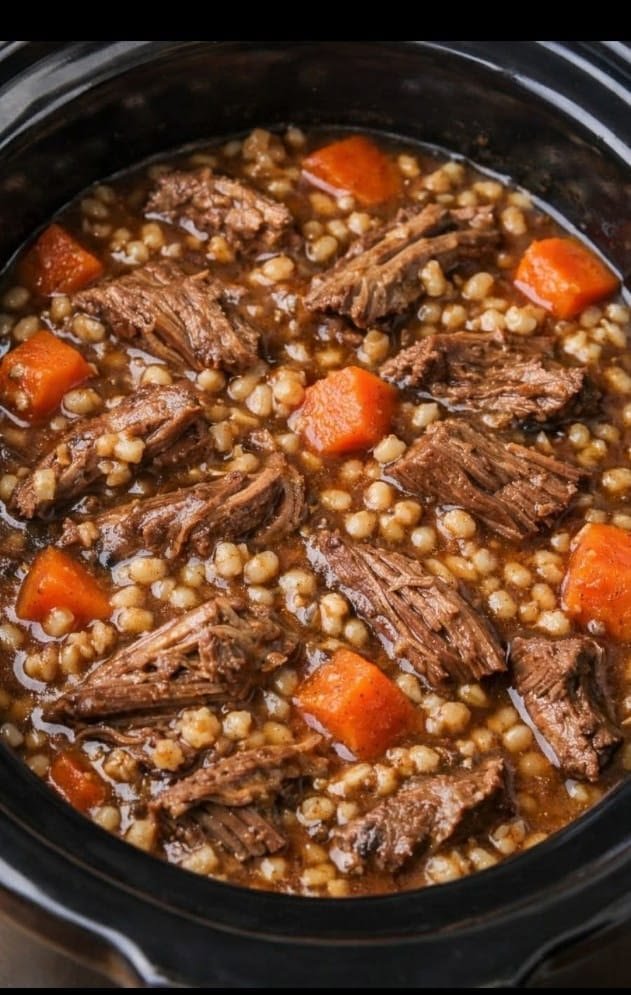
There is something about coming home to a slow cooker full of beef stew that makes an ordinary day feel a little better. The smell of slow-cooked beef, savory broth, and sweet carrots filling the kitchen is honestly one of my favorite things about making comfort food at home.
This slow cooker beef and barley stew is one of those recipes I love when I want a filling, homemade dinner without spending hours standing over the stove. The beef cooks slowly until it becomes fork-tender, the barley absorbs all that delicious broth, and the carrots add a little natural sweetness to balance the rich, savory flavors.
I usually serve this stew on chilly evenings, but honestly, it is good any time you want a warm, satisfying meal. It is made with simple ingredients, requires very little hands-on work, and tastes even better the next day.
If you love hearty beef stew but want something a little different from the usual potatoes-and-gravy version, the combination of tender beef and pearl barley is worth trying. The barley gives the broth a lovely texture and makes every bowl feel like a complete meal.
Why You’ll Love This Beef and Barley Stew
- Easy slow cooker recipe: Let the slow cooker do most of the work while you get on with your day.
- Tender, shredded beef: Slow cooking helps tougher cuts of beef become wonderfully soft and flavorful.
- Hearty and filling: Pearl barley adds a pleasant chewiness and makes this stew extra satisfying.
- Simple ingredients: You can find everything you need at most grocery stores.
- Great for meal prep: Leftovers reheat beautifully, making lunch or dinner easier the next day.
- Family-friendly comfort food: Rich broth, tender beef, and sweet carrots make a combination that’s hard to resist.
Ingredients for Slow Cooker Beef and Barley Stew
Here is what I usually use to make this hearty beef and barley stew. The quantities below make approximately 6 servings.
Main Ingredients
- 2 pounds (900 g) beef chuck roast: Cut into large chunks or leave whole for shredding after cooking.
- 3/4 cup (about 140 g) pearl barley: Rinsed under cold water before adding.
- 3 medium carrots: Peeled and cut into thick rounds.
- 1 medium yellow onion: Diced.
- 3 cloves garlic: Minced.
- 6 cups (1.4 liters) beef broth: Use a good-quality broth for the best flavor.
- 2 tablespoons tomato paste: Adds depth and a subtle richness to the broth.
- 1 tablespoon Worcestershire sauce: Gives the stew a savory, slightly tangy flavor.
- 1 tablespoon olive oil: Optional, for browning the beef.
Seasonings and Herbs
- 1 teaspoon dried thyme
- 1 teaspoon dried rosemary
- 1 bay leaf
- 1 teaspoon salt, or to taste
- 1/2 teaspoon freshly ground black pepper
Optional Ingredients
- 2 celery stalks, chopped
- 8 ounces (225 g) mushrooms, sliced
- 1 tablespoon chopped fresh parsley for serving
- Extra beef broth or water if needed
A quick note about the barley: I usually recommend pearl barley for this recipe because it cooks more evenly in the slow cooker and gives the stew that classic, hearty texture. Hulled barley can also work, but it generally needs more cooking time.
How to Make Slow Cooker Beef and Barley Stew
This recipe is straightforward, even if you don’t cook with a slow cooker very often.
Step 1: Prepare the Beef and Vegetables
Trim any unusually large pieces of excess fat from the beef chuck roast. If you want the beef to cook a little more evenly, cut it into large chunks.
Peel and slice the carrots, dice the onion, and mince the garlic. Rinse the pearl barley under cold running water and set it aside.
I prefer thicker carrot slices because they hold their shape better during a long cooking time. Smaller pieces can become very soft, especially if your slow cooker runs hot.
Step 2: Brown the Beef (Optional but Recommended)
Heat the olive oil in a large skillet over medium-high heat. Pat the beef dry, season it lightly with salt and pepper, and sear it on all sides until nicely browned.
You don’t need to cook the beef all the way through. The goal is simply to develop a rich, brown crust.
Honestly, this is the one extra step I try not to skip when I have a few spare minutes. Browning adds a deeper, roasted flavor to the finished stew.
Transfer the browned beef to your slow cooker.
Step 3: Add the Vegetables and Seasonings
Add the carrots, onion, and garlic around the beef. If you’re using celery or mushrooms, add those now, too.
Stir the tomato paste and Worcestershire sauce into the beef broth, then pour the mixture over the ingredients.
Sprinkle in the thyme, rosemary, and black pepper. Add the bay leaf.
Give everything a gentle stir, making sure the beef is mostly surrounded by liquid.
Step 4: Slow Cook Until the Beef Is Tender
Cover the slow cooker and cook on LOW for approximately 7–8 hours or on HIGH for approximately 4–5 hours, until the beef is fork-tender.
Cooking times vary depending on your slow cooker and the size of the beef pieces, so use tenderness rather than the clock alone as your guide.
For food safety, cook the beef until it reaches a safe temperature. For a chuck roast intended to become shreddable, the meat generally needs to cook well beyond the minimum safe temperature to soften its connective tissue.
Step 5: Add the Pearl Barley
Stir the rinsed pearl barley into the slow cooker during the final 60–90 minutes of cooking on HIGH, or approximately the final 1 1/2–2 hours on LOW.
If your slow cooker is already set to LOW and you want to avoid changing settings, you can add the barley earlier, but check it periodically because cooking times vary.
Make sure there is enough liquid for the barley to absorb. Add extra hot beef broth or water if the mixture looks too thick.
My favorite tip: Don’t add all the barley at the very beginning unless you know how your slow cooker handles it. Barley can become overly soft during a long cooking period, and it absorbs quite a bit of liquid.
Step 6: Shred the Beef
Once the beef is fork-tender, transfer it to a cutting board or a large plate.
Use two forks to shred the meat into bite-sized pieces, removing any large pieces of fat or gristle. Return the shredded beef to the slow cooker and stir it into the broth, vegetables, and barley.
Remove the bay leaf before serving.
Step 7: Adjust the Seasoning and Serve
Taste the stew and add more salt or black pepper if needed.
If the broth is thinner than you prefer, leave the lid off for a short period while the stew simmers, if your slow cooker allows it. Alternatively, mix 1 tablespoon of cornstarch with 1 tablespoon of cold water and stir it into the hot stew, allowing it to thicken.
If the stew is too thick, add a little more beef broth until it reaches your preferred consistency.
Finish with chopped fresh parsley and serve warm.
Cooking Tips for the Best Beef and Barley Stew
Choose the Right Cut of Beef
Beef chuck roast is my first choice because it has enough connective tissue and marbling to become tender during slow cooking. Beef shoulder or another suitable braising cut can also work well.
Avoid very lean cuts if your goal is soft, shreddable beef, as they may become dry or stringy.
Don’t Skip the Broth
Since broth provides much of the stew’s flavor, use a good-quality beef broth. Low-sodium broth is especially useful because you can adjust the salt at the end.
If your broth is already salty, wait until the stew finishes cooking before adding much extra salt.
Add Barley at the Right Time
Pearl barley thickens the broth as it cooks and absorbs liquid. Adding it toward the end helps it maintain a pleasant texture instead of turning mushy.
If you prefer a thinner, soup-like consistency, add a little extra broth before serving.
Keep the Lid Closed
Every time you lift the slow cooker lid, heat escapes and cooking slows down. I usually resist checking on the stew too often and let the slow cooker do its job.
Check toward the end of cooking rather than repeatedly stirring throughout the day.
Make It Ahead
This stew is excellent for meal prep. I often find that the flavors become even more developed after a night in the refrigerator.
Just remember that the barley continues absorbing liquid as the stew sits, so you may need to add broth when reheating.
Use Fresh Herbs for Serving
Dried thyme and rosemary work beautifully during cooking, but fresh parsley added at the end brings a little freshness to the rich broth.
A small squeeze of lemon juice can also brighten the flavor if the stew tastes particularly heavy.
What to Serve with Beef and Barley Stew
This stew is filling enough to serve on its own, but a simple side dish makes dinner feel even more special.
Here are some of my favorite serving ideas:
- Crusty bread: Perfect for soaking up every bit of the savory broth.
- Garlic bread: A delicious choice if you want something buttery and flavorful.
- Simple green salad: Fresh greens with a light vinaigrette balance the richness of the stew.
- Roasted green beans: Add a little color and freshness to the plate.
- Steamed broccoli: A simple vegetable side that pairs well with the beef.
- Dinner rolls: Soft, warm rolls are ideal for a cozy family meal.
For an easy weeknight dinner, I usually serve a generous bowl of stew with crusty bread and call it a day.
Storage, Freezing, and Reheating
How to Store Leftovers
Allow the stew to cool slightly, then transfer it to airtight containers. Refrigerate within two hours of cooking.
Store in the refrigerator for 3–4 days.
Keep in mind that the barley will continue absorbing broth, so the leftovers may be thicker than they were when freshly cooked.
Can You Freeze Beef and Barley Stew?
Yes! You can freeze this stew for convenient future meals.
For the best quality, freeze it in airtight, freezer-safe containers for approximately 2–3 months. Leave a little room at the top for expansion.
Barley can soften further after freezing and thawing, but the stew should still be delicious.
If you plan to freeze large batches regularly, you can cook the barley separately and add it to individual portions when serving.
How to Reheat It
Reheat refrigerated stew in a saucepan over medium-low heat, stirring occasionally, until steaming hot throughout.
You can also reheat individual portions in the microwave, stirring halfway through to distribute the heat evenly.
Add a splash of beef broth or water if the stew has thickened too much. For leftovers, reheat only the portion you intend to eat.
Nutrition Information
The following nutrition values are estimates for one of six servings, assuming the recipe is made with the ingredients listed above and without optional additions.
| Nutrient | Approximate amount per serving |
|---|---|
| Calories | 430 kcal |
| Protein | 35 g |
| Carbohydrates | 34 g |
| Fat | 16 g |
| Saturated fat | 6 g |
| Fiber | 6 g |
| Sugar | 4 g |
| Sodium | 650 mg |
Actual nutrition will vary based on the cut of beef, the amount of fat trimmed, the broth you use, and your portion size. Using low-sodium broth and trimming excess fat can change the final values.
Frequently Asked Questions
1. Can I put raw beef directly into the slow cooker?
Yes. You can place raw beef directly into the slow cooker with the other ingredients, provided you follow safe food-handling practices and cook it properly.
Browning the beef first is optional, but it develops extra flavor and gives the finished stew a richer taste.
2. Do I need to soak pearl barley before cooking?
No. Pearl barley generally does not need soaking for this recipe. Simply rinse it under cold water before adding it to the slow cooker.
If you’re using hulled barley instead, expect a longer cooking time and check the package instructions.
3. Why is my beef and barley stew too thick?
The most common reason is that the barley has absorbed more liquid than expected. This is particularly noticeable after refrigeration.
Stir in additional beef broth or water a little at a time until the stew reaches your preferred consistency.
4. Can I make this recipe without a slow cooker?
Absolutely. You can make it in a heavy Dutch oven or another covered pot.
Brown the beef, add the vegetables, seasonings, and broth, then cover and simmer gently on the stovetop or cook in a moderate oven until the beef becomes tender. Add the barley toward the later part of cooking, following the package’s timing instructions.
Check the liquid regularly and add more broth as needed.
5. Can I use a different grain instead of barley?
Yes. Farro can be a good alternative, although it has a different texture and cooking time. Brown rice may also work, but it requires different timing and can change the consistency of the stew.
If you need a gluten-free version, use a certified gluten-free grain such as rice or quinoa, adjust the cooking method accordingly, and check that your broth and Worcestershire sauce are gluten-free.