
Slow Cooker Beef Ragu with Rigatoni

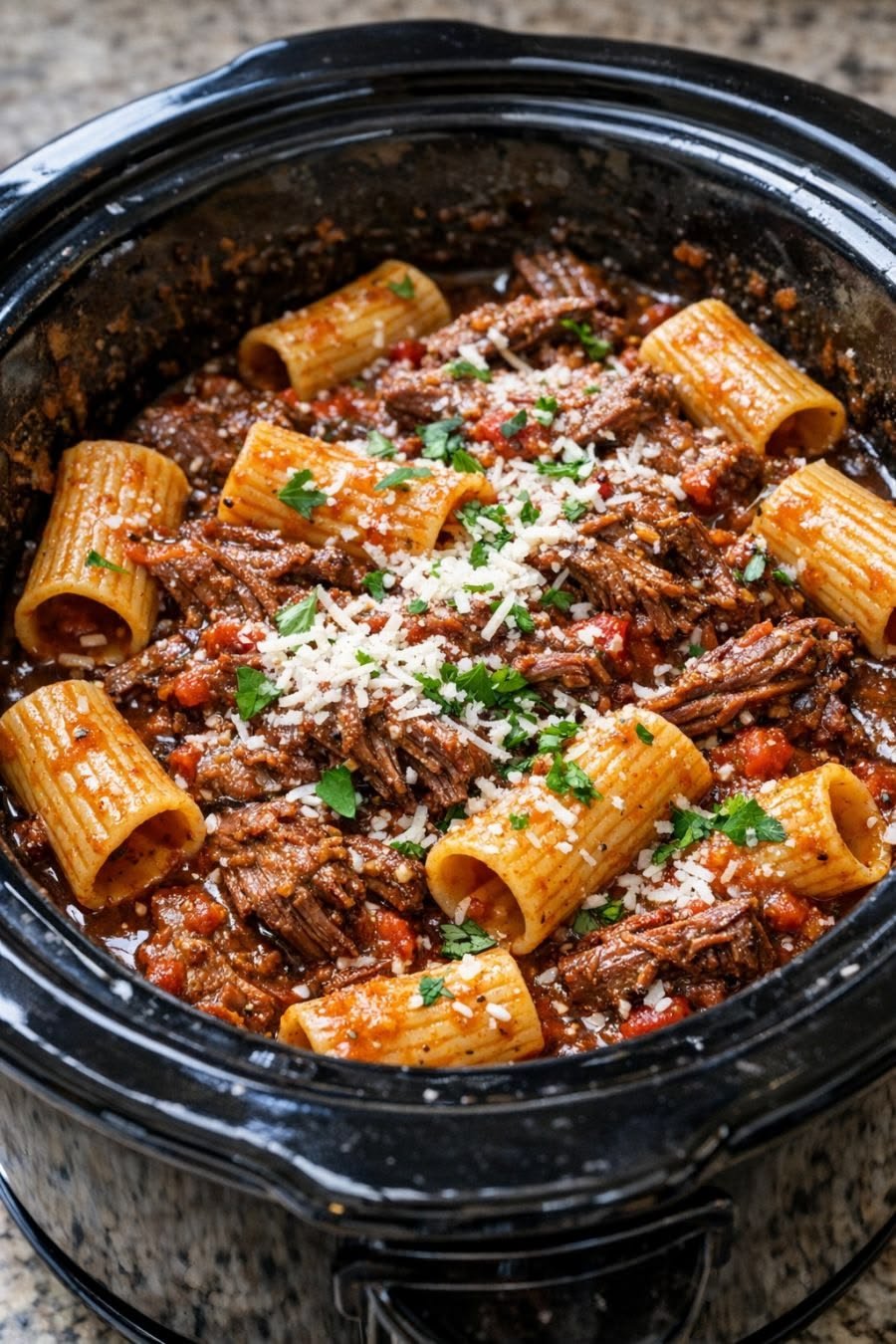
There’s something about a big bowl of pasta with slow-cooked beef and rich tomato sauce that feels like the ultimate comfort food. This Slow Cooker Beef Ragu with Rigatoni is one of those meals that tastes like you’ve spent the entire day in the kitchen, even though the slow cooker does most of the work for you.
I usually make this recipe when I’m craving a hearty homemade dinner but don’t want to spend hours stirring a sauce on the stove. A little prep in the morning, a few simple ingredients, and the slow cooker slowly transforms the beef into tender, flavorful shreds surrounded by a thick tomato sauce.
Honestly, the smell alone is enough to make everyone ask when dinner will be ready!
The beef becomes wonderfully tender after hours of cooking, soaking up the flavors of garlic, onion, tomatoes, herbs, and beef broth. Once it’s shredded and mixed back into the sauce, every bite is rich, savory, and satisfying. Toss it with rigatoni, and those large pasta tubes catch plenty of sauce in every bite.
I love finishing the dish with freshly grated Parmesan and chopped parsley. It adds a little freshness and makes the whole meal feel extra special without any extra fuss.
Whether you’re cooking for your family, preparing a cozy weekend dinner, or looking for a make-ahead meal, this slow cooker beef ragu is a recipe worth keeping.
Why You’ll Love This Slow Cooker Beef Ragu
- Mostly hands-off cooking: Let the slow cooker handle the long simmer while you get on with your day.
- Tender shredded beef: Beef chuck becomes soft and easy to shred after slow cooking.
- Rich tomato sauce: Tomatoes, garlic, herbs, and beef broth create a deeply savory ragu.
- Perfect pasta pairing: Rigatoni holds the thick sauce beautifully.
- Great for meal prep: The beef ragu can be prepared ahead and reheated when needed.
- Family-friendly comfort food: It’s filling, satisfying, and easy to serve at the dinner table.
Recipe Details
- Prep Time: 20 minutes
- Cook Time: 8–9 hours on LOW or 4–5 hours on HIGH
- Pasta Cooking Time: 10–14 minutes, depending on the package
- Total Time: Approximately 8 hours 35 minutes to 9 hours 35 minutes on LOW, including pasta preparation
- Servings: 6
- Cuisine: Italian-inspired
- Course: Main course
- Cooking Method: Slow cooker
Cooking times vary depending on your slow cooker and the size and thickness of the beef.
Ingredients for Slow Cooker Beef Ragu with Rigatoni
This recipe uses simple ingredients to create a hearty, flavorful pasta dinner.
For the Beef Ragu
- 2 pounds (900 g) beef chuck roast, trimmed of excess fat
- 1 tablespoon olive oil
- 1 medium yellow onion, finely chopped
- 4 cloves garlic, minced
- 2 tablespoons tomato paste
- 1 can (28 ounces or about 800 g) crushed tomatoes
- ½ cup (120 ml) beef broth
- 2 tablespoons Worcestershire sauce
- 1 teaspoon dried oregano
- 1 teaspoon dried basil
- 1 teaspoon dried thyme
- 1 teaspoon paprika
- 1 bay leaf
- 1 teaspoon salt, or to taste
- ½ teaspoon freshly ground black pepper
- ½ teaspoon red pepper flakes, optional
- 1 teaspoon sugar, optional, if the tomato sauce tastes too acidic
For the Pasta
- 1 pound (450 g) rigatoni pasta
- Salt, for the pasta water
- ½ cup reserved pasta water, as needed
For Serving
- ½ cup freshly grated Parmesan cheese, or to taste
- 2 tablespoons chopped fresh parsley or basil
- A drizzle of extra-virgin olive oil, optional
Ingredient tip: Beef chuck is my favorite cut for this recipe because it becomes tender and flavorful during slow cooking. Boneless beef shoulder or another suitable braising cut can also work well.
How to Make Slow Cooker Beef Ragu with Rigatoni
Follow these steps for tender shredded beef and a thick, flavorful tomato sauce.
Step 1: Prepare the Beef
Pat the beef chuck dry with paper towels. Season it on all sides with salt, black pepper, and paprika.
If the roast is very large, cut it into two or three pieces so it fits comfortably in your slow cooker and cooks evenly.
I usually take a few extra minutes to season the meat properly because it helps build flavor throughout the dish.
Step 2: Brown the Beef
Heat the olive oil in a large skillet over medium-high heat.
Add the beef and sear it for about 3–4 minutes per side, until it develops a deep brown crust. Transfer the beef to the slow cooker.
You don’t need to cook the beef through at this stage. Browning is simply about developing extra flavor.
Honestly, this is an optional step, but I recommend it whenever you have time. The browned bits left in the skillet also add wonderful flavor to the sauce.
Step 3: Cook the Onion and Garlic
In the same skillet, add the chopped onion. Cook for about 3–4 minutes, stirring occasionally, until softened.
Add the minced garlic and cook for another 30 seconds.
Stir in the tomato paste and cook for 1 minute. This helps deepen its flavor and gives the sauce a richer taste.
If the skillet has browned bits stuck to the bottom, add a small splash of beef broth and scrape them up with a wooden spoon.
Transfer the onion mixture to the slow cooker.
Step 4: Add the Sauce Ingredients
Pour the crushed tomatoes and remaining beef broth into the slow cooker.
Add the Worcestershire sauce, oregano, basil, thyme, red pepper flakes if using, and bay leaf.
Stir the sauce around the beef as much as possible so the seasonings are distributed evenly.
The beef doesn’t need to be completely submerged. The slow cooker will retain moisture, and the meat will release juices as it cooks.
Step 5: Slow Cook Until the Beef Is Tender
Cover the slow cooker and cook until the beef is fork-tender.
- LOW: 8–9 hours
- HIGH: 4–5 hours
I usually choose LOW when I have the time because the longer cooking period gives the beef plenty of opportunity to become tender.
Try not to lift the lid too often, since this allows heat to escape and may extend the cooking time.
The beef is ready when it pulls apart easily with two forks. If it still feels tough, give it more time rather than trying to shred it too early.
Step 6: Shred the Beef
Remove the cooked beef from the slow cooker and place it on a cutting board or in a large bowl.
Use two forks to pull the meat into bite-sized shreds, discarding any large pieces of fat or connective tissue that haven’t broken down.
Return the shredded beef to the tomato sauce and stir well.
Remove and discard the bay leaf.
Taste the sauce. Add a little more salt and black pepper if needed. If the tomatoes taste particularly acidic, a small amount of sugar can help balance the flavor.
At this stage, the sauce should be rich, meaty, and thick enough to cling to the pasta.
Step 7: Cook the Rigatoni
Bring a large pot of water to a boil and season it generously with salt.
Add the rigatoni and cook according to the package instructions until al dente. I usually check it a minute before the suggested cooking time because the pasta will soften a little more when tossed with the hot sauce.
Before draining, reserve about ½ cup of pasta water.
Drain the rigatoni without rinsing it.
Step 8: Combine the Pasta and Beef Ragu
Add the drained rigatoni to a large serving bowl or directly to the slow cooker if it has enough room and the pasta will be served immediately.
Spoon in plenty of beef ragu and toss gently until the pasta is evenly coated.
Add a splash of reserved pasta water if the sauce seems too thick. The starchy water helps the sauce cling to the rigatoni and gives it a smoother consistency.
I prefer mixing the pasta with the sauce just before serving instead of leaving cooked pasta in the slow cooker for hours. This helps keep the rigatoni from becoming overly soft.
Step 9: Garnish and Serve
Transfer the pasta to serving bowls.
Finish with freshly grated Parmesan, chopped parsley or basil, and a small drizzle of olive oil if desired.
Serve immediately while the pasta is hot and the beef sauce is rich and glossy.
Don’t be shy with the Parmesan! It adds a salty, nutty flavor that works beautifully with the slow-cooked beef and tomato sauce.
Tips for the Best Beef Ragu
1. Choose Beef That Benefits From Slow Cooking
Beef chuck is ideal because it contains connective tissue and fat that break down during long cooking, helping create tender shredded meat.
Lean cuts can become dry or stringy if cooked for too long.
2. Brown the Beef for Extra Flavor
Searing the beef before slow cooking creates a richer flavor and a deeper color in the finished sauce.
If you’re short on time, you can skip this step, but the result may taste a little less developed.
3. Don’t Add Too Much Broth
Crushed tomatoes and the juices released by the beef provide plenty of moisture. Too much broth can leave the ragu watery.
If the sauce is thinner than you’d like, remove the lid near the end of cooking, if your slow cooker instructions allow it, and let excess moisture evaporate. Alternatively, transfer the sauce to a saucepan and simmer it gently until thickened.
4. Cook the Pasta Separately
This is one of my biggest recommendations. Dry pasta absorbs a lot of liquid, and slow-cooking it directly in the sauce for too long can leave it mushy.
Cooking the rigatoni separately gives you much better control over its texture.
5. Reserve Pasta Water
A little starchy pasta water can transform the finished dish. It loosens a thick sauce while helping it cling to the pasta.
Add it gradually rather than pouring it all in at once.
6. Taste Before Serving
Tomatoes vary in acidity, and beef broth and Worcestershire sauce vary in saltiness. Always taste the sauce before adding more seasoning.
7. Let the Beef Rest Briefly Before Shredding
Allow the beef to rest for about 5 minutes after removing it from the slow cooker. This makes it easier to handle and gives you time to remove any unwanted pieces before returning it to the sauce.
What to Serve with Beef Ragu and Rigatoni
This pasta is hearty enough to serve on its own, but a few simple sides can make dinner feel even more special.
Garlic Bread
Warm garlic bread is perfect for soaking up any tomato sauce left at the bottom of your bowl. I love serving it alongside pasta on weekends.
Fresh Green Salad
A simple salad with lettuce, cucumber, tomatoes, and a light vinaigrette adds freshness and balances the richness of the beef.
Roasted Vegetables
Roasted broccoli, zucchini, carrots, or bell peppers are delicious alongside this dish.
Steamed Green Beans
Green beans tossed with a little olive oil, salt, and black pepper make an easy vegetable side.
Extra Parmesan and Fresh Herbs
Sometimes the simplest finishing touches are the best. A generous sprinkle of Parmesan and fresh basil or parsley brings extra flavor and color to every serving.
Recipe Variations
Red Wine Beef Ragu: Replace part of the beef broth with dry red wine. If you use wine, simmer it briefly in the skillet after cooking the onion and garlic to reduce it before adding it to the slow cooker.
Spicy Beef Ragu: Add extra red pepper flakes or a pinch of cayenne pepper for a little heat.
Mushroom Beef Ragu: Add sliced mushrooms to the slow cooker for an earthy, savory flavor.
Creamy Beef Ragu: Stir in a small splash of heavy cream just before serving for a softer, creamier sauce.
Different Pasta Shapes: Pappardelle, fettuccine, penne, and shells can all work well. Rigatoni is particularly good because its ridges and large openings hold the thick sauce.
Vegetable-Boosted Ragu: Finely chop a carrot and a celery stalk and cook them with the onion. They add sweetness and extra depth to the sauce.
Make-Ahead, Storage, and Reheating
Can You Make Beef Ragu Ahead of Time?
Absolutely. In fact, I often prefer making the sauce ahead because the flavors have more time to come together.
Cook the beef ragu, cool it promptly, and refrigerate it. Prepare the rigatoni fresh when you’re ready to serve.
How to Store Leftovers
Store the beef ragu and pasta separately if possible. Place them in airtight containers and refrigerate within two hours of cooking.
The beef ragu will generally keep for 3–4 days in the refrigerator. Cooked pasta is also best used within 3–4 days.
Can You Freeze Beef Ragu?
Yes! The sauce freezes very well.
Let the ragu cool, transfer it to freezer-safe containers, and freeze for up to 3 months for best quality.
Thaw overnight in the refrigerator before reheating. I recommend cooking fresh rigatoni when serving the thawed sauce for the best texture.
How to Reheat
Reheat the beef ragu in a saucepan over medium-low heat, stirring occasionally until steaming hot. Add a splash of water or beef broth if the sauce has thickened too much.
For individual portions, microwave the sauce in a microwave-safe container, stirring partway through heating.
If reheating pasta that’s already mixed with the sauce, add a little water before warming to help loosen it.
Reheat leftovers to an internal temperature of 165°F (74°C).
Nutrition Information
The following values are approximate estimates for one serving, assuming the recipe makes six servings and includes both the beef ragu and rigatoni.
Estimated nutrition per serving:
- Calories: 620
- Protein: 42 g
- Carbohydrates: 65 g
- Fat: 19 g
- Saturated Fat: 6 g
- Fiber: 5 g
- Sugar: 8 g
- Sodium: 750 mg
These values can vary depending on the cut of beef, pasta brand, amount of fat trimmed, broth, and Parmesan used. The estimates do not include extra garlic bread or additional cheese.
Frequently Asked Questions
1. Can I Put Raw Beef Directly Into the Slow Cooker?
Yes. You can place the seasoned beef directly into the slow cooker with the sauce ingredients. Browning the beef first is optional, but it adds deeper flavor and improves the color of the finished ragu.
2. Why Is My Slow Cooker Beef Ragu Tough?
The beef may need more cooking time. Tough cuts such as chuck become tender as their connective tissue breaks down during slow cooking. Continue cooking and check periodically until the meat pulls apart easily with a fork.
3. Can I Cook the Rigatoni Directly in the Slow Cooker?
It’s possible, but I don’t recommend it for the best texture. Pasta can absorb too much sauce and become mushy if left cooking for too long. Cooking it separately and tossing it with the finished ragu gives you more consistent results.
4. Can I Make This Recipe Without Red Wine?
Of course! This recipe uses beef broth and crushed tomatoes, so red wine isn’t necessary. If you enjoy the flavor of wine, you can replace part of the broth with dry red wine, but the sauce is delicious without it.
5. What Is the Best Cut of Beef for Slow Cooker Ragu?
Beef chuck roast is my top choice because it becomes tender and shreds easily after several hours of cooking. Beef shoulder and other suitable braising cuts are good alternatives. Choose a cut intended for slow cooking rather than a very lean steak.