
Slow Cooker Garlic Butter Pot Roast with Onions and Gravy

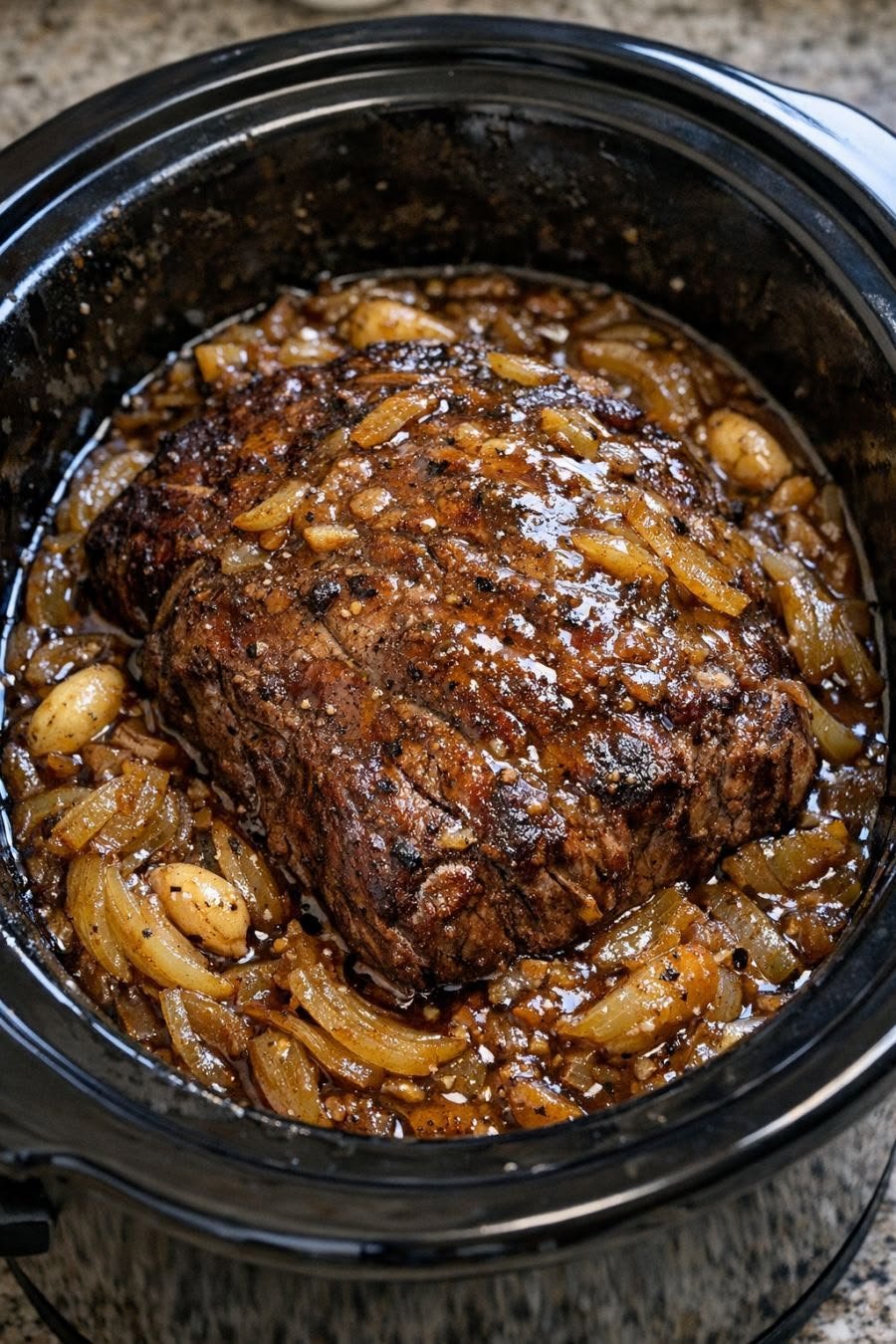
There’s something special about coming home to the smell of a slow-cooked beef roast. The rich aroma of garlic, onions, and savory gravy makes the whole kitchen feel warm and inviting. And when the beef turns tender enough to pull apart with a fork, you know you’ve got a meal worth sitting down for.
This slow cooker garlic butter pot roast is the kind of recipe I love for busy days when I want a hearty homemade dinner without standing over the stove for hours. The ingredients are simple, the preparation is straightforward, and the slow cooker does most of the work.
Honestly, one of the best things about a pot roast is how a few basic ingredients can create such a deep, comforting flavor. The beef slowly cooks in a savory broth with garlic, butter, and onions, allowing everything to blend into a delicious sauce.
I also love how versatile this meal is. You can serve it with mashed potatoes, roasted vegetables, rice, or crusty bread to soak up every bit of that flavorful gravy. It’s a wonderful option for Sunday dinner, family gatherings, or an easy weeknight meal when you have time to let dinner cook slowly.
If you’ve struggled with dry or tough pot roast in the past, don’t worry. With the right cut of beef, enough cooking time, and a few simple tricks, you can make a roast that’s tender, juicy, and full of flavor.
Let’s make it!
Ingredients for Slow Cooker Garlic Butter Pot Roast
This recipe makes approximately 6 servings.
- 3–4 pounds beef chuck roast: This cut is ideal for slow cooking because its connective tissue softens over time, producing tender, flavorful meat.
- 1 large yellow onion: Sliced into thick strips for a naturally sweet, savory flavor.
- 6–8 garlic cloves: Peeled and lightly crushed or minced.
- 4 tablespoons unsalted butter: Adds richness to the cooking liquid and gravy.
- 1 cup beef broth: Provides moisture and a savory base for the sauce.
- 2 tablespoons Worcestershire sauce: Adds a deeper, savory flavor.
- 1 tablespoon olive oil: For searing the beef.
- 1 teaspoon salt: Adjust according to taste and the saltiness of your broth.
- 1 teaspoon freshly ground black pepper: For a little warmth and seasoning.
- 1 teaspoon dried thyme: Adds an earthy, aromatic flavor.
- 1 teaspoon dried rosemary: Complements the beef beautifully.
- 1 teaspoon paprika: Adds a mild, savory note and enhances the seasoning.
- 1 tablespoon Dijon mustard: Optional, for extra depth and a subtle tang.
- 1 tablespoon cornstarch: Optional, for thickening the gravy.
- 1 tablespoon cold water: To mix with the cornstarch.
Optional additions
You can also add the following ingredients if you want to make the meal more substantial:
- 1 pound baby potatoes, halved if large.
- 3–4 carrots, cut into thick pieces.
- 1 teaspoon onion powder for extra savory flavor.
- 1 tablespoon chopped fresh parsley for garnish.
How to Make Slow Cooker Garlic Butter Pot Roast
Step 1: Prepare the beef
Remove the chuck roast from its packaging and pat it dry with paper towels. This helps the seasoning stick and makes it easier to develop a flavorful crust if you sear the meat.
Season both sides generously with salt, black pepper, paprika, dried thyme, and dried rosemary.
Try to distribute the seasoning evenly over the entire roast, including the edges.
Step 2: Sear the roast for extra flavor
Heat the olive oil in a large skillet over medium-high heat. Once hot, add the beef and sear it for about 3–4 minutes per side, until a deep brown crust forms.
You don’t need to cook the roast through at this stage. The goal is simply to brown the outside and develop extra flavor.
Transfer the beef to the slow cooker.
My tip: Don’t skip searing if you have a few extra minutes. Slow cooking makes the beef tender, but browning adds a richer, roasted flavor to the finished dish.
Step 3: Add the onions and garlic
Scatter the sliced onions around the beef in the slow cooker. Add the garlic cloves, spreading them throughout the cooking pot.
The onions will gradually soften and release moisture as they cook. Combined with the garlic and beef juices, they help create a delicious base for the gravy.
If you’re adding carrots and potatoes, arrange them around the roast rather than piling them directly on top.
Step 4: Make the garlic butter cooking liquid
In a small bowl, combine the beef broth, Worcestershire sauce, and Dijon mustard, if using. Stir until everything is mixed.
Pour this mixture around the beef.
Cut the butter into several small pieces and place them over the roast and among the onions.
You don’t need to melt the butter first. It will gradually melt during cooking and blend with the broth and meat juices.
Step 5: Slow cook until tender
Cover the slow cooker with its lid and cook according to one of these settings:
- LOW: Approximately 8–10 hours.
- HIGH: Approximately 4–6 hours.
Cooking times depend on the size and thickness of the roast, the slow cooker, and the cut of beef.
The roast is ready when it becomes fork-tender and pulls apart easily. A chuck roast often needs to reach around 195–205°F (90–96°C) for the connective tissue to break down sufficiently, although tenderness is the most useful practical guide.
Avoid opening the lid repeatedly, as this releases heat and can lengthen the cooking time.
Step 6: Check the sauce and shred the beef
Carefully lift the lid and check the roast with two forks. If the meat separates easily, it’s ready.
Transfer the roast to a large plate or cutting board. Let it rest briefly, then shred it into large pieces or slice it against the grain if it holds together.
Stir the onions into the cooking juices. Taste the sauce and adjust the salt and pepper if necessary.
If you prefer a smoother gravy, you can strain the liquid and remove excess fat before thickening it.
Step 7: Thicken the gravy if desired
If you like a thicker gravy, pour the cooking liquid into a saucepan and bring it to a gentle simmer.
In a small bowl, mix the cornstarch with cold water until smooth. Slowly whisk this slurry into the simmering liquid.
Cook for 1–2 minutes, stirring, until the gravy thickens. Add a little extra broth if it becomes too thick.
Alternatively, you can use a slow cooker’s suitable stovetop-safe insert if its manufacturer permits it. Otherwise, use a separate saucepan.
Step 8: Serve the pot roast
Return the shredded beef to the slow cooker or arrange it on a serving platter. Spoon the onions and garlic butter gravy over the top.
Garnish with chopped fresh parsley if desired.
Serve while warm, with mashed potatoes, carrots, roasted vegetables, or crusty bread.
Trust me, that rich gravy is too good to leave behind!
Cooking Tips and Tricks
A few small details can make a big difference when preparing a slow cooker pot roast.
1. Choose the right cut of beef
Chuck roast is usually the best choice because it contains connective tissue and marbling that gradually soften during slow cooking.
Lean cuts can become dry or tough if cooked using the same approach, so choose a cut intended for braising or pot roasting.
2. Always pat the beef dry before searing
Moisture on the surface can prevent proper browning. Patting the roast dry helps it develop a darker crust, which contributes additional flavor to the finished gravy.
3. Don’t add too much liquid
A slow cooker traps moisture, and the beef and onions release their own juices during cooking. You generally don’t need to cover the roast completely with broth.
About one cup of broth is a good starting point for a 3–4 pound chuck roast, depending on the slow cooker and other ingredients.
4. Keep the lid closed
Every time you lift the lid, heat escapes. Unless you’re checking for doneness near the end, leave the slow cooker covered.
This is one of the easiest ways to avoid unnecessarily extending the cooking time.
5. Give the roast enough time
If your beef is still tough, it may need more cooking time rather than less. Chuck roast becomes tender as its connective tissue breaks down.
Check it periodically toward the end of the recommended cooking window and continue cooking until a fork slides in easily.
6. Add vegetables at the right time
Potatoes and carrots can cook alongside the roast. Cut them into large, evenly sized pieces so they don’t become overly soft.
Place firmer vegetables near the bottom or sides of the slow cooker, where they can sit in the cooking liquid.
7. Balance the gravy
If the gravy tastes too rich, a small splash of red wine vinegar or lemon juice can brighten it. If it’s too salty, add a little unsalted broth or water.
For a deeper flavor, stir in a small amount of tomato paste or extra Worcestershire sauce before cooking.
8. Remove excess fat before serving
The roast and butter can release fat into the cooking liquid. If the sauce looks oily, spoon off the excess fat or refrigerate the strained liquid until the fat solidifies, then remove it.
You can reheat the gravy afterward and thicken it if desired.
9. Make it ahead
Pot roast often tastes even better the next day because the meat has more time to absorb the flavors of the sauce.
Refrigerate it in its cooking liquid and reheat gently with a splash of broth to keep the beef moist.
What to Serve with Garlic Butter Pot Roast
This slow cooker roast pairs well with simple sides that complement its rich beef flavor.
Creamy mashed potatoes: Probably the classic choice. The potatoes soak up the garlic butter gravy beautifully.
Roasted carrots: Their natural sweetness balances the savory beef and onions.
Green beans: Steamed or sautéed green beans add freshness and a little crunch.
Buttered egg noodles: These are excellent when you want something comforting that catches plenty of gravy.
Steamed rice: A simple, budget-friendly side that works well with the sauce.
Crusty bread: Perfect for soaking up the leftover juices on your plate.
A fresh green salad: A light salad with a tangy vinaigrette helps balance the richness of the meat.
For a traditional family dinner, I’d choose mashed potatoes and roasted carrots. If you’re serving guests, add a green vegetable and fresh bread for a complete meal.
Family-Friendly Appeal and Home-Cook Feedback
Pot roast is one of those classic comfort foods that can make an ordinary dinner feel special. The tender beef, soft onions, mellow garlic, and savory gravy create familiar flavors that work well for family meals.
It’s also a practical recipe when you’re feeding several people. The slow cooker does most of the work, and the roast can be served shredded for a casual dinner or sliced and arranged on a platter for a more traditional presentation.
The recipe is easy to adapt, too. You can add potatoes and carrots for a one-pot meal, use extra garlic for a stronger flavor, or prepare the gravy separately if you prefer a smoother sauce.
For an authentic personal touch: If you’ve served this recipe to your family or friends, include their actual reactions here. For example, mention whether they enjoyed the tender beef, asked for extra gravy, or preferred it with mashed potatoes. Genuine feedback makes a food blog more relatable and trustworthy.
Nutrition Information
The following nutrition values are approximate estimates for one serving, assuming the recipe makes six servings and includes beef, butter, onions, and the cooking liquid.
- Calories: 450–550 kcal
- Protein: 38–48 g
- Fat: 28–38 g
- Carbohydrates: 5–10 g
These estimates can vary significantly depending on the beef’s fat content, how much butter and gravy you consume, and whether you include optional potatoes or carrots.
Adding potatoes and carrots will increase the carbohydrate and calorie content. For a more accurate nutrition label, calculate the values using the exact ingredients and quantities in your recipe.
Frequently Asked Questions
1. Can I put raw beef directly into the slow cooker?
Yes. You can place seasoned raw beef directly into the slow cooker and cook it until tender. However, searing it first creates a deeper browned flavor. Both approaches work, so choose the one that suits your schedule.
2. Why is my slow cooker pot roast tough?
The most common reason is that the connective tissue hasn’t had enough time to soften. Continue cooking until the roast is fork-tender. Also, make sure you’re using a suitable cut, such as chuck roast, rather than a very lean cut intended for quick cooking.
3. Can I cook garlic butter pot roast overnight?
You can use the LOW setting for an overnight cooking period if the total time fits the recipe and your slow cooker’s instructions. An 8–10-hour cooking window is often suitable for chuck roast, but check the manufacturer’s guidance and avoid leaving the roast cooking for substantially longer than necessary.
4. Can I make this recipe without searing the beef?
Absolutely. Skip the skillet step, season the beef, and place it in the slow cooker with the onions, garlic, broth, Worcestershire sauce, and butter. The finished roast will still be tender, although it may have a less pronounced browned flavor.
5. How do I store and reheat leftover pot roast?
Refrigerate leftovers in an airtight container within two hours of cooking and use them within 3–4 days. Reheat the beef and gravy until they reach 165°F (74°C), adding a little broth if needed.
You can also freeze cooked pot roast with its gravy for approximately 2–3 months for best quality. Thaw it in the refrigerator before reheating.
6. Can I add potatoes and carrots to the slow cooker?
Yes. Add baby potatoes or large potato chunks and thick carrot pieces around the roast. They can cook in the beef broth and absorb the savory flavors. Cut the vegetables evenly and check their tenderness toward the end of the cooking time.
Conclusion
Slow cooker garlic butter pot roast is a comforting, flavorful meal made with simple ingredients and very little hands-on work. Tender beef, sweet onions, garlic, butter, and savory gravy come together to create a dinner that feels homemade in the best possible way.
The keys to success are choosing a good chuck roast, searing it for extra flavor when possible, using a sensible amount of broth, and giving the meat enough time to become fork-tender.