
Easy Oven-Roasted Pulled Pork Recipe

Easy Oven-Roasted Pulled Pork Recipe
There are few things better than opening the oven and getting hit with the smell of slow-roasted pork. Honestly, pulled pork is one of those recipes I usually make when I want something comforting without having to stand over the stove all day.
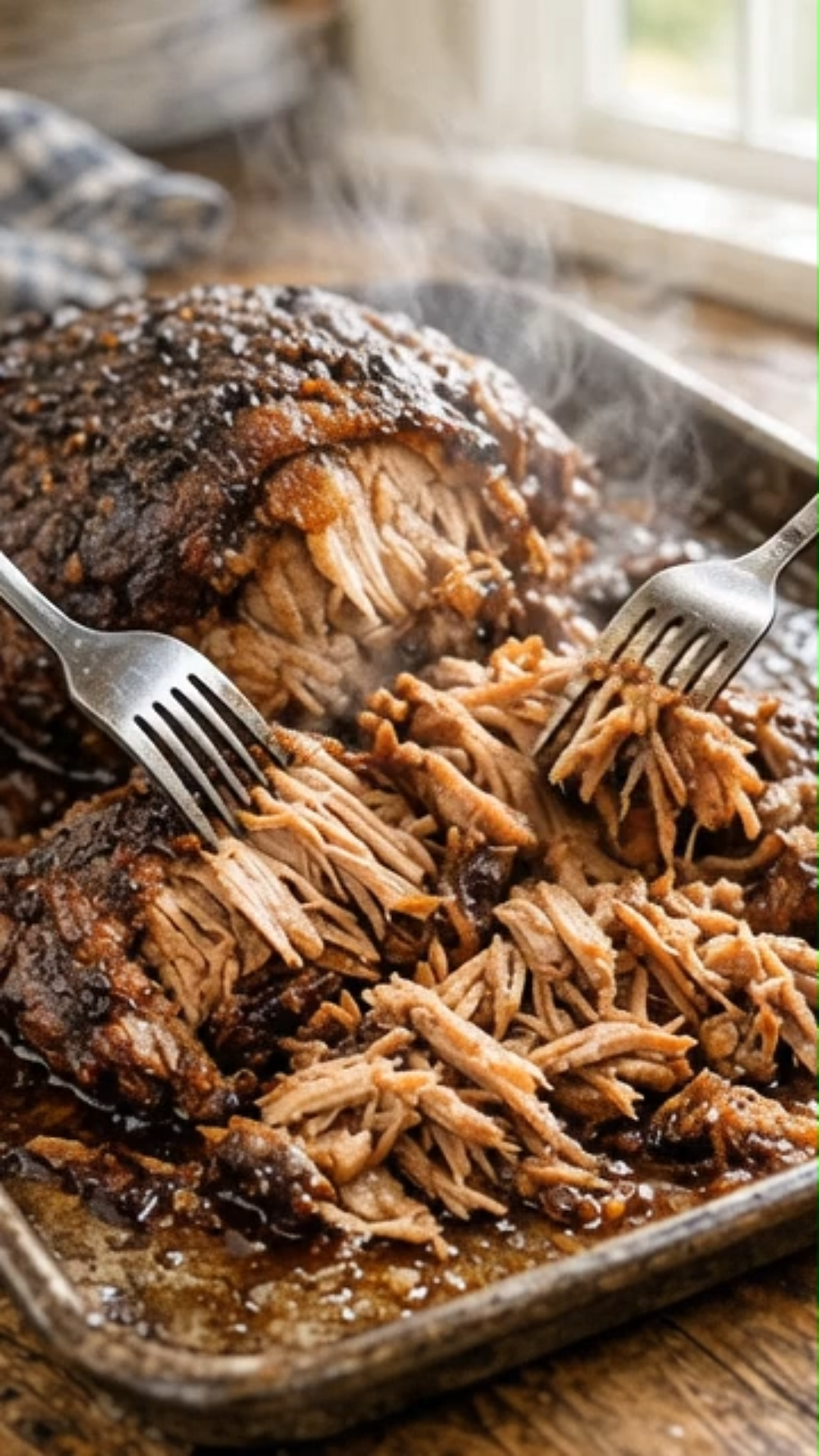
The secret is simple: start with a well-seasoned pork shoulder, give it plenty of time in a low oven, and let the meat slowly become tender enough to pull apart with a fork. The outside develops a dark, flavorful crust while the inside stays juicy and wonderfully tender.
I usually make a big batch because leftovers are just as good—sometimes even better—the next day. Pile it onto toasted buns, tuck it into tortillas, serve it over rice, or eat it straight from the roasting pan. No judgment here!
Why You’ll Love This Pulled Pork
Tender and juicy: Slow roasting gives the pork plenty of time to become fork-tender.
Big BBQ flavor: A homemade spice rub creates a delicious savory crust.
Easy preparation: Most of the cooking time is hands-off.
Great for a crowd: One pork shoulder makes plenty of servings.
Perfect for leftovers: The shredded meat reheats beautifully.
Ingredients
For the Pulled Pork
4–5 lb (1.8–2.3 kg) boneless or bone-in pork shoulder
2 tablespoons brown sugar
2 tablespoons smoked paprika
1 tablespoon paprika
1 tablespoon kosher salt
2 teaspoons freshly ground black pepper
2 teaspoons garlic powder
2 teaspoons onion powder
1 teaspoon chili powder
1 teaspoon ground cumin
½ teaspoon cayenne pepper, optional
2 tablespoons yellow or Dijon mustard
1 tablespoon Worcestershire sauce
1 tablespoon olive oil
1 cup chicken or beef broth
½ cup BBQ sauce, plus more for serving
Optional Finishing Ingredients
Extra BBQ sauce
Apple cider vinegar
Pickles
Coleslaw
Freshly ground black pepper
Sliced green onions
How to Make Oven-Roasted Pulled Pork
1. Prepare the Pork
Take the pork shoulder out of the refrigerator about 30–45 minutes before cooking.
Pat it dry thoroughly with paper towels. This helps the seasoning stick and encourages the outside to develop a better crust.
If there’s a very thick layer of fat on top, trim some of it away, but don’t remove all the fat. A little fat helps keep the pork moist and flavorful during the long cooking process.
2. Make the Dry Rub
In a small bowl, combine the brown sugar, smoked paprika, paprika, salt, black pepper, garlic powder, onion powder, chili powder, cumin, and cayenne pepper.
Give everything a good stir.
I usually make extra rub and keep it in a sealed jar. It’s handy for chicken, ribs, roasted potatoes, and even burgers.
3. Season the Pork
Rub the pork all over with the mustard, Worcestershire sauce, and olive oil.
Don’t worry about making it look perfect. Just get the seasoning onto every surface.
Generously coat the pork with the dry rub, pressing it into the meat with your hands.
For the best flavor, cover the pork and refrigerate it for at least 4 hours, or preferably overnight.
Honestly, this overnight step makes a noticeable difference in flavor.
4. Bring the Oven to Temperature
Preheat your oven to 275°F (135°C).
Place the seasoned pork shoulder into a large roasting pan or Dutch oven. Pour the broth into the bottom of the pan, taking care not to wash the seasoning off the meat.
Cover tightly with aluminum foil or a lid.
5. Slow Roast the Pork
Place the pork in the oven and cook for approximately 5–7 hours, depending on its size.
The exact cooking time can vary considerably, so don’t rely only on the clock.
For pulled pork, you’re looking for an internal temperature around 195–205°F (90–96°C), with the meat feeling very tender when tested with a fork or thermometer.
If the pork isn’t tender yet, keep cooking it. This is one of those recipes where patience really pays off.
6. Let It Rest
Remove the pork from the oven and leave it covered for about 30–45 minutes.
I know it’s tempting to start shredding immediately, but letting the meat rest gives the juices time to redistribute.
7. Shred the Pork
Transfer the pork to a large cutting board or serving dish.
Using two forks, pull the meat apart into strands. Remove any large pieces of excess fat, gristle, or connective tissue as you go.
Don’t discard all the juices from the roasting pan. Skim off excess fat and mix some of the flavorful cooking juices back into the shredded pork.
8. Add BBQ Sauce
Toss the shredded pork with BBQ sauce to taste.
I usually start with a small amount because I want the smoky, seasoned pork to remain the star of the show. You can always add more sauce at the table.
For a slightly tangy finish, add a splash of apple cider vinegar.
Cooking Tips for Perfect Pulled Pork
Choose the right cut
Pork shoulder is ideal because it contains enough fat and connective tissue to stay moist during slow cooking. Pork butt, also called Boston butt, works particularly well too.
Don’t rush the cooking
If the pork has reached a high internal temperature but still feels tough, it probably needs more time. Tender pulled pork comes from the breakdown of connective tissue, not simply reaching one particular temperature.
Season generously
A large pork shoulder needs plenty of seasoning. Don’t be shy with the dry rub.
Let it rest
A good 30-minute rest makes shredding easier and helps keep the meat juicy.
Save the cooking juices
Those juices contain a lot of flavor. Mix a little back into the shredded pork rather than throwing everything away.
Want a darker crust?
After the pork is fully cooked, remove the cover and place it under a hot broiler for a few minutes. Watch it carefully because the sugar in the rub can burn quickly.
Serving Suggestions
There are so many ways to serve pulled pork.
My favorite is probably the classic pulled pork sandwich: pile the meat onto a toasted brioche bun, add a little BBQ sauce, and finish it with crunchy coleslaw.
You can also serve it with:
Creamy coleslaw
Cornbread
Baked beans
Roasted potatoes
French fries
Mac and cheese
Potato salad
Pickles
Grilled corn
Steamed rice
Warm tortillas
Fresh green salad
For an easy weeknight dinner, I usually serve the pork with roasted potatoes and a simple crunchy salad.
How to Store Leftover Pulled Pork
Let the pork cool and transfer it to an airtight container.
Keep it refrigerated for up to 3–4 days.
For longer storage, pulled pork can also be frozen. Divide it into meal-sized portions, add a little of the cooking juice or BBQ sauce, and freeze in airtight freezer-safe containers or bags.
Thaw it in the refrigerator before reheating.
How to Reheat Pulled Pork
The microwave works for small portions, but I prefer reheating pulled pork gently in a covered skillet or saucepan with a splash of broth, water, or reserved cooking juices.
Heat it over medium-low heat until warmed through.
This helps prevent the pork from drying out.
Approximate Nutrition Information
Per serving, assuming 8 servings and excluding optional buns, sides, and additional BBQ sauce.
Calories: 430
Protein: 48 g
Fat: 22 g
Carbohydrates: 10 g
Fiber: 1 g
Sugar: 7 g
Sodium: 850 mg
Nutrition is an estimate and will vary depending on the size and fat content of the pork shoulder, BBQ sauce, and exact ingredients used.
Frequently Asked Questions
1. What cut of pork is best for pulled pork?
Pork shoulder is the classic choice. Pork butt, also known as Boston butt, is another excellent option. Both contain enough fat and connective tissue to become tender during slow cooking.
2. Can I make pulled pork without a smoker?
Absolutely. You don’t need a smoker to make delicious pulled pork. A low oven and a flavorful spice rub can produce incredibly tender meat with a beautifully seasoned crust.
3. Why is my pulled pork tough?
Usually, it simply needs more cooking time. Pork shoulder can become tender only after enough connective tissue has broken down. If it’s tough, cover it again and continue cooking until it pulls apart easily.
4. Can I prepare the pork the day before?
Yes. In fact, I often recommend it. Cook the pork completely, shred it, and refrigerate it with some of its cooking juices. Reheat gently the next day, adding a little extra BBQ sauce if needed.
5. Can I freeze pulled pork?
Yes. Pulled pork freezes very well. Store it in airtight portions with some cooking juices or sauce to help protect it from drying out. For best quality, use it within a few months.
Final Thoughts
This oven-roasted pulled pork is the kind of recipe I come back to whenever I want something hearty, comforting, and easy to share. There’s a little preparation involved, but once the pork goes into the oven, most of the work is simply letting time do its thing.
And honestly, the moment you can grab two forks and effortlessly pull apart that tender, juicy pork is when you know you’ve got it right.
Serve it with plenty of BBQ sauce, crunchy slaw, warm buns, and your favorite sides—or keep it simple and enjoy the pork on its own. Either way, slow-roasted pulled pork is one of those recipes that’s worth making a big batch of.