
Garlic Butter Salmon & Asparagus Foil Pack

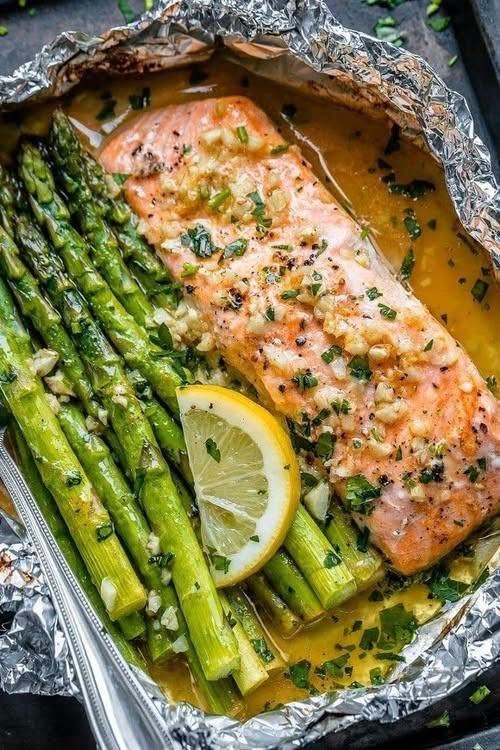
If there’s one dinner I keep coming back to when I want something delicious without making a huge mess in the kitchen, it’s garlic butter salmon and asparagus foil packs. Honestly, this recipe is one of those simple meals that tastes like something you’d order at a nice restaurant, but it’s surprisingly easy to make at home.
I love how the salmon cooks in its own little foil packet with fresh asparagus, minced garlic, melted butter, and a squeeze of lemon juice. Everything comes together in one packet, allowing the flavors to mingle while the fish stays moist and tender.
The best part? There’s hardly any cleanup afterward! I usually serve these foil packs on busy weeknights when I want a satisfying dinner without spending hours cooking or washing dishes.
Whether you’re looking for a healthy salmon dinner, an easy oven-baked fish recipe, or a fresh meal for the warmer months, this garlic butter salmon and asparagus recipe is one you’ll want to save.
Why You’ll Love This Recipe
- Ready in about 30 minutes: Perfect for busy weeknights.
- Minimal cleanup: Everything cooks together in a foil packet.
- Fresh and flavorful: Garlic butter, lemon, and herbs make every bite delicious.
- Nutritious and satisfying: Salmon provides protein and omega-3 fatty acids, while asparagus adds fiber and vitamins.
- Easy to customize: Adjust the herbs, seasonings, and vegetables to suit your taste.
- Great for different cooking methods: Bake it in the oven or cook it on the grill.
Recipe Details
- Prep Time: 10 minutes
- Cook Time: 15–20 minutes
- Total Time: Approximately 25–30 minutes
- Servings: 2
- Cooking Method: Oven-baked foil packets
- Difficulty: Easy
Ingredients for Garlic Butter Salmon and Asparagus Foil Packs
These simple ingredients create a rich, buttery sauce that coats the salmon and asparagus beautifully.
Main Ingredients
- 2 salmon fillets, approximately 6 oz (170 g) each
- 1 bunch fresh asparagus, woody ends trimmed
- 4 tablespoons unsalted butter, melted
- 4 cloves garlic, finely minced
- 1 tablespoon fresh lemon juice
- 1 teaspoon lemon zest, optional
- 1 tablespoon fresh parsley, chopped
- ½ teaspoon paprika
- ½ teaspoon Italian seasoning
- Salt and black pepper, to taste
- 2 lemon wedges, for serving
- Heavy-duty aluminum foil, for wrapping
Optional Ingredients
- 1 tablespoon olive oil for extra richness
- ½ teaspoon red pepper flakes for a little heat
- 1 tablespoon grated Parmesan cheese for a savory finish
- Fresh dill or thyme instead of parsley
I usually stick with butter, garlic, lemon, and parsley because that combination lets the natural flavor of the salmon shine through without overpowering it.
Step-by-Step Instructions
Step 1: Preheat the Oven
Preheat your oven to 400°F (200°C).
Prepare two large sheets of heavy-duty aluminum foil, each large enough to hold one salmon fillet and a portion of asparagus with enough extra room to fold and seal the edges.
Place the foil sheets on a baking tray for easier handling.
Step 2: Prepare the Asparagus
Wash the asparagus thoroughly and pat it dry. Trim off the tough, woody ends, then divide the asparagus evenly between the two foil sheets.
Arrange the spears in a single layer in the center of each piece of foil.
If your asparagus stalks are especially thick, you can slice them lengthwise or give them a few extra minutes of cooking time.
Step 3: Make the Garlic Butter Sauce
In a small bowl, combine the melted butter, minced garlic, lemon juice, lemon zest, chopped parsley, paprika, Italian seasoning, salt, and black pepper.
Stir everything together until well combined.
Honestly, this garlic butter mixture is what makes the recipe so delicious. The garlic becomes fragrant as it cooks, while the butter and lemon create a rich, bright sauce that pairs perfectly with salmon.
Step 4: Add the Salmon
Place one salmon fillet on top of each bed of asparagus.
Pat the salmon dry beforehand if necessary, then season lightly with additional salt and black pepper.
Spoon the garlic butter mixture evenly over the salmon and asparagus, making sure the garlic and herbs are distributed across both packets.
Place a lemon wedge beside each fillet for extra citrus flavor.
Step 5: Seal the Foil Packets
Fold the long sides of the foil over the salmon and bring the edges together. Fold them down to create a secure seal.
Fold the shorter ends inward to form a packet, leaving a little room inside for steam to circulate.
You want the packets sealed well enough to retain moisture, but not wrapped so tightly that the foil presses against the fish.
Step 6: Bake the Salmon
Place the foil packets on the prepared baking tray and bake for approximately 15–20 minutes at 400°F (200°C), depending on the thickness of the salmon fillets.
Thinner fillets may cook more quickly, while thicker pieces may need additional time.
The salmon should be opaque and separate easily with a fork. For food safety, cook salmon to an internal temperature of 145°F (63°C) at its thickest point, measured with a food thermometer.
Be careful when opening the packets because hot steam will escape.
Step 7: Serve and Enjoy
Carefully open each packet and spoon some of the garlic butter sauce over the salmon.
Garnish with extra chopped parsley, freshly cracked black pepper, and a squeeze of lemon juice.
Serve immediately while the salmon is warm, juicy, and tender.
I love bringing the packets straight to the table because they look beautiful and keep the meal simple. Just remember to transfer the food to plates or use heat-safe serving dishes.
Cooking Tips for the Best Garlic Butter Salmon
1. Choose Fresh, Evenly Sized Salmon Fillets
Try to use salmon fillets that are similar in thickness so they cook at roughly the same rate. Fresh or properly thawed frozen salmon both work well.
2. Don’t Overcook the Fish
Salmon can become dry if it cooks for too long. Start checking thinner fillets early and use a thermometer to confirm they reach 145°F (63°C).
3. Trim the Asparagus Properly
Remove the woody ends before cooking. If the stalks are very thick, consider cutting them lengthwise so they cook more evenly alongside the salmon.
4. Use Fresh Garlic
Freshly minced garlic gives the butter sauce a stronger, more vibrant flavor than garlic powder alone. If you only have garlic powder, use approximately ½ teaspoon as a substitute for the four cloves.
5. Seal the Foil Packets Well
A good seal helps trap steam and moisture, keeping the salmon tender while the asparagus cooks.
6. Want a Little Browning?
Foil packets trap moisture, so the salmon won’t develop much of a browned crust. If you’d like a little color, carefully open the packets near the end of cooking and broil briefly, watching closely to prevent burning.
Only use foil under the broiler if your foil and baking setup are suitable for broiling, and never allow the foil to contact the heating element.
7. Make It on the Grill
These packets also work well on a grill preheated to medium heat, approximately 375–400°F (190–200°C). Cooking time will vary, so check the salmon’s internal temperature before serving.
What to Serve With Garlic Butter Salmon and Asparagus
This salmon foil pack is a complete meal on its own, but a few simple sides make it even more satisfying.
Rice or Rice Pilaf
Fluffy white rice, brown rice, or lemon rice is wonderful for soaking up the extra garlic butter sauce.
Roasted Potatoes
Crispy roasted baby potatoes or garlic Parmesan potatoes make a hearty addition to the meal.
Garlic Bread
Warm garlic bread is perfect for anyone who loves that buttery garlic flavor as much as I do.
Fresh Green Salad
A simple salad with lettuce, cucumber, tomatoes, and a light lemon dressing adds freshness and crunch.
Mashed Potatoes
Creamy mashed potatoes pair beautifully with the lemony butter sauce and make the meal feel extra comforting.
Quinoa or Couscous
For another easy side, serve the salmon with fluffy quinoa or couscous and a little fresh parsley.
Variations You Can Try
Honey Garlic Salmon: Add 1 teaspoon of honey to the garlic butter mixture for a slightly sweet finish.
Lemon Dill Salmon: Replace the parsley with fresh dill for a classic pairing with fish.
Spicy Garlic Butter Salmon: Add red pepper flakes or a pinch of cayenne pepper.
Parmesan Asparagus: Sprinkle a little grated Parmesan over the asparagus before sealing the packets.
Low-Carb Dinner: Keep the salmon and asparagus as written, and serve with cauliflower rice or a fresh salad.
Storage and Reheating
How to Store Leftovers
Allow the salmon to cool slightly, then transfer it to an airtight container and refrigerate within two hours of cooking. Use refrigerated leftovers within 3–4 days.
For the best texture, store the salmon and asparagus with a little of the garlic butter sauce to help prevent them from drying out.
Can You Freeze Garlic Butter Salmon?
You can freeze cooked salmon, although the asparagus may become softer after thawing. Place the cooled salmon in a freezer-safe container and freeze for up to 2–3 months for best quality.
Thaw overnight in the refrigerator before reheating.
How to Reheat
Reheat the salmon gently in a covered oven-safe dish at 275–300°F (135–150°C) until warmed through, or use a microwave at reduced power in short intervals.
Add a small amount of butter or lemon juice if needed to refresh the sauce. Reheat leftovers to 165°F (74°C).
Approximate Nutrition Information
Estimated nutrition per serving, assuming the recipe makes two servings and each serving includes one salmon fillet and half the asparagus:
- Calories: 450–500 kcal
- Protein: 38–42 g
- Carbohydrates: 7–10 g
- Fat: 30–34 g
- Fiber: 3–4 g
- Sugar: 2–3 g
Nutrition will vary based on the size and type of salmon, the amount of butter used, and the ingredients selected. These estimates do not include additional side dishes.
Frequently Asked Questions
1. How long does salmon take to cook in foil at 400°F?
Salmon generally takes about 15–20 minutes in foil at 400°F (200°C), depending on the thickness of the fillet. Always check the thickest part with a food thermometer and cook to 145°F (63°C) for food safety.
2. Can I use frozen salmon for this recipe?
Yes, but thaw it completely in the refrigerator before preparing the foil packets. Pat it dry to remove excess moisture, then follow the recipe as written. Cooking salmon directly from frozen may require a different cooking time and can make it harder to cook the asparagus evenly.
3. Can I make garlic butter salmon foil packs ahead of time?
You can prepare the garlic butter sauce, trim the asparagus, and portion the salmon ahead of time. For the best quality, assemble the packets shortly before baking, or refrigerate fully assembled packets and cook them within a short period while keeping them properly chilled.
4. Can I make this recipe without aluminum foil?
Yes. Use parchment paper packets or place the salmon and asparagus in a lightly greased baking dish covered with a lid or oven-safe cover. Cooking time may vary slightly depending on the method and thickness of the fish.
5. How do I know when the asparagus is done?
The asparagus should be bright green and tender when pierced with a fork, while still retaining a little firmness. Thin stalks cook faster than thick ones. If you prefer very tender asparagus, choose thinner stalks or give thicker ones a head start before adding the salmon.
Conclusion
This garlic butter salmon and asparagus foil pack is one of those recipes that proves a delicious dinner doesn’t need to be complicated. With juicy salmon, tender asparagus, fresh lemon, fragrant garlic, and rich melted butter, every bite is full of simple, satisfying flavor.
Honestly, what I love most is how easy it is to prepare and how little cleanup it leaves behind. It’s perfect for busy weeknights, relaxed weekend dinners, or anytime you want a fresh homemade meal without a pile of dishes.