
Garlic Herb Pot Roast with Potatoes and Carrots

There is something incredibly comforting about a pot roast slowly cooking away in the kitchen. The smell of garlic, herbs, seared beef, and rich gravy fills the whole house, and honestly, it is one of those meals that makes everyone look forward to dinner.
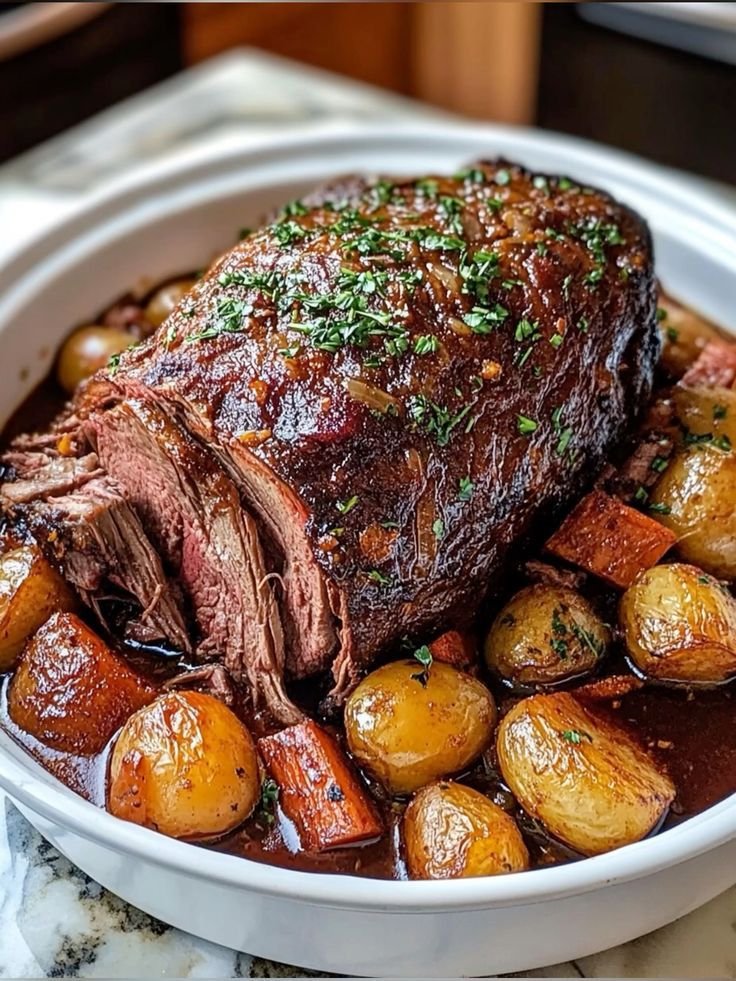
This garlic herb pot roast is inspired by the beautiful, glossy roast served with golden baby potatoes and tender carrots in the photo. The beef develops a deeply browned crust, while the inside becomes fork-tender after hours of slow cooking. Everything cooks together in a flavorful broth that turns into a delicious, savory gravy.
I usually make pot roast on weekends or whenever I want a hearty meal without spending the entire day standing over the stove. Once the beef is seared and the ingredients are in the pot, the oven does most of the work.
Whether you are preparing Sunday dinner, hosting family, or simply craving classic comfort food, this easy pot roast recipe is one worth keeping.
Why You’ll Love This Pot Roast Recipe
- Tender, juicy beef: Slow cooking transforms a tough cut of beef into wonderfully tender meat.
- Rich garlic herb flavor: Fresh garlic, rosemary, thyme, and beef broth create a delicious, savory sauce.
- A complete one-pot meal: Potatoes, carrots, beef, and gravy come together in one Dutch oven or heavy oven-safe pot.
- Perfect for family dinners: It is filling, comforting, and easy to serve straight from the cooking pot.
- Great for leftovers: The beef and gravy taste just as delicious the next day.
Recipe Details
- Prep time: 20 minutes
- Cooking time: 3–3½ hours
- Total time: Approximately 3 hours 45 minutes
- Servings: 6
- Cooking method: Oven braising
- Difficulty: Easy to moderate
Ingredients for Garlic Herb Pot Roast
These ingredients create a classic pot roast with tender beef, golden vegetables, and a rich homemade gravy.
For the Beef
- 3–4 pounds (1.4–1.8 kg) beef chuck roast
- 2 tablespoons olive oil
- 2 teaspoons salt, or to taste
- 1 teaspoon freshly ground black pepper
- 1 teaspoon smoked paprika
- 1 teaspoon onion powder
- 1 teaspoon dried thyme
- 1 teaspoon dried rosemary
- 5–6 garlic cloves, minced
- 1 tablespoon Worcestershire sauce
- 2 tablespoons tomato paste
For the Vegetables
- 1½ pounds (680 g) baby potatoes, halved if large
- 4 medium carrots, peeled and cut into thick chunks
- 1 large yellow onion, roughly chopped
- 2 celery stalks, cut into large pieces (optional)
For the Braising Liquid
- 2½ cups (600 ml) beef broth
- 1 tablespoon balsamic vinegar or red wine vinegar
- 2 fresh rosemary sprigs
- 3–4 fresh thyme sprigs
- 2 bay leaves
For the Gravy and Garnish
- 2 tablespoons butter, optional
- 1 tablespoon cornstarch mixed with 1 tablespoon cold water, optional
- 2 tablespoons freshly chopped parsley
- Salt and black pepper, as needed
Ingredient tip: I usually choose a well-marbled chuck roast because it becomes exceptionally tender during slow cooking. Beef brisket can also work, but cooking time and texture may vary.
How to Make Garlic Herb Pot Roast
Follow these simple steps to make a beautifully browned roast with tender vegetables and flavorful gravy.
Step 1: Prepare the Beef
Remove the beef chuck roast from the refrigerator about 20–30 minutes before cooking, if convenient. Pat it dry with paper towels.
In a small bowl, combine the salt, black pepper, smoked paprika, onion powder, dried thyme, and dried rosemary. Rub this seasoning mixture over every side of the beef.
I always take a little extra time with this step because seasoning the meat evenly makes a noticeable difference in the finished dish.
Step 2: Sear the Roast Until Golden Brown
Preheat your oven to 300°F (150°C).
Heat the olive oil in a large Dutch oven over medium-high heat. Once the oil is hot, carefully place the seasoned beef inside.
Sear for approximately 4–5 minutes per side, including the edges, until a deep brown crust develops.
Avoid moving the meat too frequently. Letting it sit against the hot pot helps build that flavorful crust that makes pot roast taste so good.
Transfer the browned beef to a plate.
Step 3: Cook the Onion and Garlic
Reduce the heat to medium. Add the chopped onion and celery, if using, to the same pot.
Cook for 3–4 minutes, stirring occasionally, until the onion begins to soften.
Add the minced garlic and tomato paste. Stir for another minute, scraping up the browned bits from the bottom of the pot.
Those browned bits are packed with flavor, so honestly, I never skip this step.
Step 4: Add the Broth and Herbs
Pour in the beef broth and Worcestershire sauce. Add the balsamic vinegar and stir well to combine.
Use a wooden spoon to loosen any browned bits stuck to the bottom of the pot.
Add the fresh rosemary, thyme sprigs, and bay leaves. Return the seared beef to the pot, along with any juices that collected on the plate.
The liquid should come partway up the sides of the roast rather than completely cover it. This allows the beef to braise gently while developing a rich, concentrated flavor.
Step 5: Slow-Cook the Pot Roast
Cover the Dutch oven with its lid and carefully transfer it to the preheated oven.
Cook for approximately 2½ hours before checking the tenderness.
The roast should gradually become softer as the connective tissue breaks down. If it still feels firm when pierced with a fork, cover it again and continue cooking in 30-minute intervals.
A typical 3–4-pound chuck roast takes around 3–3½ hours, although the exact time depends on its thickness and the particular cut.
Step 6: Add the Potatoes and Carrots
Carefully remove the pot from the oven. Arrange the baby potatoes and carrot chunks around the beef, nestling them into the braising liquid.
Cover the pot again and return it to the oven for another 45–60 minutes, or until the vegetables are tender and the beef pulls apart easily with a fork.
I usually cut the carrots into fairly large pieces so they hold their shape instead of becoming mushy during the long cooking process.
If the beef is tender before the vegetables are ready, you can temporarily remove the roast and keep the vegetables cooking in the covered pot.
Step 7: Make the Gravy
Once the beef and vegetables are cooked, transfer them to a serving platter and cover loosely to keep warm.
Remove the bay leaves and herb stems from the cooking liquid.
For a simple, rustic gravy, spoon the cooking liquid directly over the roast. If you prefer a thicker sauce, bring the liquid to a gentle simmer on the stovetop.
Stir together the cornstarch and cold water in a small bowl. Gradually whisk this mixture into the simmering liquid and cook for 1–2 minutes until thickened.
For extra richness, stir in the butter and taste the gravy before adding more salt or pepper.
Step 8: Garnish and Serve
Place the roast in the center of a large serving dish and arrange the potatoes and carrots around it.
Spoon the glossy gravy over the beef and vegetables, then sprinkle with freshly chopped parsley.
Let the roast rest for about 10–15 minutes before serving if you plan to slice it. If it is already fork-tender, gently pull it into large pieces with two forks.
Serve warm with plenty of gravy.
My Best Tips for Tender, Flavorful Pot Roast
Choose the Right Cut of Beef
Chuck roast is my first choice because its marbling and connective tissue help produce tender, flavorful meat after slow cooking. Leaner cuts can become dry or remain firm if cooked incorrectly.
Never Skip Searing
Searing creates a flavorful brown crust and adds depth to the cooking liquid. It does not seal in the juices, but it does contribute significantly to the finished flavor.
Keep the Oven Temperature Low
Cooking at 300°F (150°C) allows the beef to soften gradually. A gentle braise is much better for this recipe than rushing the process at a high temperature.
Give the Beef Enough Time
One of the most common pot roast mistakes is stopping the cooking too early. If the meat feels tough, it often needs more time rather than less.
The beef is ready when a fork slides in easily and the meat separates with little resistance.
Cut the Vegetables Evenly
Try to keep the potato and carrot pieces roughly similar in size. Larger chunks are particularly useful because they withstand the longer cooking time.
Adjust the Gravy to Your Taste
If the sauce tastes too strong, add a little beef broth. If it seems thin, simmer it uncovered or use the cornstarch slurry. Taste before serving and adjust the seasoning as needed.
What to Serve with Garlic Herb Pot Roast
This recipe is already a satisfying meal, but a few simple sides can make it feel extra special.
- Crusty bread: Perfect for soaking up every last bit of gravy.
- Creamy mashed potatoes: A wonderful addition if you want even more of that classic comfort-food experience.
- Steamed green beans: Add a fresh, colorful contrast to the rich beef.
- Roasted Brussels sprouts: Their lightly caramelized edges pair beautifully with the savory gravy.
- Simple green salad: A crisp salad with a light vinaigrette balances the richness of the roast.
- Dinner rolls: Soft rolls are ideal for a relaxed family meal.
For a cozy Sunday dinner, I usually serve the roast with the potatoes and carrots from the pot, a basket of warm bread, and something green on the side.
Variations to Try
Slow Cooker Garlic Herb Pot Roast
Sear the beef in a skillet first for the best flavor. Transfer it to a slow cooker with the onion, garlic, tomato paste, broth, and seasonings.
Cook on LOW for approximately 8–9 hours or HIGH for 4–5 hours, until the beef is fork-tender. Add the potatoes and carrots during the final 3–4 hours on LOW, or approximately 2 hours on HIGH, adjusting as needed for their size and your slow cooker.
Pot Roast with Red Wine
Replace up to 1 cup of the beef broth with dry red wine. Let it simmer briefly after adding it to the pot to cook off some of the alcohol before returning the roast.
This variation creates a deeper, more complex gravy.
Extra Garlic Butter Pot Roast
Stir a tablespoon of butter and one additional minced garlic clove into the finished gravy. Keep the heat low so the garlic does not burn.
Gluten-Free Pot Roast
The beef and vegetables can be naturally gluten-free, depending on the ingredients used. Choose gluten-free beef broth and Worcestershire sauce, check all seasoning labels, and thicken the gravy with cornstarch instead of regular flour.
How to Store and Reheat Leftovers
Refrigerator: Let the leftovers cool slightly, then refrigerate them in airtight containers within two hours of cooking. Store for 3–4 days.
Freezer: Place cooled beef and gravy in freezer-safe containers and freeze for approximately 2–3 months for best quality. The vegetables may soften after thawing.
Reheating: Warm the beef, vegetables, and gravy in a covered saucepan over low heat until thoroughly heated. Add a splash of broth if the sauce has thickened too much.
You can also reheat individual portions in the microwave in a covered, microwave-safe dish, stirring or turning the food as needed for even heating.
For food safety, reheat leftovers to 165°F (74°C).
Approximate Nutrition Information
The following estimates are for one serving, assuming six servings from the recipe and including a portion of beef, vegetables, and gravy. Actual values depend on the beef’s fat content, portion size, and how much gravy is consumed.
| Nutrient | Approximate amount |
|---|---|
| Calories | 550–650 kcal |
| Protein | 40–48 g |
| Total fat | 25–35 g |
| Saturated fat | 9–13 g |
| Carbohydrates | 30–40 g |
| Fiber | 4–6 g |
| Sugar | 5–8 g |
| Sodium | 650–950 mg |
These are general estimates, not laboratory-tested nutrition facts. Using low-sodium broth and trimming excess fat can change the nutritional values.
Frequently Asked Questions
1. What is the best cut of beef for pot roast?
Beef chuck roast is generally the best choice because it contains enough connective tissue and fat to become tender and flavorful during slow cooking. Brisket and certain round roasts can also be used, although their texture and cooking requirements may differ.
2. Why is my pot roast still tough after hours of cooking?
The beef may simply need more time. Tough connective tissue softens gradually during braising, so continue cooking in 30-minute intervals until the meat pulls apart easily with a fork. Also make sure the pot is covered and there is enough braising liquid to prevent the meat from drying out.
3. Can I prepare pot roast a day ahead?
Absolutely! In fact, I often find that the flavors taste even better the next day. Refrigerate the cooked roast with its gravy, then reheat it gently until thoroughly hot. You can remove any solidified fat from the surface before reheating if desired.
4. Can I make this recipe without a Dutch oven?
Yes. Sear the beef in a heavy skillet, then transfer everything to a deep, oven-safe baking dish. Add the broth and seasonings, cover tightly with foil, and cook according to the recipe. You can also use a slow cooker, following the cooking-time guidance above.
5. How do I know when pot roast is done?
The most reliable sign is tenderness: a fork should slide into the meat easily, and the beef should pull apart with little effort. A thermometer can help with temperature checks, but pot roast often needs to cook beyond the temperatures used for medium-rare beef because its connective tissue needs time to soften.
Final Thoughts
This garlic herb pot roast with potatoes and carrots is the kind of meal that makes an ordinary evening feel special. The beef becomes wonderfully tender, the vegetables soak up the savory cooking juices, and the homemade gravy brings everything together.
I love that most of the cooking happens in the oven while the flavors slowly develop. There is no need for complicated techniques or fancy ingredients—just a good cut of beef, a handful of herbs, fresh garlic, and a little patience.