
Spanish Potato and Egg Skillet

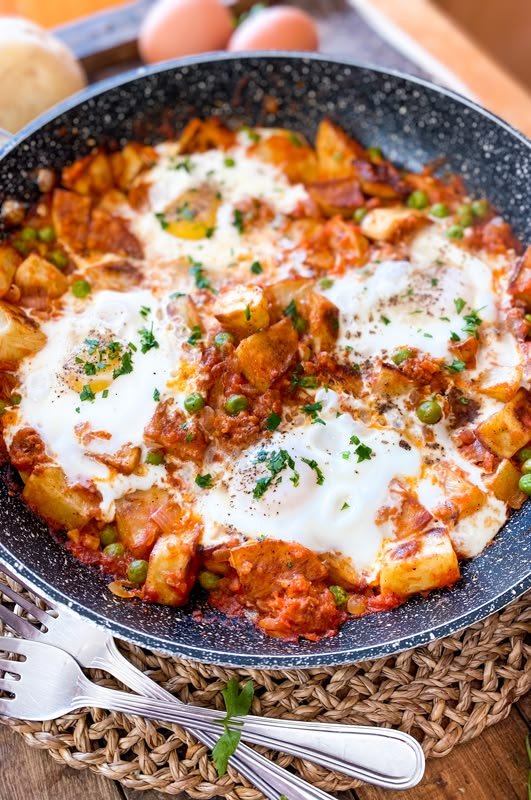
There’s something about a skillet full of golden potatoes, rich tomato sauce, and gently cooked eggs that makes a meal feel extra comforting. This Spanish-style potato and egg skillet is one of those simple dishes that looks impressive on the table but doesn’t require much fuss in the kitchen.
Honestly, I love recipes like this because they turn everyday ingredients into something that feels special. Potatoes, eggs, onions, tomatoes, and a handful of seasonings are all you need to create a hearty meal that works just as well for a lazy weekend breakfast as it does for a quick weeknight dinner.
The potatoes become soft and flavorful inside, while the tomato sauce adds a slightly tangy, savory taste. Sweet green peas bring a pop of color, and the eggs cook right in the sauce, soaking up all those delicious flavors.
I usually finish the skillet with a sprinkle of fresh parsley and a little black pepper. It’s a small touch, but it makes the whole dish look fresh and inviting.
The best part? Everything cooks in one pan, which means less washing up afterward. Serve it straight from the skillet with some crusty bread, warm flatbread, or a fresh salad, and you’ve got a satisfying meal everyone can enjoy.
Ingredients for Spanish Potato and Egg Skillet
Main Ingredients
-
- 4 medium potatoes: About 1½ pounds (680 g), peeled if desired and cut into small cubes.
-
- 4 large eggs: The star of the dish. Use more if you’re serving bigger appetites.
-
- 1 medium onion: Finely chopped for sweetness and flavor.
-
- 2 cloves garlic: Minced for a delicious savory base.
-
- 1 tablespoon olive oil: For cooking the potatoes and vegetables.
-
- 1 tablespoon butter (optional): Adds extra richness to the potatoes.
-
- 1 cup tomato sauce or crushed tomatoes: Creates the flavorful sauce that brings everything together.
-
- ½ cup green peas: Fresh or frozen peas both work well.
-
- ½ teaspoon paprika: Adds warmth and a gentle smoky flavor.
-
- ½ teaspoon ground cumin: Optional, but lovely with the potatoes and tomato sauce.
-
- ½ teaspoon dried oregano: Adds a subtle herbal note.
-
- ¼ teaspoon black pepper: Adjust to taste.
-
- ½ teaspoon salt, or to taste: Season as needed.
-
- ¼ cup water or vegetable broth: Helps soften the potatoes and loosen the sauce.
-
- 2 tablespoons chopped fresh parsley: For garnish.
Optional Ingredients
-
- ¼ teaspoon chili flakes: For a little heat.
-
- ½ cup diced bell pepper: Adds sweetness and color.
-
- ¼ cup grated cheese: For a richer, cheesy finish.
-
- A pinch of smoked paprika: If you enjoy a deeper smoky flavor.
How to Make Spanish Potato and Egg Skillet
Step 1: Prepare the Potatoes
Wash the potatoes thoroughly and cut them into small, even cubes. You can peel them or leave the skins on if you prefer a more rustic texture.
I usually cut the potatoes into pieces around ½ inch in size. Smaller pieces cook faster and are easier to brown evenly.
Pat the potatoes dry with a clean kitchen towel if they’re wet. This helps them brown better in the pan.
Step 2: Cook the Potatoes Until Golden
Heat the olive oil in a large, deep skillet over medium heat. Add the diced potatoes and season with a little salt and black pepper.
Cook for about 10–12 minutes, stirring occasionally, until the potatoes start to turn golden on the outside.
If they begin sticking or browning too quickly, reduce the heat slightly and add a tablespoon or two of water.
Cover the pan for a few minutes if necessary to help the potatoes soften inside. Remove the lid toward the end so excess moisture can evaporate.
The potatoes don’t need to be completely cooked at this stage because they’ll continue cooking in the sauce.
Step 3: Add the Onion and Garlic
Add the chopped onion to the skillet and cook for 3–4 minutes until softened.
Stir in the minced garlic and cook for another 30–60 seconds, just until fragrant.
If you’re using diced bell pepper, add it with the onion so it has time to soften.
This step creates a flavorful base for the tomato sauce. I try not to rush the onions because their sweetness adds a lot to the finished dish.
Step 4: Add the Tomato Sauce and Seasonings
Stir in the tomato sauce or crushed tomatoes, paprika, cumin, oregano, and the remaining salt and black pepper.
Add the water or vegetable broth and stir everything together, making sure the potatoes are coated in the sauce.
Bring the mixture to a gentle simmer, then reduce the heat to medium-low.
Cover and cook for about 8–10 minutes, stirring occasionally, until the potatoes are tender and the sauce has thickened slightly.
If the sauce becomes too thick before the potatoes are ready, add a small splash of water or broth.
Step 5: Stir in the Green Peas
Add the green peas and stir gently to distribute them throughout the skillet.
If you’re using frozen peas, there’s no need to thaw them first. Let the mixture simmer for another 2–3 minutes until the peas are heated through.
At this point, taste the sauce and adjust the seasoning. You can add more paprika, black pepper, or chili flakes if you prefer a bolder flavor.
Step 6: Add the Eggs
Use the back of a spoon to make four small wells in the potato mixture.
Crack one egg into each well, taking care not to break the yolks if you want them to remain whole.
Cover the skillet with a lid and cook over low heat for approximately 5–8 minutes, depending on how runny or firm you like your eggs.
For runny yolks, start checking early. If you prefer firmer yolks, cook a little longer.
The egg whites should be set before serving. For food safety, cook until the whites and yolks are firm, or use pasteurized eggs if you prefer a runny yolk.
Step 7: Garnish and Serve
Remove the skillet from the heat and sprinkle fresh parsley over the top.
Add a little extra black pepper or paprika if desired. If you’re using grated cheese, sprinkle it over the potatoes during the final minute of cooking and cover until melted.
Bring the skillet directly to the table and serve while it’s hot.
I love serving this dish straight from the pan because it feels relaxed, rustic, and perfect for sharing.
Tips for the Best Spanish Potato and Egg Skillet
A few simple tricks can make this recipe even better.
1. Cut the Potatoes Evenly
Try to keep the potato cubes roughly the same size. This helps them cook evenly, so you don’t end up with some pieces soft while others are still hard.
2. Don’t Rush the Potatoes
Golden potatoes add wonderful texture to this dish. Give them enough time to brown before adding the tomato sauce.
If your skillet is small, cook the potatoes in batches rather than overcrowding the pan.
3. Choose the Right Skillet
A large, deep skillet with a lid works best. A 10–12-inch skillet is ideal for this quantity, giving the potatoes enough room to cook without spilling over.
A nonstick or well-seasoned cast-iron skillet can both work well.
4. Adjust the Sauce Consistency
The tomato sauce should be thick enough to coat the potatoes but not so dry that the mixture sticks to the pan.
If it looks too thick, add a splash of broth. If it’s too watery, simmer uncovered for a few minutes before adding the eggs.
5. Cook the Eggs to Your Preference
The eggs are one of the best parts of this recipe, so cook them exactly how you like them. Keep the heat low to avoid overcooking the bottoms while the tops remain underdone.
Covering the pan helps the eggs cook more evenly.
6. Add Fresh Herbs at the End
Fresh parsley or cilantro adds a bright finish that balances the rich tomato sauce.
I usually add the herbs right before serving so their color and flavor stay fresh.
7. Make It Your Own
This recipe is easy to customize. Add mushrooms, spinach, bell peppers, cooked sausage, or a little cheese to suit your taste.
Just keep in mind that adding extra vegetables may change the amount of liquid needed.
What to Serve With Spanish Potato and Egg Skillet
This potato and egg skillet is filling enough to serve on its own, but a few simple sides can turn it into a complete meal.
Crusty Bread
Fresh bread is perfect for scooping up the tomato sauce and egg yolks. Sourdough, a baguette, or rustic country bread all work well.
Warm Flatbread
If you prefer something softer, serve the skillet with warm flatbread or pita. It’s an easy and satisfying combination.
Fresh Green Salad
A simple salad with lettuce, cucumber, tomatoes, and a light lemon dressing provides a refreshing contrast to the warm potatoes and rich sauce.
Sliced Avocado
Creamy avocado pairs beautifully with the tomato sauce and eggs. Add a few slices on the side for extra richness.
Roasted Vegetables
Roasted zucchini, carrots, or broccoli make good accompaniments if you’re serving this dish for dinner.
Yogurt or Garlic Sauce
A small bowl of plain yogurt or a light garlic-yogurt sauce can add a cooling contrast, especially if you’ve made the skillet spicy.
Easy Variations to Try
Once you’ve made the basic version, there are plenty of ways to change it up.
Spicy Potato and Egg Skillet: Add chili flakes, cayenne pepper, or a chopped fresh chili to the onion and garlic.
Cheesy Potato and Egg Skillet: Sprinkle grated cheddar, mozzarella, or a Spanish-style melting cheese over the potatoes before covering the pan.
Potato, Egg, and Spinach Skillet: Stir in a handful of fresh spinach with the peas and let it wilt before adding the eggs.
Sausage and Potato Skillet: Brown sliced cooked sausage or chorizo-style sausage before cooking the potatoes. If using raw sausage, cook it thoroughly first.
Smoky Tomato Potato Skillet: Increase the smoked paprika slightly and add a pinch of chili flakes for a deeper, warmer flavor.
Dairy-Free Version: Simply leave out the optional butter and cheese. The olive oil and tomato sauce provide plenty of flavor on their own.
Can You Make This Recipe Ahead of Time?
Yes, you can prepare parts of this recipe in advance.
You can chop the potatoes, onion, and garlic ahead of time and store them separately in the refrigerator. You can also cook the potato and tomato mixture without the eggs, then refrigerate it and add freshly cracked eggs when reheating.
For the best texture, I recommend cooking the eggs just before serving rather than storing them in the skillet for later.
How to Store Leftovers
Transfer leftover potato and tomato mixture to an airtight container and refrigerate within two hours of cooking. Use within 3–4 days.
If possible, store the eggs separately because their texture can change when reheated.
How to Reheat
Reheat the potato mixture in a covered skillet over medium-low heat with a splash of water. Stir occasionally until thoroughly hot.
You can also microwave individual portions in a microwave-safe dish, stirring halfway through.
Refrigerated leftovers should be reheated to 165°F (74°C). For the best quality, prepare fresh eggs when serving reheated potatoes.
Nutrition Information
The following nutrition values are approximate estimates per serving, based on four servings and the core ingredients, including four eggs and one tablespoon of olive oil. Actual values will vary with potato size, tomato sauce, oil quantity, and optional toppings.
-
- Calories: 330
-
- Protein: 12 g
-
- Carbohydrates: 43 g
-
- Total Fat: 12 g
-
- Saturated Fat: 3 g
-
- Fiber: 6 g
-
- Sugar: 7 g
- Sodium: Approximately 450–650 mg
Frequently Asked Questions
1. Can I use leftover cooked potatoes?
Absolutely! Leftover boiled or roasted potatoes work well and can save you time. Add them after softening the onions and garlic, then stir in the tomato sauce and seasonings. Simmer until everything is hot before adding the eggs.
Because the potatoes are already cooked, you may need less cooking time and slightly less liquid.
2. How do I stop the potatoes from becoming mushy?
Cut the potatoes into reasonably even cubes and avoid stirring them too aggressively. Brown them first, then simmer gently in the tomato sauce until just tender.
Waxy potatoes often hold their shape better than very starchy varieties, although both can work in this recipe.
3. Can I make this Spanish potato and egg skillet without tomatoes?
Yes. You can replace the tomato sauce with a little vegetable broth, sautéed onions, garlic, paprika, and herbs for a drier potato and egg skillet.
The flavor will be different, but it can still be delicious. You may need to adjust the cooking time and liquid so the potatoes become tender without sticking.
4. Can I make this recipe vegan?
Yes! Skip the eggs and butter, and use olive oil or another plant-based cooking oil. You can add chickpeas, white beans, or extra vegetables to make the meal more substantial.
Use vegetable broth and check that any optional cheese or other toppings are plant-based.
5. Is Spanish potato and egg skillet suitable for breakfast and dinner?
Definitely. It’s hearty enough for dinner but simple enough for breakfast or brunch. I usually serve it with bread and fresh fruit or salad, depending on the time of day.
It’s also a useful option when you want a filling, budget-friendly meal without preparing several separate dishes.
Conclusion
This Spanish-style potato and egg skillet is proof that simple ingredients can make a wonderfully satisfying meal. Golden potatoes, sweet peas, aromatic garlic, and rich tomato sauce come together in one pan, while the eggs add extra flavor and protein.
Honestly, the best part is how flexible the recipe is. You can make it spicy, add extra vegetables, sprinkle over some cheese, or keep it simple with just the basic ingredients.
I usually serve it straight from the skillet with warm bread and a sprinkle of fresh parsley. It’s easy, comforting, colorful, and ideal for those days when you want something homemade without spending hours in the kitchen.
Give this easy potato and egg skillet a try for your next breakfast, brunch, or weeknight dinner. Once you see how easily it comes together, it might become one of your favorite one-pan meals!